
Transportation

Roadwork on Woodward makes it more walkable

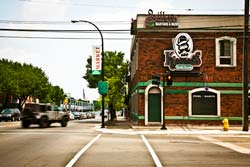
Woodward Avenue in Berkley and Royal Oak is in the process of changes that should make one heavy pedestrian spot a less challenging one to walk safely.The Michigan Department of Transportation is spending $400,000 to improve Woodward Avenue and 12 Mile Road. While safety is MDOT's main concern, the changes could also make the intersection even more inviting to pedestrians who frequent the dozens of businesses along the stretch.The construction, which will primarily affect the median and Michigan left turn lanes, started this week and could finish in time for the Woodward Dream Cruise, which runs Aug. 17-22, and attracts thousands of collector car owners and spectators to this part of Woodward. If incomplete by then, it should be done by Labor Day, says MDOT spokesman Rob Morosi. Some of the conditions at the pedestrian-heavy area along this wide swath of road traveled by speeding cars, "raised red flags," Morosi says. The existing median will be widened so there's a safe place to wait while crossing the wide road. Left turn lanes will be shortened so cars can't go so fast next to the median. Stamped concrete at the crossings will make crossing locations clearer to pedestrians and drivers, and new crossing signals will have the added feature of a countdown clock to make it clear if there's enough time to make it across the road. Additionally, sidewalk ramps will be improved. Source: Rob Morosi, spokesman Michigan Department of TransportationWriter: Kim North Shine

Latest in Transportation
Middle or curbs? Woodward rail plan takes sides

Up the middle or down the sides? These are good conversations to be having about light rail along Woodward. Far better than the ifs, maybes, and "I don't knows" of the past.(Ed. Note: As a former Portlander, I can attest to the claim that there's no way you can correlate Woodward's bi-directional boulevard with the Rose City's transit corridors. It is, indeed, comparing apples to oranges.)Excerpt:"Should the proposed Woodward Light Rail run down the center of the street or along the curb? It's the one issue that divides advocates for improved transportation options in metro Detroit.The center-run alternative has vocal supporters, but Dan Gilbert stepped forward recently to offer a full-throated defense of the curbside option."Read the rest here.

The time has come for Metro Detroit to commit to regional mass transit

Even as the rest of the country adopts regional mass transit plans to help de-emphasize a car-only culture, metro Detroit still lags behind. The Detroit Free Press offers up a spirited editorial for why Detroit and its suburbs need to create a regional bus system.Excerpt:"The need for transit is critical in southeast Michigan. At least 25% of Detroit households don't own vehicles. Throughout the region, many others who do have cars want alternatives, especially with gas prices exceeding $4 a gallon. Mass transit can provide them, while sparking investment, reducing congestion and improving air quality. It is essential to attracting and retaining talented young people.Together, SMART and DDOT carry about 165,000 people a day. Roughly 40% of SMART's riders are Detroiters commuting to suburban jobs. Transit is an inherently regional issue that demands regional answers."Read the rest of the story here.And more on the topic here.

Dearborn Plans For Rail

Thank you Florida and Wisconsin. Your loss is our gain. Michigan will receive nearly $400 million to improve its rail system, and Dearborn is planning for and anticipating the potential benefits to its downtown, its U-M campus, and The Henry Ford.

GM might test the future of personal mobility in Metro Detroit

The picture in CNET's story about GM's EN-V program says it all: Welcome to the future! GM is considering whether to make Detroit its testing ground for a new battery-powered, enclosed two-wheeled vehicle designed for car-clogged cities like Beijing. Is it us, or does the vehicle look like something out of Demolition Man?Excerpt:"EN-V, which stands for Electric Networked Vehicle, is GM's answer to improving transportation systems in congestion-choked cities such as Beijing. The EN-V was unveiled in 2010 at the Shanghai auto show. It is a battery-powered, enclosed two-wheeled vehicle that seats two, based on the two-wheeled Segway scooter. It reaches speeds of 25 mph and can drive itself and communicate wirelessly with other EN-Vs to avoid crashes."Read the rest of the story here.

Nearly $200M federal grant accelerates high speed rail in Metro Detroit

Metro Detroit and Michigan's high speed rail system moved into the fast lane this week with the announcement of nearly $200 million in federal funding from the U.S. Department of Transportation to improve lines from Dearborn to Kalamazoo.The grant goes toward the purchase of tracks, signals and other rail infrastructure that will address congestion points and separate rail and freight trains -- currently the reason train travel is slower than ideal. The changes will allow trains to travel up to 110-mph along certain portions of the line. This will also decrease the travel time between Chicago and Detroit by one hour on what is known as the Amtrak Wolverine line. The 135-mile-long corridor will receive $196.5 million in funding while a separate $2.8 million will pay for a new train and bus station in Ann Arbor to serve Amtrak and other local transit providers. Michigan will also receive funding to purchase the latest in locomotives and coaches as part of a joint application with Illinois, Wisconsin and Missouri. The new cars will be added to Amtrak's Wolverine, Blue Water, and Pere Marquette lines.The projects are expected to start next year and be completed by 2013 or 2014. Once the new rail network is built, Michigan workers and residents will have greater access to high speed rail than most states. According to the Michigan Municipal League, 69 percent of Michigan residents and 71 percent of employers would be within 15 miles of a station, including Pontiac, Detroit, Dearborn, Ann Arbor, Jackson, Albion, Kalamazoo and Battle Creek.The announcement comes at a time when ridership on the trains is rising substantially, an illustration that high speed rail is desired by Americans and will be a part of American life across the nation, as Federal Transportation Secretary Ray LaHood said during the accelerated high rail funding announcement in Detroit Monday.Michigan Gov. Rick Snyder and other transportation advocates say the high speed rail projects will mean jobs and economic development, but critics complain that Michigan is not a high speed rail or mass transit kind of market and the money is a waste."Accelerated rail service has the ability to enhance our economy, environment and overall quality of life," Gov. Snyder said in a statement. "An investment of this magnitude can spur economic development in our communities with rail stations, and provide access to a 21st century rail system that will help Michigan citizens compete in a global economy. Reliable, fast train service is attractive to businesses that want to locate or expand near it. This investment in our rail system is critical to Michigan's recovery."Michigan Municipal League CEO and Executive Director Dan Gilmartin says the funding caps many years of working in unison."Here in Michigan, we have been fortunate enough to have strong bi-partisan support for high-speed rail. Our political leaders on both sides of the aisle fully understand how important this money is to creating jobs, increasing affordable transportation options, and jump-starting our economy."Source: Sara Wurfel, spokesperson for Gov. Rick Snyder; Dan Gilmartin, executive director, Michigan Municipal LeagueWriter: Kim North Shine

Windsor interested in Metro Detroit’s transportation plans

From rail to ferries, Windsor is taking a keen interest in how Metro Detroit invests in transportation infrastructure (and vice versa), cementing the view that although an international border divides us, we're all in this together. Excerpt: "A passenger line to Canada would change Detroit’s place in the rail system, from an end-of-the-line outpost to a crossroad for high-speed rail service from Quebec and Ontario to Chicago, and by extension, St. Louis and Kansas City. International passenger rail from Detroit is, at least on the U.S. side, a realistic goal because the existing Amtrak route can easily connect to the rail tunnel under the Detroit River." Read the rest of the story here. Read about ferries from Windsor to Detroit here.

Propane-powered vehicles deliver for Wright & Fillippis

Goods delivered by Rochester-Hills-based healthcare supplies provider Wright & Fillippis are getting to their destinations on propane power as the company converts 25 percent of its fleet to this clean form of fuel.That means 12 of Wright & Fillippis' trucks and vans will run on propane as they deliver goods in Michigan. About half the vehicles have already been converted and are on the road and a propane station is up and operating at the company's headquarters. "They're hoping to convert the entire fleet eventually," says Matt Sandstrom, mobility division manager for the Clean Energy Coalition, an Ann Arbor-based non-profit that steers companies through the process of converting to alternative fuels, whether for transportation or building.The Wright & Fillippis fleet conversion came out of a partnership with the coalition through a $15 million grant from the American Recovery and Reinvestment Act.  Wright & Fillippis and the Clean Energy Coalition worked with Roush CleanTech, a Plymouth Township company that designs and manufactures liquid propane autogas fuel systems for a variety of light and medium Ford vehicles. The technology, which reduces vehicle operating costs and vehicle emissions, is available to consumers through authorized Ford dealerships. The Wright & Fillippis project is one of several clean-fuel conversions being directed by the coalition through a $40 million agreement with the Department of Energy, says Sandstrom.Of all the clean fuel projects, about a third are propane, he says. The others are compressed natural gas, electric, and hydraulic hybrid, he says. The type of fuel used depends on the type of fleet and uses of the vehicles, and the coalition guides companies through the learning process to select what's best for them.Companies working with the Clean Energy Coalition include Frito-Lay, which is converting 90 of its vehicles, about half of its Michigan fleet, to propane, and U-haul, which is converting 30 vehicles."It should be very clear that this is not R&D. This is a deployment of these technologies… They've already been true and tried," Sandstrom says.For Wright & Fillippis, propane autogas will result in the use of 48,000 fewer gallons of gasoline, the elimination of 931,200 pounds of carbon dioxide released, and a savings of $3,000 per converted vehicle, or $36,000 total thus far.Source: Matt Sandstrom, mobility division manager, Clean Energy Coalition Writer: Kim North Shine

Michigan’s Next Step: A Conversation with Bruce Katz

Bruce Katz of the Brookings Institute has strong opinions about what will help to push Michigan forward. Our colleagues at Lansing's Capital Gains chat with him about cities, transportation, and the strengths of manufacturing in the new economy.

Mount Clemens historic train depot up for restoration

The train depot in Mount Clemens, a site on the state and national registers of historic places, is undergoing a face-lift, thanks to a grant from the State Historic Preservation Office.The $18,000 grant from the SHPO and a $12,000 match from the city will cover the rehab of the masonry on the building built in 1859 and used today for the Michigan Transit Museum.Its historical significance, other than its crucial connection with transportation, is as the place where inventor Thomas Edison worked and learned telegraphy. It is also believed he saved the station manager's son from the path of a moving boxcar.The repairs to the brick and other masonry are expected to be completed by June 30 and in the long run, keep the face of one of the national historical treasurers looking its best.The grant awarded to the depot was the largest in Southeast Michigan, MSHPO spokeswoman Laura Ashlee says. Source: Laura Ashlee, communications coordinator, State Historic Preservation OfficeWriter: Kim North Shine

Our Partners

City of Oak Park

Don't miss out!

Everything Detroit, in your inbox every week.

Close the CTA

Already a subscriber? Enter your email to hide this popup in the future.