Transportation

Could Metro Detroit develop regional public transport?

Macomb County is on board. Detroit believes it can happen. Oakland County, Wayne and Washtenaw will represent. Each had representatives attending last week's 2011 Southeast Michigan Regional Summit. Excerpt: "Citing statistics that show $1 of public investment in regional transportation corridors leads to $6 in private funds, Flynn said: "Regional transportation is worth the investment." The summit featured a panel of speakers from Denver discussing that area's Regional Transportation District and its ambitious expansion efforts for light rail. This year's event, formerly the Tri-County Summit, was hosted by Macomb County commissioners and included representatives from St. Clair and Washtenaw counties, as well as those from Wayne, Oakland and Macomb counties and the City of Detroit." Read the rest of the story here.

Latest in Transportation
UM-Dearborn partners with MDOT to research minority-owned and disadvantaged businesses

The University of Michigan - Dearborn is working with the Michigan Department of Transportation and two private companies to conduct research that could increase the number of contracts awarded to disadvantaged and minority-owned businesses. UM-Dearborn's engineering school is also participating in the study of ways to promote such businesses. A $200,000 grant from MDOT is paying for the yearlong research headed by UM-Dearborn's Center for Innovation Research - or iLabs - along with the college's Connected Vehicle Proving Center. "We will work with experts in the field to look at the ways MDOT is or could be promoting minority and disadvantaged programs," says Tim Davis, director of iLabs. ASG Renaissance, a transportation engineering firm owned by Beth Ardisana, and Somat Engineering, founded by India native Ramji Patel, make up the private arm of the project. Together they all will examine the public and private methods of contracting, determine best practices, zero in on successes, and put them in the form of an action plan that will help state transportation officials understand what changes would be need internally and externally to add more such contracts, Davis says. Source: Tim Davis, director of iLabs - Center for Innovation Research, University of Michigan-Dearborn Writer: Kim North Shine

Walkers, cyclists may like changes coming to Grosse Pointe, Dearborn

Projects coming courtesy of the federal government will bring changes to streets, sidewalks and commercial areas in Grosse Pointe and Dearborn. The changes, part of federal Transportation Enhancement Grants distributed by the Michigan Department of Transportation, will basically make busy areas of the two cities more pedestrian- and bicycle-friendly and ideally more attractive to locals and visitors. The $575,105 Dearborn project will realign the Dix-Vernor business corridor and improve pedestrian safety. The realignment will change the angle at which Vernor Highway intersects Dix Avenue. In addition, a streetscape project will add ADA-compliant curb ramps, pedestrian stereo lighting, benches, trash receptacles and landscaping and also provide space for added parking. The city is paying $228,442 while the federal grants cover $342,663. "Working with MDOT and Wayne County, we will be able to create a modern, pedestrian-friendly intersection that will be safer and more attractive to residents and visitors alike while boosting our business district," Dearborn Mayor John O'Reilly, Jr. says in a statement announcing the grants. "This is a great example of how a partnership between local and state government can set the stage for community improvements and economic growth." In Grosse Pointe, a $969,029 project will also add ADA-compliant curb ramps, decorative sidewalks, bike racks, benches, trash receptacles, scored concrete crosswalks, landscaping and decorative lighting. The changes will improve pedestrian safety and mobility and improve the appearance of the neighborhood. The city is paying $329,470, the federal government $639,559. The grants fall under a federal law that requires 10 percent of federal surface transportation funds be used for transportation enhancement projects for community investment in projects such as streetscapes, bicycle paths and historic preservation. Source: Jeff Cranson, director of communications, Michigan Department of Transportation; Grosse Pointe City Manager Peter Dame; Dearborn Mayor John O'Reilly, Jr. Writer: Kim North Shine

Downtown Rochester $1M streetscape re-do is on

The final piece of funding for a massive redo of Rochester Road in downtown Rochester is in place.A $523,778 federal grant - combined with a matching amount from the city - will set off a project that will modernize the street, lights and sidewalks while preserving history and enhancing safety, appearance and usefulness.Rochester Road, the city's main thoroughfare through downtown, is one of Michigan's most admired Main Streets. The million-dollar-plus streetscape project will include new LED street lighting fixtures, pedestrian benches, trash receptacles, reconstructed crosswalks and sidewalks, and more. New street lights and posts with the energy saving bulbs will be replaced along the stretch from Second Street to the Paint Creek Bridge. The old lights, if financially feasible, will go into alleys, says Kristi Trevarrow, executive director of the Rochester Downtown Development Authority.During construction, which will begin in April and end in September 2012, it is expected that the original brick-paved Rochester Road will be uncovered. Those bricks will be used to make new planters, not only repurposing what could be waste but adding greenery to the city, says Trevarrow.In addition,the sidewalks will be restored to their original exposed brick walkways. Crosswalks will be made of stamped concrete that slows cars and have downward facing lighting for pedestrians - both for safety. Street signs will also have backlit illumination.Bike racks will be constructed into the new planters and the streetlamps.The project has the potential to draw visitors and business to the area and also make Rochester another example of how to build a thriving downtown. But it only began because the state-owned Rochester Road was due for maintenance improvements. The Michigan Department of Transportation helped the city obtain the federal dollars."We thought this was a great opportunity to do things we've been wanting to do," Trevarrow says.Source: Kristi Trevarrow, executive director, Rochester Downtown Development AuthorityWriter: Kim North Shine

Oakland County Airport first LEED-certified terminal in Michigan

Oakland County's new and improved airport opens next week with a facility that's a better match for the high-flying clientele that comes in and out of it. It's also an example of how to build an eco-conscious airport. The new Oakland County International Airport is one a handful of LEED-certified general aviation airport terminal in the country and Oakland County's first LEED-certified building. LEED is Leadership and Energy in Environmental Design, a coveted distinction from the US Green Building Council. All told, the project cost $7.5 million, with $2 million coming from federal government. The green, energy-saving features include wind and solar power sources, geothermal heating and cooling, and LED and fluorescent lighting. There are also electric car charging stations and a living wall in the lobby. The wall, where a collectible bi-plane hangs from the ceiling, is made of green plants watered by captured rainwater, says Airport Director David Vanderveen. Solar panels and wind turbines will save about 15 percent in energy usage, Vanderveen says. The geothermal heating and cooling, which pulls 55-degree water from the earth so that energy is saved by not having to  cool or warm water to reach ideal building temps, will save 50 percent or more in energy costs, he says. The new airport building will house airport administration, US Customs, an office for the Waterford Police Department, and also have a conference room available to airport users and the community, Vanderveen says. Customs can now process 70 passengers instead of 20. "It will make things much easier for the international travelers and even for our basketball team, the Pistons," he says. The new airport replaces a 50-year-old facility that was out of date, not compliant with disabled accessibility laws, had leaky roofs and windows, and asbestos. The changes also include new parking lots and airport entrances. The new airport will be dedicated next week during an invitation-only event, and then opened to the community on Aug. 28 from 10 a.m. - 4 p.m., when 15,000-20,000 visitors are expected. "It was a worn-out, dysfunctional building," Vanderveen says. "Oakland County has over 700 foreign firms from 33 countries. Virtually every Fortune 500 company comes through this airport. You only have one chance to make a good impression and it can either be positive or negative. We obviously want the impression to be positive, especially when we're welcoming visitors from around the world." Source: David Vanderveen, director Oakland County International Airport Writer: Kim North Shine


New transit center in Pontiac welcomes train, bus commuters

A new transit center opened this week in Pontiac, giving residents and commuters a new, faster, more accessible and appealing way to travel, and the community an economic lift.The 4,500-square-foot intermodal station at 51000 Woodward opened Aug. 8 and is a starting and stopping point for passengers on Amtrak trains, SMART buses and Greyhound bus lines. Passengers and crew members of the transportation providers now have a modern-designed lobby, indoor and outdoor seating for bus stops and under canopies and other conveniences and comforts. The Pontiac stop is already showing that train travel is catching on in metro Detroit. Stats for 2010 train ridership in or out of Pontiac increased 10 percent from 2009, for a total of 16,000 riders using the station for train travel. Figures for 2011 are on pace to exceed 2010.Michigan's state transportation director, Kirk T. Steudle, in a statement calls the station "an excellent example of why it's important for the state of Michigan to invest in safe, modern, accessible transit buildings…"U.S. Rep. Gary Peters says in a statement announcing the opening that, "transit systems offer safe, affordable, accessible transportation options that benefit commuters, stimulate new business development within the community, and create jobs through the building and maintenance of critical infrastructure. We're making a commitment to the economic development of Pontiac, both today and in the future…"State Rep. Tim Melton adds, "Not only will this instantly create good jobs for our residents, but this facility will also open numerous employment and economic opportunities for the citizens of Pontiac to access workplaces that, at one time may simply have been too far out of reach. I know that Pontiac is headed in the right direction and this is yet another indication of that progress."Source: John Richard, Michigan Department of TransportationWriter: Kim North Shine

More biking in Michigan leads to more bike shops

Michigan's bike ridership is going up at a triple digit rate, and a national bike chain is pedaling after them.According to the League of American Bicyclists, the percentage of bicycling commuters increased by 126% percent between 2005 and 2009. Performance Bicycle, a North Carolina-based bike and apparel retailer and service provider, opened two metro Detroit locations last month, one in Novi and one in Bloomfield Hills and a third in Ann Arbor in May. The company has 100 stores and is adding 11 more locations this year. The Michigan market was appealing because of the growth in biking commuters as well as a system of bike trails that are coming together in metro Detroit and statewide.Source: Performance BikeWriter: Kim North Shine

Density Vs. Transit

The argument against mass transit in Southeast Michigan has always hinged on the region's lack of density. But that hasn't stopped sprawling metros like Phoenix and Salt Lake City from building highly successful light rail systems. What do they know that we don't?

If Dallas Can Do It, Why Can’t Detroit?

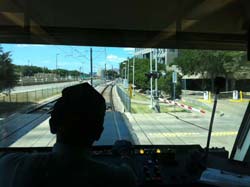
In Texas, Dallas is referred to as The Big D. And like our D, it's a sprawling metropolitan region ringed by suburbs and freeways, and deeply in love with its cars. We are talking oil country after all. Despite that, the city also has a growing light rail system with over 70 miles of track. So, why them and not us?

Next stop: Dearborn. New train station pulling in

Construction on a new train station in Dearborn could be weeks away now that several key agreements are signed.The $28.2-million project formally known as the Dearborn Intermodal Passenger Rail Facility will be located on Michigan Avenue west of the Southfield Freeway and replace an old, outdated station that takes riders across the railroad tracks.The new station will feature a bridge over the tracks."The bridge will be a safer way to cross," says Barry Murray, Dearborn's director of economic and community development.The new station will be served by Amtrak and provide quick access to some of the city's top institutions, including Henry Ford Hospital, The University of Michigan at Dearborn, The Henry Ford and Greenfield Village, and the west end of downtown.Murray says conference calls this week with federal rail officials will hopefully result in the release of the federal funds that are part of an economic stimulus grant.Key agreements that were reached and required for the release of the money include the hiring of the architectural firm, Neumann Smith, and the construction manager, Tooles & Clark."We're very hopeful the grant will be obligated sometime very soon, maybe 30 days is a good number to put on it," Murray says. "It's really hard to say for sure. We've been saying 30 days for a long time, but I think we're really close."Source: Barry Murray, director of economic and community development, city of DearbornWriter: Kim North Shine

Our Partners

City of Oak Park

Don't miss out!

Everything Detroit, in your inbox every week.

Close the CTA

Already a subscriber? Enter your email to hide this popup in the future.