
How Talent Together is helping solve the teacher shortage
In response to statewide teacher shortages, Michigan has invested in alternative routes to teacher certification. One program, Talent Together, helps Metro Detroiters realize their dreams of becoming teachers by providing a free education and a paid student-teaching experience.
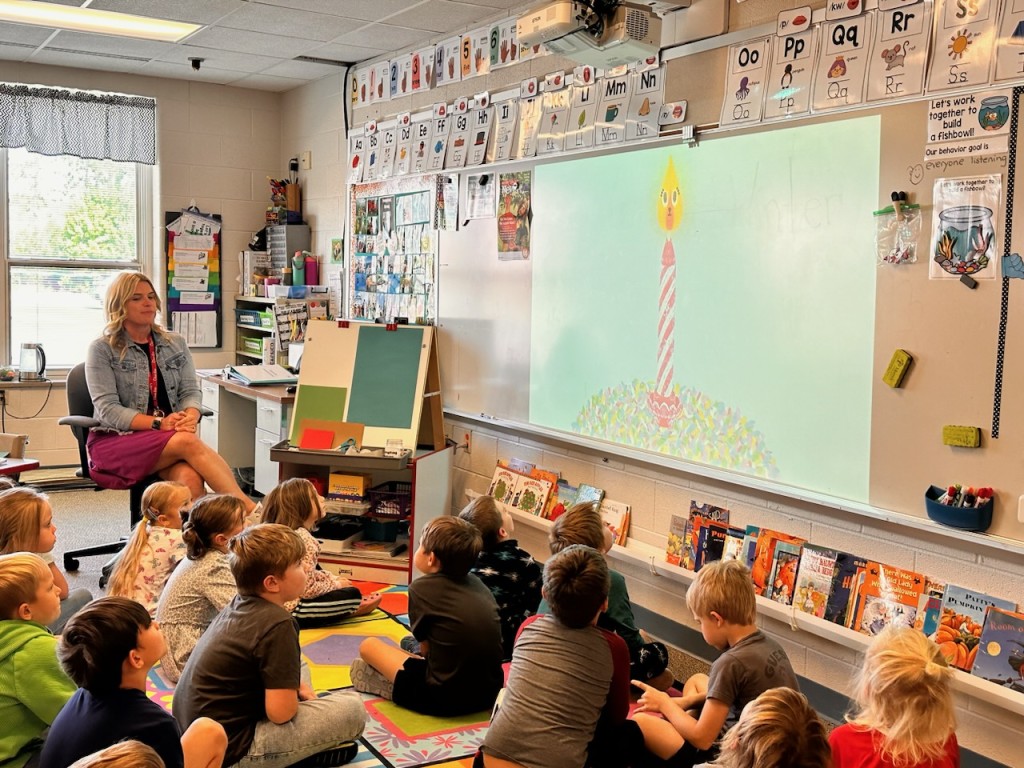
For years, Michelle Harrington had dreamed of being a teacher. But life got in the way; she couldn’t afford the cost of a master’s degree, and she needed to work at her corporate job to provide for her family.
Then, she read a news article about the alternative teacher certification program Talent Together, which allows candidates to go to school for free while earning an income. She applied.
After finishing her coursework and student teacher apprenticeship, she will graduate from Davenport University this school year with her teaching certificate. Harrington will step into her own classroom in Roseville Community Schools this fall.
“I’m looking forward to putting my own personal touch on my classroom and developing relationships with the kids,” she says. “I’m excited for it.”
Teacher shortages fueled by high turnover, decrease in new candidates
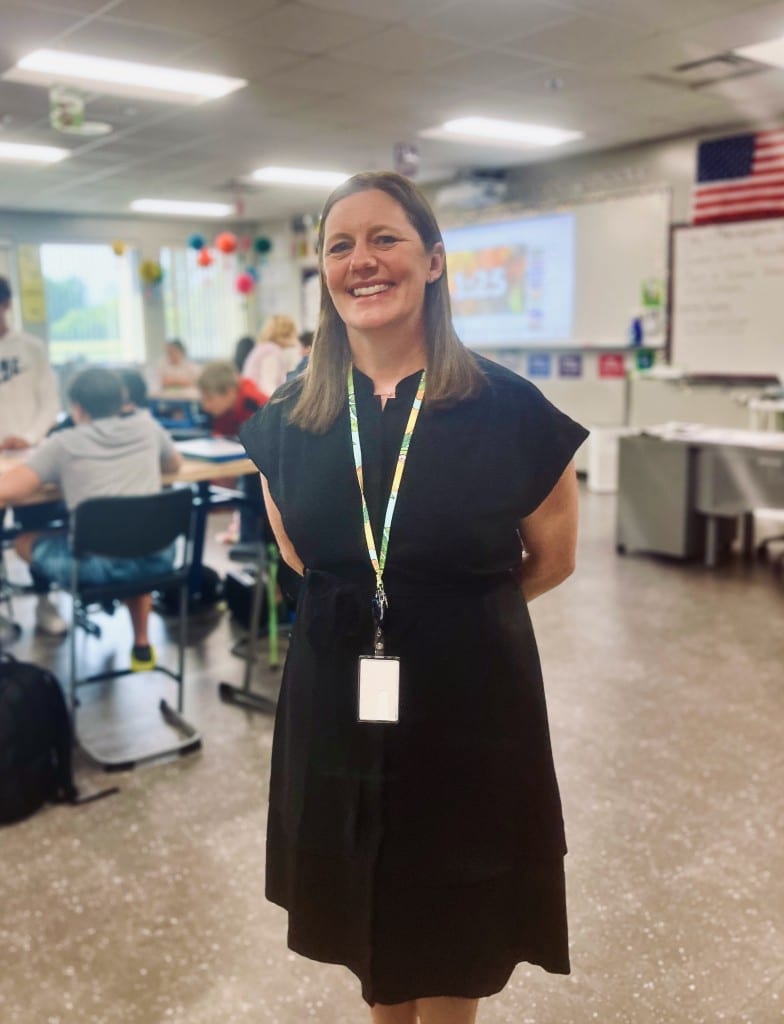
Michigan – and most other US states – is facing a shortage of qualified teacher candidates, says Michigan Department of Education (MDE) spokesman Kenneth Coleman.
In fall 2024, there were 441 teaching vacancies in the state, or 3% of all teaching positions, according to a report from the Education Policy Innovation Collaborative (EPIC).
Teacher shortages disproportionately affect special education, urban and rural areas, charter schools, high-poverty communities, and students of color.
And, while Michigan certified more teachers this year than at any time in the past decade, stubbornly high turnover rates mean the number of new or returning teachers barely keeps pace with those leaving the field, according to the EPIC report.
The high cost of a bachelor’s or master’s degree in education and low starting salaries would deter would-be teachers from ever entering the pipeline. Teacher preparation enrollment fell 59% between 2011 and 2012 and 2016 and 2017, creating long-term shortages, Coleman says.
In recent decades, cuts to once-prized benefits such as pensions and health insurance further discouraged would-be candidates, says Roseville assistant superintendent Peter Hedemark.
“People are looking to exit university, and they have a choice to make,” he says. “Do I take up a career that, when I exit university, I’ll make a living wage? Or do I take up a career that, when I exit university, I won’t be making a living wage? That’s the problem.”
In the education field since 1988, Hedemark says he has seen a noticeable drop in recent years in the number of qualified candidates for open positions. In the fall, the district already has open positions for Spanish and math that he anticipates will be difficult to fill.
At the same time, heavy workloads and burnout due to lack of support are pushing teachers to leave the profession at a rate far higher than before the pandemic, Coleman says.
How do school districts cope with teacher shortages?
To fill gaps, school districts are increasingly relying on teachers who lack full teaching credentials: long-term substitute teachers, teachers still working on their certification, or teachers teaching a subject outside their certified subject area, the EPIC report states.
When positions become difficult to fill the traditional way, Hedemark says he usually leans on word-of-mouth referrals or helps staff who are employed in other positions find an alternative route to certification. Often, he finds people who are switching careers later in life.
Research has shown that having a certified teacher with specialized training in the area they teach increases student achievement, the EPIC study states.
“There are more underqualified or out-of-field teachers serving students. These teachers often require additional district support to be successful,” Coleman says. “Class sizes often increase, providing less opportunity for individualized student instruction.”
State investments in teacher training

To grow its supply of teachers, Michigan has invested in “Grow Your Own” alternative teacher certification programs, which provide funding and a framework for local districts to provide faster routes to teacher certification for workers with a bachelor’s degree.
MDE has also provided scholarships, loan repayment, and stipends for student teachers as financial incentives. Policies have shifted to improve reciprocity for out-of-state teachers, develop a rural credentialing hub, and expand data tracking for better workforce planning.
A “Grow Your Own” program, Talent Together covers trainees’ full cost of tuition and fees and provides a yearly stipend for technology and materials. The nonprofit’s success navigators match candidates with a program through one of 19 partnering Michigan colleges or universities, providing guidance and support along the way.
Program length varies based on each candidate’s path – some only need a master’s or certification program, while others complete a four-year bachelor’s degree, says Pamara Sanders, southeast regional program director for Talent Together.
Online classes eliminate barriers to in-person attendance and allow candidates to tailor their classes to fit their schedule, Sanders says.
Talent Together apprenticeship provides income, real-world experience
While attending school, candidates also complete a paid one-year apprenticeship alongside an experienced mentor teacher at one of more than 400 Michigan school districts.
That apprenticeship includes U.S. Department of Labor-approved standards that trainees must demonstrate proficiency in throughout the school year.
Sanders says the apprenticeship is designed to gradually increase trainees’ roles and responsibilities in the classroom, allowing them to learn key teaching concepts and then practice them through real-world experiences.
“When they start off, the apprentice teacher is observing; the mentor teacher is modeling. There’s a lot of conversation and planning. As the school year goes on, it’s a gradual release,” Sanders says. “(The apprentice teacher) will start co-teaching, and then by spring, that apprentice teacher is fully leading the classroom.”
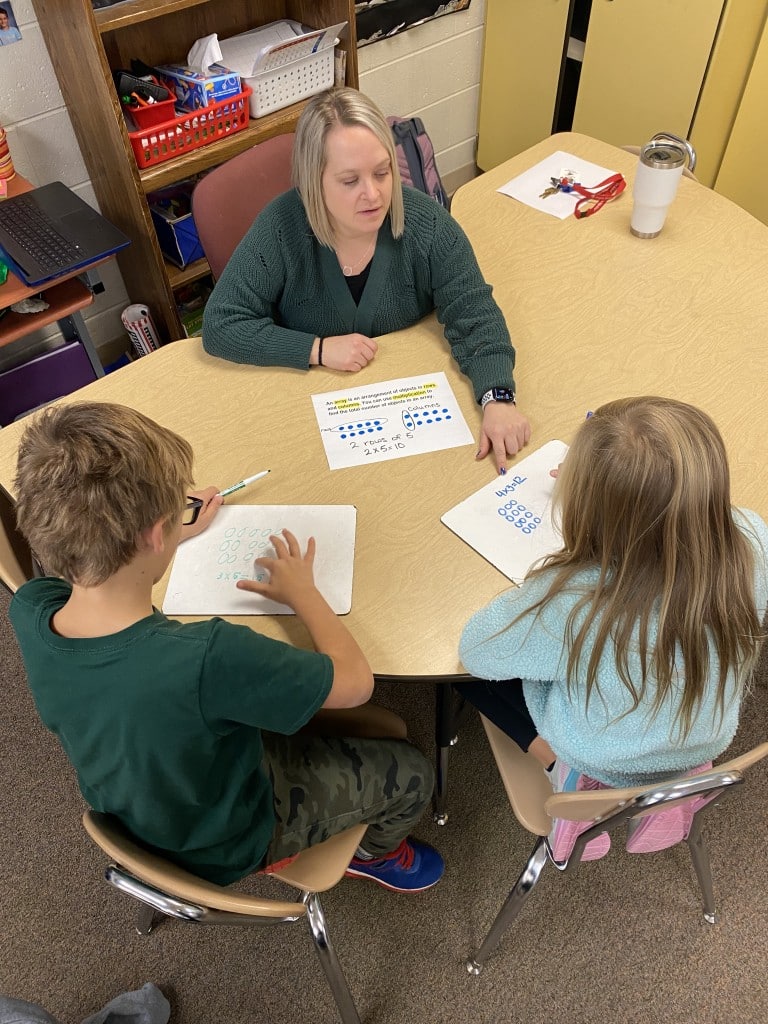
Harrington says she has learned valuable skills observing and working alongside her mentor, math teacher Sean LaForge.
She says she was happy the apprenticeship was a full school year, rather than half of the year, as most traditional student-teaching assignments are. It allowed her to see students’ behavior changes and build meaningful relationships throughout the year.
“I get to observe a lot of people,” Harrington says. “I get a lot of ideas and things that I can take with me going into my career next year.”
Hedemark says the apprenticeship allows the school to vet a candidate before hiring them as a certified teacher, ensuring both parties are a good fit, he says.
“You’re invested in (the teacher candidates). They’re invested in you. They know the community. They know the kids. They’re already connected to a school. They’re part of the family, if you will,” Hedemark says. “You’re not hiring somebody based on a couple of interviews and looking at a resume; you’re hiring somebody based on multiple hours of work with your students.”
Who are Talent Together teacher candidates?
Sanders says candidates usually work in a school already as a substitute teacher, paraprofessional, office manager, or other staff member.
Including Harrington, Roseville has three teachers who are products of Talent Together, Hedemark says. The other two previously served in the district as substitutes or paraprofessionals and became the teacher of record while finishing their coursework.
As of mid-April, there were 27 Talent Together alumni or trainees in the Macomb Intermediate School District, and 147 in Oakland Schools, Sanders says.
Statewide, Talent Together is expecting more than 300 newly certified teachers by the end of the 2025-26 school year, with 985 active teacher candidates currently in the program, according to its website.
Since its inception in 2023, nearly 7,000 people have applied, and approximately 3,700 candidates have been accepted. More than 1,200 new Talent Together teachers are expected to lead Michigan classrooms by 2029.
“The myth is that there are people who are uninterested in becoming teachers nowadays,” Sanders says. “It’s not that people don’t want to become educators, but there are just too many barriers in the way of them becoming educators. And so, for that comes Talent Together in an effort to reduce or eliminate the barriers that individuals who are interested in the field would face.”
Interested in applying? Visit mitalenttogether.org/apply/ to apply as a teacher candidate or mentor.
Author

Related Articles

Is PreK for All meeting its goals?
Roadmap co-author encouraged by how the state is expanding its Great Start Readiness Program into universal pre-K.
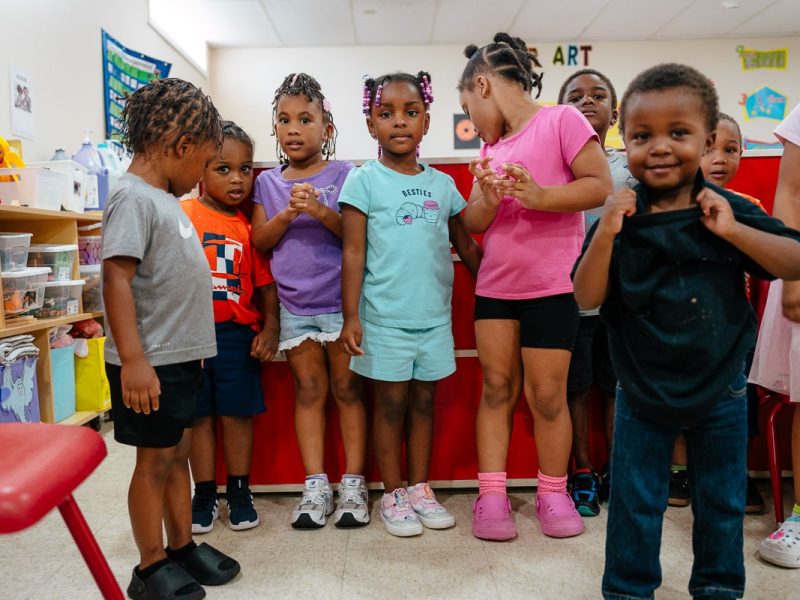
Michigan’s free universal pre-K program could serve 70,000 4-year-olds this school year
Launched in 2023, PreK for All now has no income qualifications.

Free Wonderschool platform will help Michigan families find childcare faster
Scheduled to launch early 2027, the platform will connect parents to available childcare and preschool spaces with one application.


