
EDGE Spotlight: Electrifying the Auto Industry
One year ago, the American auto industry was facing possible liquidation while the North American International Auto Show was shopping around for a new home. What a difference a year makes.
 One year ago, the American auto industry was facing possible liquidation while the North American International Auto Show was shopping around for a new home. What a difference a year makes.
“The good news is that it’s a great show,” said U.S. Rep. John Dingell, D-Dearborn. “The better news is that it demonstrates we’ve had comeback here in Detroit.” Dingell said the American automobile industry, with the cooperation of the federal and state government, is producing extraordinary automobiles and even more extraordinary models and new technologies.
A lot of the buzz at the auto show, not surprisingly, came from Electric Avenue, a 37,000-square-foot area on the main floor that showcased electric vehicles and technology from both established automakers and innovative entrepreneurs. In total, nearly 20 advanced vehicles were featured. Auto show visitors were given the opportunity to test drive electric vehicles on an indoor track.
“I don’t know how practical some of these one-seaters are,” said Mike Roddy, of Toledo, who hasn’t missed the auto show in years. “But some of these other vehicles like the Focus are really cool.”
Visitors also mingled with representatives from advanced battery manufacturers including A123 Systems and Dow Kokam. Other electric vehicle battery recyclers and makers of electric vehicle charging stations like PEP Stations, LLC, a Livonia-based company, were also on hand to demonstrate their new products.
“So we are not looking at the past but now focusing on the future,” Wayne County Executive Robert Ficano said from the auto show. “That’s what the hybrid and electric vehicles and the battery pack are all about.”
The Driving Forces Behind Electric Vehicles
The emergence of the electric vehicle industry during the past year was the result of an 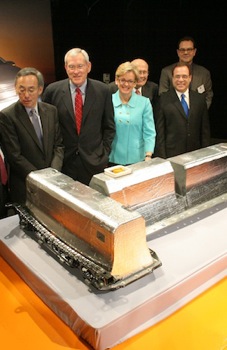 unprecedented partnership between government and private sector. Grants from the federal government as well as additional incentives provided by the State of Michigan helped the region land some of new players in the industry. Leaders point to the state of Michigan’s $700 million battery tax credits and the U.S. Dept of Energy’s $1.3 billion in battery technology grants as the two biggest factors behind the flurry of advanced manufacturing investments.
“Last year at this very auto show I signed into law $700 million worth of tax credits to make Michigan the place for research, development and production of the battery,” said Gov. Jennifer Granholm. “I feel like this is an entire new day, there’s a new spirit here because we know the auto industry is back.”
Impact on Wayne County
Wayne County has been a major beneficiary of new investments related to battery technology and electric vehicles. Major investments were announced during 2009 and at the beginning of 2010 that indicate that the region will be major center for the emerging electric vehicle economy.
Last April, A123 Systems, a company that supplies lithium-ion batteries for electric cars, announced it would open a headquarters in Livonia and create 300 jobs. One of the strong incentives that attracted A123 to Wayne County was the County’s TURBO program (Transforming Underdeveloped Residential and Business Opportunities), which offers property tax abatements to businesses or residents investing in real property. In addition A123 announced January 14th that they are moving their North American coating operations to a 300,000 square foot facility in Romulus. A123 executives believe the facility will be ready for production during the first half of 2011.
In May, Ford Motor Co. announced it was investing $500 million to convert its Michigan Assembly Plant from manufacturing Expeditions and Navigators to the new battery-electric version of the Focus. The re-tooled plant will retain at least 2,000 jobs. And at the 2010 NAIAS, Ford CEO Bill Ford Jr. announced that the company was moving production of battery pack assembly from Mexico to Michigan, creating an additional 1000 new jobs. Battery production will also be located at Michigan Assembly in Wayne with a total investment of $450 million.
“What we are doing in electrics is a big deal for our company, for our community, frankly for our country,” Ford said.
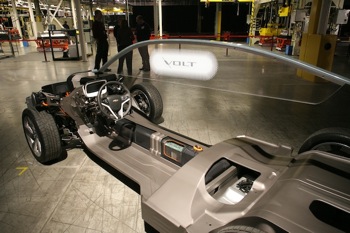
 Finally, in early January, just before the auto show, General Motors produced the first lithium-ion battery at its new facility in Brownstown Township. The 160,000 square-foot GM Brownstown Assembly plant will assemble batteries for GM’s electric cars including the Chevrolet Volt, with final assembly of the Volt taking place at the Detroit-Hamtramck plant.
“Our investment in Michigan is a sign of our commitment to this state,” said GM CEO Ed Whitacre. “It’s also a sign of our commitment to our customers who want clean and efficient vehicles.”
The Road Ahead
Michigan State University recently produced a study of the battery sector in the state and determined that the battery manufacturing and supply chain activities could create 40,000 jobs in Michigan by the year 2020. Still, the United States has some ground to make up, according to U.S. Secretary of Energy Steven Chu.
“Right now, 99 percent of the batteries that power America’s hybrid cars are made in Japan,” the Secretary said. “America has fallen behind the race to build the cars of the future.”
But it’s a race the United States is positioning to take the lead in, if this year’s 2010 North American International Auto Show is any indication.
Pat Dostine is a Project Manager for EDGE and the Wayne County Communications Team.
Related Articles

Partner Partner Content How Downtown Farmington is Balancing 40 Years of Legacy with a New Era of Social Entrepreneurship
In downtown Farmington, the shift from late spring to summer heat brings more than just patio dining and farmers’ markets; it’s ushering in a change in how businesses and the community work hand in hand.

Metro Detroit Death Doulas Want You to Talk about Death
Death Doulas in Metro Detroit are working to change how people approach the end of life — with less fear and more understanding. It can be a tough sell in a culture that largely avoids talking about death, but with the right support and guidance, these non-medical advocates promise life’s final chapter can be rich and rewarding.
How Talent Together is helping solve the teacher shortage
In response to statewide teacher shortages, Michigan has invested in alternative routes to teacher certification. One program, Talent Together, helps Metro Detroiters realize their dreams of becoming teachers by providing a free education and a paid student-teaching experience.


