
An Oakland County nonprofit is brewing success for immigrant entrepreneurs
Immigrant business owners and entrepreneurs can help revitalize and sustain Michigan’s economy.

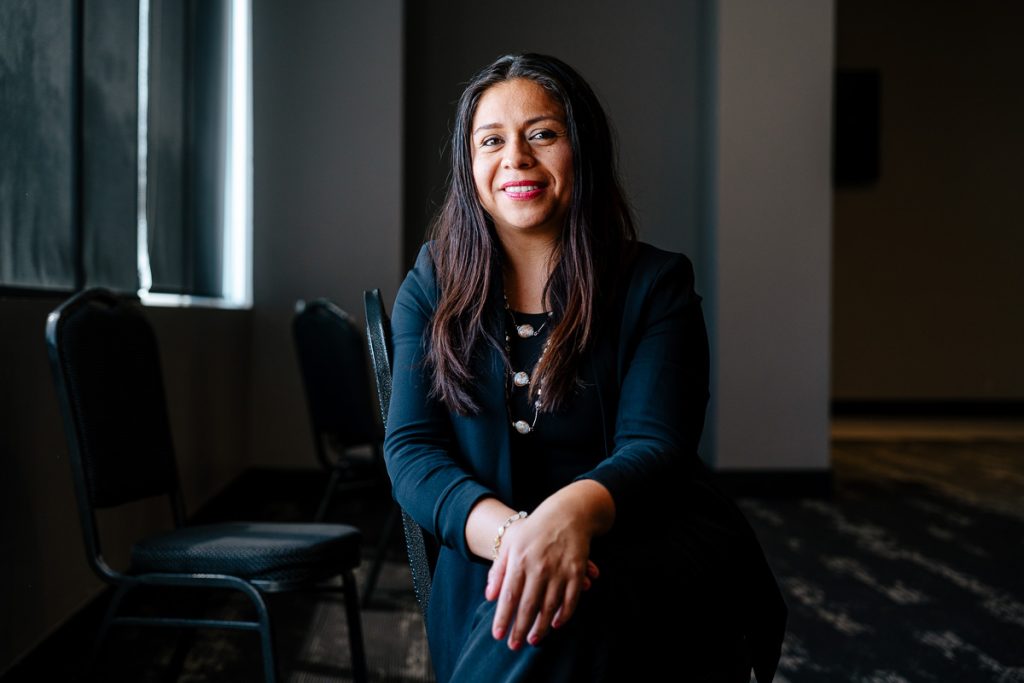
On a recent April morning in an office in Pontiac, where her pop-up normally operates, Marian Esnoval measures the grounds of Chiapas coffee beans, which have a vibrant, cherry-red color.
Esnoval, who founded pop-up coffee retailer Cafetal Coffee exactly one year ago, began her journey as an entrepreneur at home among the trees and people of the Mexican highlands. The coffee beans Esnoval sells are often grown by Indigenous, rural communities in parts of the country’s Chiapas region where the soil is rich.
Esnoval had a vision that turned red coffee beans into a lifeline for her family and the community that raised her.
“When I started, all I had was an idea, and my main purpose was to help people,” Esnoval says. “But I didn’t know anything about planning a business, or even setting up your price points correctly for retail.”
When Esnoval immigrated to the United States, she settled in Florida. She left the sunshine state for the unfamiliar winters of Michigan, arriving in 2020 just as the COVID-19 pandemic began to reshape the world.
Immigrants like Esnoval are determined to grow their businesses but often need access to resources.
Then Esnoval joined the Global Resource Program at Oakland Thrive, a nonprofit organization based in Pontiac, Michigan. The program aims to help new immigrants, refugees and asylum seekers start their own businesses.
Since 2023, Oakland Thrive has been ensuring that the next generation of Michigan’s business leaders, who come from countries across Latin America, the Middle East, Asia and Africa, can turn their ideas into something meaningful to the community.
To date, hundreds of participants have successfully completed the program, says Sairy Garcia, the manager of the Global Resource Program who helps immigrants navigate the complexities of Michigan’s business landscape.
“It’s a beautifully diverse community, and each business brings its own story, culture and resilience into the ecosystem.”
Providing blueprints for immigrant business growth
In 2022, immigrants made up roughly 11% of the state’s business owners, even though immigrants represented about 7% of the state’s population overall, according to a report from the American Immigration Council. Immigrants in Michigan were about 36% more likely to become entrepreneurs compared to their U.S.-born counterparts.
Many immigrant entrepreneurs came to the state from Mexico, Iraq, India, Albania, and China, the report finds. About 46,200 immigrant entrepreneurs in Michigan generated $1.4 billion in business income.
These contributions help places like Oakland County.
“The county faces unique economic challenges, including a need for diversified small businesses that can withstand global market shifts,” Garcia says. “Immigrant-led businesses bring a level of creativity and resilience that naturally fills gaps in our local economy.”

“After 2022, as many communities continue to rebuild and adapt, we’ve seen immigrant entrepreneurs step into spaces where there may have been limited investment or attention. They are opening businesses in areas that need revitalization, bringing life back to commercial corridors,” Garcia adds.
But the transition from start-up to running a legitimate business is often filled with predatory “big corporation” practices and daunting bureaucratic hurdles.
The Global Resource Program was designed specifically to address these challenges, offering mentorship to those unfamiliar with American marketing strategies or the legal requirements for trademarks and business plans.
The program also provides newcomer entrepreneurs with specialized training tailored for those with professional qualifications acquired outside the U.S. These resources include personalized one-on-one business consultations.
This support is matched by partnerships with organizations like the Michigan Hispanic Chamber of Commerce and the Asian Pacific American Chamber of Commerce. Garcia says these collaborations allow Oakland Thrive to co-create programming that is more relevant and accessible, ensuring that the Blueprint Cohort, a specialized business training track, reflects real community needs.
The program currently supports a wide variety of businesses. Garcia notes she is inspired by the business growth she has seen.
“Hospitality and retail continue to be some of the most popular sectors,” Garcia explains.
“We’re also seeing growth in service-based businesses, construction, beauty and wellness and professional services.”
Garcia emphasizes that the program aims to help participants overcome barriers to building viable and sustainable businesses.
“On the financial side, many entrepreneurs are navigating systems that are completely new to them, understanding credit, accessing capital, managing taxes or even opening the right type of business bank account,” Garcia says.
“Language can also be a barrier. That’s why offering consultations in multiple languages is so important. I’m able to support the Hispanic community in Spanish as Spanish is my first language, creating a space where clients feel comfortable and confident.”
For Garcia, an immigrant from Mexico, the mission is personal.
“This program truly lives in my heart. Building trust is paramount; we [immigrants] don’t trust easily,” Garcia says.
Program participants “feel confident talking about their business and their story.”
“I love what I do. I feel really passionate about working with these types of small businesses because sometimes we think that those resources are not available for us,” Garcia says.
Community collaboration across borders
What started as a personal search for a “piece of home,” the specific flavor of coffee from her father’s hometown in Mexico, eventually drove Esnoval to create Cafetal Coffee.
In addition to organizing pop-up events in Pontiac, Esnoval sells bags of fresh beans online, interacting with customers through direct messages on Instagram. Her beans are also featured at cafes like Alba in Detroit’s Corktown neighborhood.
Bags of coffee beans range in price. A 100-gram bag costs $10.00, and a 340-gram bag costs $21.99. A 250-gram bag of specialty coffee sells for $24.99. Each coffee package highlights a different Mexican state. For instance, the Nayarit Single Origin beans offer a blend of honey, almond, and yellow plum. Nayarit is a state on Mexico’s western coast, bordered by the Sierra Madre Occidental mountains and the Pacific Ocean.
Esnoval made her coffee business official in 2023, with support from mentors at Oakland Thrive. The mentorship helped accelerate Cafetal Coffee’s growth, instrumental in shifting her mindset.
“Right now we are at the point that I’m in the process of getting my trademark, and that was something that I didn’t even think about,” she says.
“I was thinking more along the lines of a mom and pop shop, ignoring the impact my coffee can create in the community.”
Immigrant-owned businesses often serve as cultural bridges, and Esnoval is bringing international trade connections to metro Detroit with Cafetal Coffee. Economic benefits are felt on both sides of the border. The mission became clear after Esnoval discovered her own cousin, a coffee farmer in Chiapas, was struggling against large corporations that lock small farms into long-term contracts at minimum pay.
“I realized that they don’t have those resources to go and try to sell it for better,” Esnoval explains.
By bypassing these third-party “big corporation” loopholes and working directly with farmers from more than a dozen coffee-producing states across Mexico, Esnoval ensures a percentage of every sale is reinvested directly into these communities.
This “radical transparency” funds essential needs like electricity and water, and most recently, allowed her to deliver laundry machines to a group of woman-owned coffee farmers this past January.
As Cafetal Coffee celebrates its first anniversary, its goals have shifted from survival to scaling. Esnoval’s vision of “conscious consumption,” which is rooted in ethical and environmentally-conscious labor practices, is exactly the kind of gap-filling Garcia sees as vital for the county’s future. And Esnoval plans to visit the very farms in Chiapas that fueled her journey.
Esnoval is grateful for Garcia’s mentorship, and the two women share a special bond.
“I always tell her that she has been my angel,” Esnoval says.
Point of Entry is a series exploring the lived realities and vital contributions of immigrant communities across Southeast Michigan. This is a collaboration with New Michigan Media, supported by the Community Foundation for Southeast Michigan. See more stories from this series here.
Author

Related Articles

Thumb Art Spark initiative connects artists, communities, and businesses ahead of 2027 public art celebration
Planned for September 2027, the Thumb Art Spark Celebration will bring communities across the region to highlight existing public art, showcase new projects, and give residents and visitors new ways to explore the places where they live.

Small Business Social Hours foster success through face-to-face connection
Why face-to-face networking opportunities are even more important for small businesses and entrepreneurs.
Micro forests attract not only birds and bees but Metro Detroiters, too
Whether you call them micro, mini, or pocket forests, they are taking root around the world — and in metro Detroit. They help the environment, provide refuge to native species, and respite to people seeking green spaces — especially in urban areas.


