
U-M Dearborn’s Virtual Game Face
The future is both virtual and digital. With computer gaming quickly becoming the cultural and technological linchpin to modern society (it’s a $10 billion business), U-M Dearborn has developed a highly respected program that is turning out the next generation of game coders.
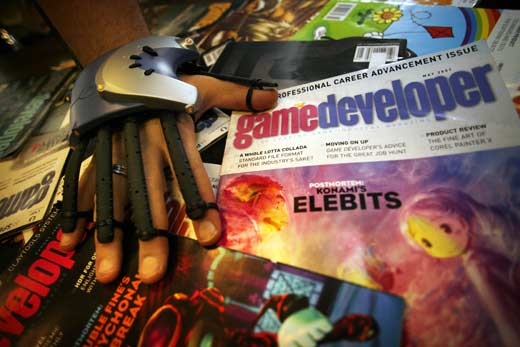 PSP, X-Box 360, Second Life, Call to Duty, and Nintendo Wii — to most people, these are household names. But how many consider the programming that goes into making them? Well, right here in Dearborn, Michigan, students speak the language of code and are learning how to create the very games that have revolutionized the way we play, socialize and in many cases, work.
The Gaming curriculum that is part of the Computer and Information Sciences Department (CIS) at University of Michigan-Dearborn, led by Dr. Bruce Maxim, is sending graduates into this high-tech world with great success and is capturing the attention of the next generation of gaming professionals as well. 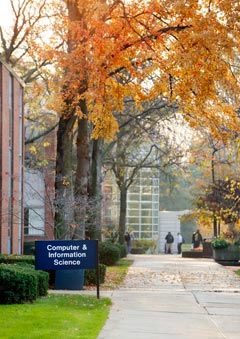
The CIS department is part of the College of Engineering and Computer Science at the Dearborn Campus and is one of the top-rated, accredited programs in the country. Dr. Bruce Maxim, who also runs the Games and Multimedia Environments (G.A.M.E). Lab, describes the gaming curriculum as just one component of the CIS dept., which has a main objective of creating well-rounded engineers.
Maxim taught his first game design course at the university in 1991 and hasn’t looked back. The success of the course and interest in it from students fostered a way to integrate game design into the overall curriculum of the CIS department. The CIS curriculum is the backbone and key to the program, especially since there is no Fine Arts department at the Dearborn campus, which is where students at other universities with game design programs would take their design courses. Instead, at U-M Dearborn, undergraduates must be enrolled in the CIS department so that they receive the core engineering training including programming, computer languages like C++ and C#, and courses in Game Design, which include programs created in collaboration with the College of Creative Studies.
“In the early days of the program, there were too many open electives, so we created six selective tracks for the game design curriculum,” says Maxim. Those tracks are: Game Programming, Game Design, Computer Graphics, Computer Animation, AI and Film/Multi-media, and the program overall hits the benchmarks for 80 to 85 percent of the International Game Developers Association curriculum frameworks; there is also a separate track for graduate students in the program.
The gaming curriculum, along with the core curriculum of the CIS department, delivers the “skills that are the kinds of things that can attract peopl e to high-tech fields,” says Maxim. And the program does—the department boasts many success stories among its alumni and alumnae who have gone on to work for top companies in a variety of fields. One alumnus, Austin Krauss (MSSE ’05) is just one example. Krauss is a software engineer with Treyarch, a game development studio wholly owned by Activision Blizzard—the world’s largest video game publisher. (Many of us probably remember playing such Activision games like Pitfall as kids, and today, whether you have kids or not, you’re well aware of the popularity of Guitar Hero series, one of the company’s best sellers.) At Treyarch, Kraus is responsible for implementing many of the same concepts that will ultimately be experienced by the end consumer such as enemy AI (artificial intelligence), player controls and weapons, multiplayer game modes and UI (user interface) design.
Kraus describes the education he received in the CIS G.A.M.E. program as “beneficial from both a tech and team management perspective.” Kraus states: “The CIS curriculum [is] current with industry technology trends and the group work encouraged by the program prepared me for the team structure and work environment employed by the video game industry.” Kraus was particularly attracted to the software engineering program because he never fancied himself a particularly strong programmer, but enjoyed more of the overall design and management of software development. His praise for the program and current work in the field is a testament to the program’s curricular and practical strength. “
Several of the elective classes in the program focused on video game development. These classes encouraged students to work together to design and implement video games that addressed a particular engineering discipline. This type of collaborative experience is vital in the video game industry, as most games’ successes are attributed to a strong team of people working closely with one another to create the final product,” Kraus states.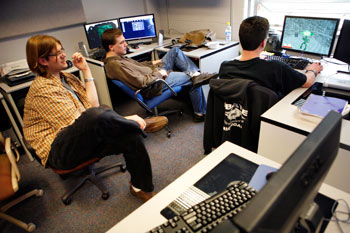
This type of collaboration and hands-on experience is something that students get not only in Dr. Maxim’s G.A.M.E. lab, but through the internships and senior design projects that students have access to through local companies. Senior projects can account for the equivalent of $30,000 to $80,000 worth of “free” programming (per project) to meet the programming needs of the companies that work with the department. Local industry supports and trusts the work coming out of the students and alumni of the CIS department—another testament to the program‘s strengths and the viability of high-tech and computer and information science careers in the state.
While there are only a handful of game design companies in the Metro Detroit area, such as Reactor Zero in Ann Arbor and Stardock in Plymouth, alumni still find themselves employable not only directly in the gaming industry, but in other industries including defense work, the medical field, aerospace, the automotive field and multimedia—worldwide and in Michigan. And with Michigan looking to embrace new economy sectors, having such a program here at home means greater opportunity to keep its alumni talent in the state and perhaps attract companies that need such talent to Michigan. As an alumnus and expert in his field, Kraus believes that this couldn’t be more true. “It’s always great to see a university, especially one as well-known as U of M, branch out to exp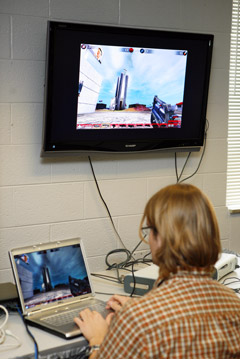 lore emerging industries. UM has definitely found an untapped market of motivated students eager to learn the engineering and artistic foundation behind the creation of video games. Although these types of programs aren’t unique, several exist in California, Florida, and Texas for example, they are relatively new to the Midwest. The programs in Michigan (specifically UM and MSU) are in an advantageous position to bring young talent to the Michigan area,” Kraus says.
Attracting talent to the world of high tech and gaming isn’t limited to the college-set. The CIS department actively works with high school students and other pre-collegiate youth who are interested in video games, gaming technology and learning about how some of their favorite pastimes work.
Through programs such as Torque—a game engine for the educational sector—kids with a valid high school or college ID can do things like make 2-D games for their X-Box 360s using a WYSIWYG (what you see is what you get) editor. For those interested in finding out how code directly relates to how they want their games or environments function, they can learn that too. For those interested in virtual environments, they can participate in the department’s Second Life project—Campus of Hope/University of Michigan Dearborn—a joint program with Ford Motor Company. The Second Life Island will consist of a Ford, University of Michigan – Dearborn, and Food Drive presence. Second Life® is a 3-D virtual world created by “residents” or members, where one interacts with other residents in the communities or islands created there, and is being used more and more not only by recreational and casual gamers, but across industry sectors for anything from training to meetings to addressing potential scenarios for trouble shooting.
The Campus of Hope/University of Michigan Dearborn will be implemented in 2009 with a goal of not only creating community, but improving hunger awareness in the state and creating a creation of a collaborative community between food banks. While the end goal seems so far removed from what we think of when it comes to the world of gaming — pretending to be your favorite superhero or rock icon, driving the Grand Prix or becoming a member of a Special Ops team with online buddies — the same principals drive it, showing that gaming has a broad range of practical applications. The gaming curriculum at U-Mich. Dearborn is proving that high-tech is hip and that it’s hip to be square.
Erika-Marie Geiss…
Related Articles

Partner Partner Content How West Oakland communities grow without losing what makes them special
Growth can bring new opportunities — and pressures — to small communities. Leaders across western Oakland County share how thoughtful development, historic preservation, and community input are helping them plan for change without losing what makes their downtowns distinctive.

Hazel Park’s annual Art Fair is highlighting over 100 local artists this weekend
This year’s Hazel Park Art Fair, from August 22 to August 23, will feature over 100 local artists, food trucks, yard games, morning yoga, a charity beer tent, and much more.

Oak Park opens new event hub, celebrates years of community investment
Oak Park looks ahead after fulfilling promises to residents on the Elevate Oak Park initiative.


