
Micro forests attract not only birds and bees but Metro Detroiters, too
Whether you call them micro, mini, or pocket forests, they are taking root around the world — and in metro Detroit. They help the environment, provide refuge to native species, and respite to people seeking green spaces — especially in urban areas.
It’s not often city officials are quick to embrace a new idea — especially when it’s something they’ve never heard of.
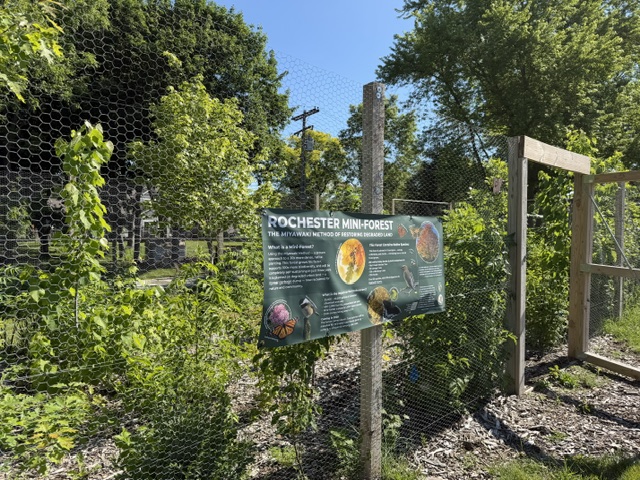
But in April 2024, when Rochester city council member Marilyn Trent pitched the city’s Tree Committee a micro forest on the site of a former garbage dump using the Miyawaki method she’d been studying, there wasn’t much debate, says Nancy Salvia, head of the committee and mayor at the time.
That is, once they knew what it was.
Trent, who founded Rochester Pollinators in 2019 to help save the Monarch butterfly, educated them on the technique developed by Japanese botanist Akira Miyawaki in the 1970s, which has been gaining momentum worldwide.
Microforests, often referred to as mini forests or pocket forests, restore ecosystems by planting dense, fast-growing forests on degraded urban land using only native trees and shrubs. These multi-layered forests, which can be as small as 300 square feet or less, become self-sustaining in just three years.
The density forces the plants to compete for sunlight and nutrients, triggering rapid growth that’s up to ten times faster than conventional single-crop plantings. They mature into fully layered ecosystems with a canopy, understory trees, and shrubs.
The benefits are big. They capture carbon from the atmosphere and lower temperatures by as much as 10 degrees, according to advocates. They filter pollutants and absorb rainwater, which reduces flooding. They also boost biodiversity, hosting hundreds of pollinator species while providing habitats for animals.
It was a no-brainer, says Salvia: “We were all, yeah! Yeah! There’s just no downside to it.”
Rochester Mini Forest Takes Root
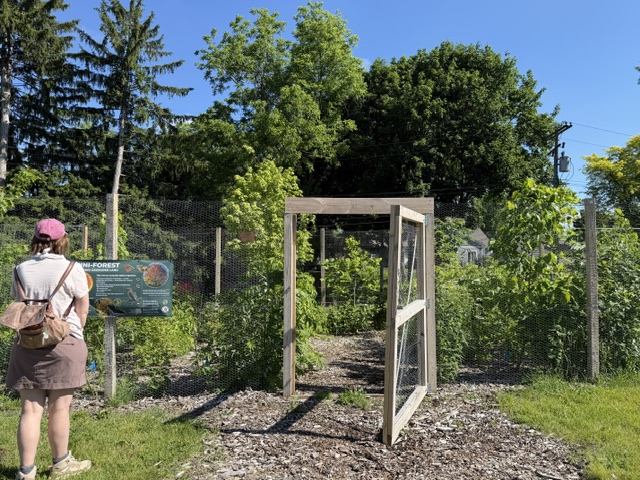
The Rochester Mini Forest was born on May 3, 2025, on a 1,000-square-foot plot near the community garden off Wilcox St. and Woodward Ave. It is the city’s first and one of just roughly five in the Detroit metro area, all of which were, ironically, planned around the same time with no collaboration between them.
That realization spurred Barbara Lucas, a volunteer with Tree Town Urban Forest Team in Ann Arbor, a group devoted to helping the urban forests thrive, to organize a “Meet the Forest Makers” tour in metro Detroit (and later the Ann Arbor area) to learn what everyone was doing. The tour included mini forests in Warren, Sterling Heights, and two in Detroit.
According to Lucas, “Anything is better than grass.”
And so, on a sunny morning on June 7, 2026, about 15 people gathered at the Rochester Mini Forest to poke around the plantings, already looking tall and bushy and surrounded by a fence to protect the forest from deer.
Trent explained the remediation required with the help of the Department of Public Works. They dug down seven feet to remove the trash, mostly glass and metal. Then it was backfilled with leaf mulch, compost, and topsoil to provide the forest with the foundation to thrive.
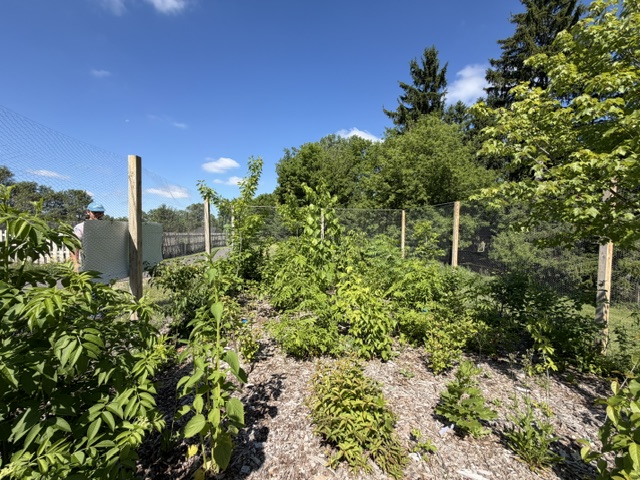
“What you’re looking at is what one year on good soil can do,” Trent told the group, sounding like a proud parent.
She says 36 volunteers showed up to plant 290 native trees and shrubs, including 52 canopy trees, from Oak to Black Cherry to Shagbark Hickory. Nearly all of the forest’s plants are indigenous to Oakland County. It features 10 unique plots of plant communities that existed across the region in different eras.
At the center sits the Mother Tree, a Red Maple, which Salvia is especially fond of. It was planted early, on Arbor Day. “I just love the Mother Tree,” she says. “It communicates with all the other plants in the underground microcosm of fungi.” Trent says the Mother Tree concept comes from Canadian forest ecologist Suzanne Simard, who discovered that large older trees act as hubs in the underground network, sharing resources, communicating warning signals, and nurturing young trees.
For now, Rochester Pollinators and volunteers do most of the weeding while the DPW manages the watering. By 2028, the forest will be self-sustaining.
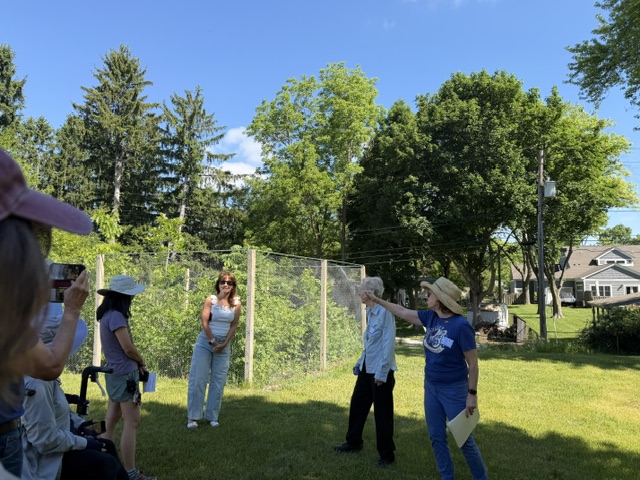
“Nature takes over,” Trent added that at that point, the fence will come down, and two benches will go in for people to practice forest bathing.
Looking back, Trent says the project evolved in ways she didn’t expect. “It became bigger than the forest.” She recalled the volunteers who came to plant — students, retirees, city officials, neighbors who’d never met. “Something happened. People didn’t just plant trees, they connected with each other and with this land.”
These native species are part of our heritage, she says, sustaining the land and the people for centuries. Now, they do more than just grow.
“They reconnect us to something we didn’t know we were missing. A community that remembered what this land wanted to be,” Trent says.
The Greening of a Traffic Circle in Warren
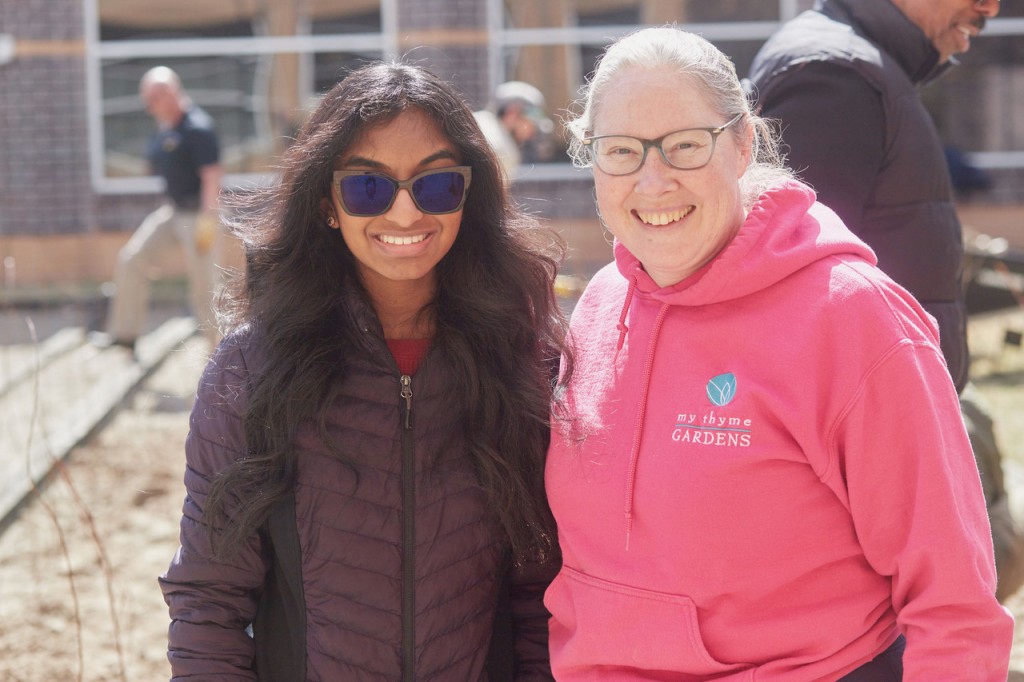
A similar chord was struck later that day, on June 7, at a very different mini forest at the center of a neighborhood traffic circle in Warren. Jennifer Ott, the project’s advisor and designer, choked up as she mentioned the absent teen who spearheaded the project in 2024.
“I felt like it was her story to tell and was sad she couldn’t be there,” says Ott of 17-year-old Nethanya Fonseka, who’d asked Ott to do the design.
Fonseka, who was busy prepping for college, has deep roots in environmental stewardship.
When she was a freshman at the International Academy of Macomb, she founded Plant It Forward, a tree-planting initiative aimed at combating climate change and promoting environmental justice. By 10th grade, she pitched the mini forest to Warren Mayor Lori Stone after reading about the Miyawaki method.
“I was fascinated by the idea that even small urban spaces could be transformed into thriving pockets of biodiversity,” says Fonseka, who was born in Warren.
Stone was sold. “It was not pie in the sky,” she says. “Warren has a lot of pavement and buildings and one of the lowest percentages of tree canopy in the country.”
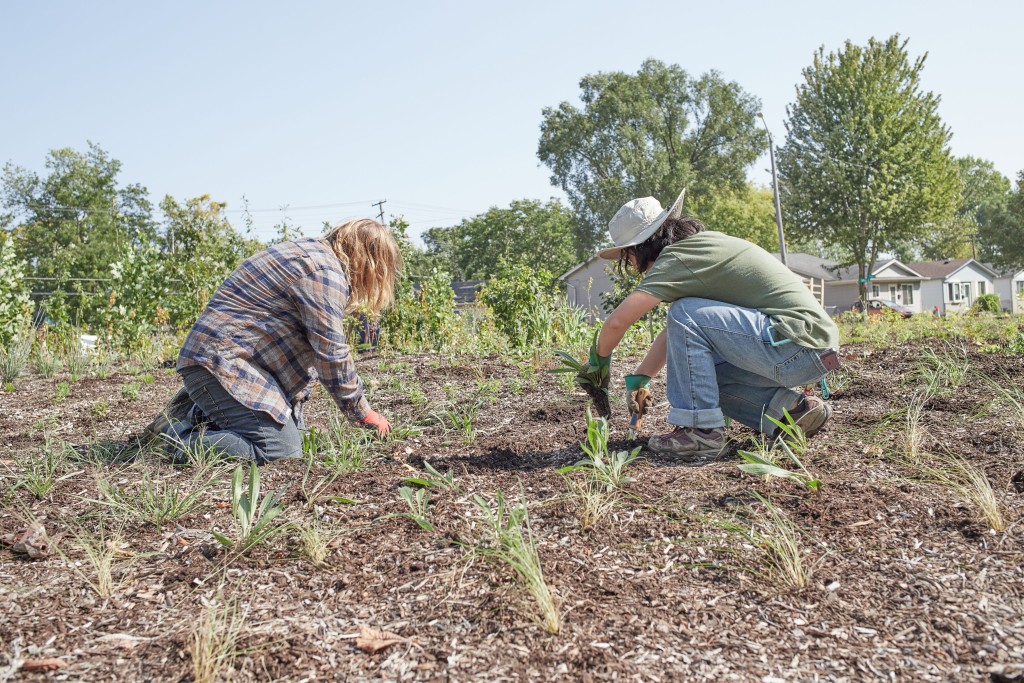
It was also important to involve the community around the mini forest at Julius and Heussner Avenues south of Nine Mile Road (13420 Julius Avenue), she says. “So often they feel they’ve been ignored.”
Stone recalled when the plants went from lush to languid after their September 2025 installation. After the leaves dropped, some residents felt the city got its photo opp and left them with the garbage. “We had to get them to be patient.”
Ott says on the first day of planting. “It was quiet.” Then, at one point, she turned to look behind her. “All sorts of dragonflies were dancing over the property,” she says with delight. By day two? Neighbors were checking it out, and some started to applaud.
By June 7, the 13,000 square foot Warren Micro Forest was bustling with growth as Ott directed the group to various plants among the more than 1,000 trees and shrubs representing 19 species.
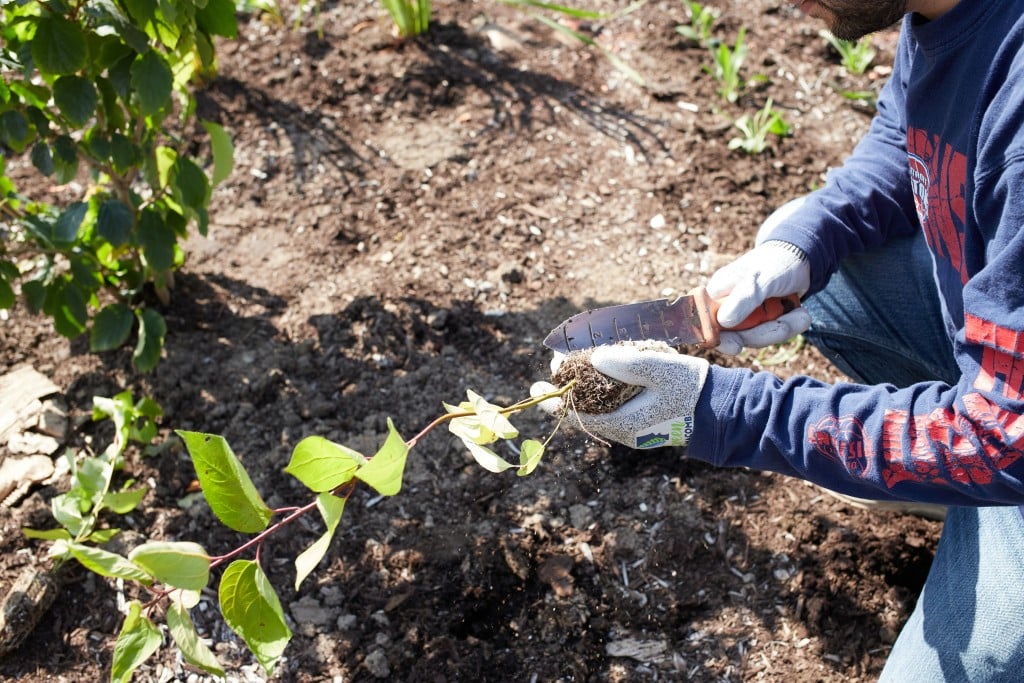
As the mini forest matures, Ott, who owns My Thyme Gardens in Macomb Township, is excited to see what survives. “It’s a harsh environment,” she says of the concrete and salt, even noting tire tracks she found one day. Whether it was an accident or not, Ott is curious to see how nature evolves from the scar. “I love the resistance.”
As for Fonseka. She does not doubt that what she started is in good hands as she leaves to study biological science at Cornell University this fall.
Her wish? “That projects like this inspire others to care for and improve their communities.”
Microforests in the Metro Detroit area:
Rochester Mini Forest
https://rochesterpollinators.org/pages/miniforest-project
Warren Micro Forest
https://mythymegardens.com/warren-micro-forest/
Nelson Park Pocket Forest, Sterling Heights
Pocket Forest at Lasky Recreation Center, Detroit
Kintsugi Village Forest, Detroit
https://www.sugiproject.com/forests/kintsugi-forest
Author

Related Articles
Partner Partner Content Creativity and community come together at Farmington’s new Art Park Promenade
Farmington’s Art Park Promenade connects Riley Park with the Hillside Townes development through a pedestrian-friendly space filled with landscaping, seating, and public art.
Oak Park opens new event hub, celebrates years of community investment
Oak Park looks ahead after fulfilling promises to residents on the Elevate Oak Park initiative.
In Photos: Cranbrook House and Gardens
Take a stroll with Metromode’s Managing Editor as she explores Cranbrook’s House and Gardens.


