Transportation

U-M students spin out Shepherd Intelligent Systems

The eggheads at the University of Michigan are spinning out another start-up from technology riding in Ann Arbor.Excerpt:How Shepherd Intelligent Systems got its start is the way that University of Michigan officials anticipate a lot of future start-ups will launch.The 5-month-old U-M spin-off began as the project of U-M engineering student Jahan Khanna. He was creating software that gives riders the real-time position of university buses and realized it had broad commercial potential. So Jahan teamed up with U-M MBA student Adrian Fortino to start the firm, which now employs four people downtown.Read the rest of the story here.

Latest in Transportation
Oakland U creates more parking within existing space

More parking. It's a refrain that has become the bane of redevelopment in Metro Detroit, a region still chained to four wheels. Providing more parking often comes at the expense of good urban development, if it doesn't scuttle the project altogether. Oakland University has come up with a way to provide it without extending the sea of asphalt.The university, which experienced record enrollment this fall, re-striped some of its parking lots in a more efficient manner. The project, which cost $2,000, created 72 extra spaces. The goal is to give a little extra breathing room for drivers at the commuter campus in Rochester.Among the lots that received extra spaces are the lot at Squirrel Road and Walton Boulevard (26) and along the connector road between Varner Hall and Pawley Hall (23). The rest were scatted on parking lots throughout campus. All of the university's parking areas can be found here.Source: Oakland UniversityWriter: Jon Zemke

Ann Arbor’s Current Motor Co. delivers first electric scooters

Current Motor Co. is looking forward to a bright future making electric scooters in Ann Arbor.Excerpt:John Harding was Current Motor Co.'s first customer before the business even existed.Harding wanted a sustainable electric scooter, but the only ones he could buy were powered by fossil fuels. So he and Erik Kauppi started Current Motor Co. last year on Ann Arbor's far west side."I wanted an electric vehicle," says John Harding, president of Current Motor Co. "I am a motorcyclist as well and a two-wheeler makes a lot of sense."Read the rest of the story here.

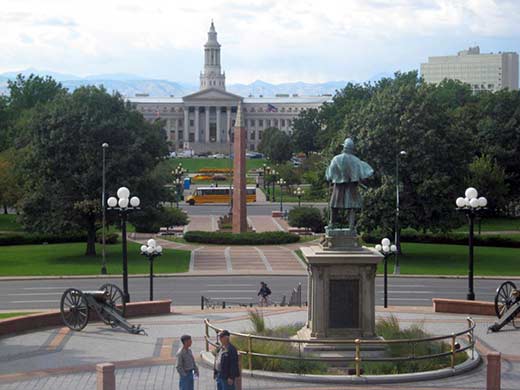
Frontier Spirit, Urban Ideas

Splitting her time between the Motor City suburbs and the Mile High City, Metromode's Tanya Muzumdar sees ideas and innovations ripe for importation. Maybe instead of going it alone, Metro Detroit should consider going West for some urban inspiration.

Smaller cars (not flying) are the future

At a conference on the future of personal mobility held in Ypsilanti, the talk was smaller cars. Due to a massive jump in urbanization, density, and an aging population, cars will undoubtedly get smaller. So, the future is still holding off on flying cars. Excerpt: Currently 40% of Manhattan residents don’t own a car. Many can afford one, but find the cost of ownership too high when public transportation, bicycle lanes, cabs and walking are less expensive. Car sharing is growing in many large cities. Paris two years ago launched a bicycle-sharing program that reportedly saved about 10 million kilometers of car trips. Unfortunately, more than half the original bikes were stolen or vandalized, raising the cost to replace them and to improve security. The other factor encouraging the popularity of smaller vehicles is the desire to contain carbon dioxide emissions, the primary source of climate change. Read the entire article here.

The politics of dirt in downtown Ann Arbor

Downtown Ann Arbor knows how to dig a big hole, but it hasn't figured out where it's going to put the dirt yet.Excerpt:Where to put the dirt? It's a question that's starting to vex downtown Ann Arbor officials as they prep to begin digging one big hole in the ground.The hole is for the Library Lot underground parking deck next to the Ann Arbor District Library. The city has started on some of the work to build a 677-car parking garage underneath a surface parking lot on Fourth Street and to replace some of the surrounding infrastructure, such as sewer and water lines. But the big hole for all of those cars is coming later this year. That means an acre of earth four stories deep has to go somewhere."We're talking about a mountain of dirt," says Susan Pollay, executive director of Ann Arbor Downtown Development Authority.Read the rest of the story here.

Mass transit ridership hits record levels in Metro Detroit

Mass transit ridership continues its climb in Metro Detroit, saving millions of gallons of gas and increasing demand for more effective transportation options.Michigan transit usage jumped 6 percent from 2007 to 2008. All of those bus and train riders helped save 35.6 million gallons of gas, the amount consumed by 61,800 cars. That also equates to 4.4 billion fewer miles driven in 2008 than in the year before, a 5 percent drop, and 321,000 fewer tons of air pollution."People are voting with their feet by driving less and taking more public transportation," says Shelley Vinyard, a spokeswoman for Ann Arbor-based Environment Michigan. These numbers come when Metro Detroit is pursuing plans to dramatically expand and improve its mass transit system, primarily by adding rail lines to the mix. Detroit and Ann Arbor are looking at adding streetcar lines, and there are plans to create commuter rail lines between Detroit and Ann Arbor and north from Ann Arbor to Howell.However, there have also been attempts to cut transportation funding at the local and state levels. Environment Michigan and other groups/local politicians are calling for more funding to meet the growing demand for mass transit."We need more public transit funding so we can provide more choices for the increased demand across the state," Vinyard says.Source: Shelley Vinyard, a spokeswoman for Ann Arbor-based Environment MichiganWriter: Jon Zemke

Alt transportation answers WCC’s parking problem

The conventional wisdom in Southeast Michigan is that more parking always solves the problem. That's not what they're thinking at Washtenaw Community College.Excerpt:Washtenaw Community College is dealing with its highest enrollment ever, which means the commuter campus is experiencing its greatest demand for parking (and lack of supply) ever.Most other Midwest institutions would conclude they need to build more parking. Well, Washtenaw Community College is dealing with the acute parking shortage by asking its students to take the vehicle less traveled – alternative transportation."We still have a parking problem but we're redoubling efforts to alleviate the problem," says Janet Hawkins, director of public relations and marketing for Washtenaw Community College.Read the rest of the story here.

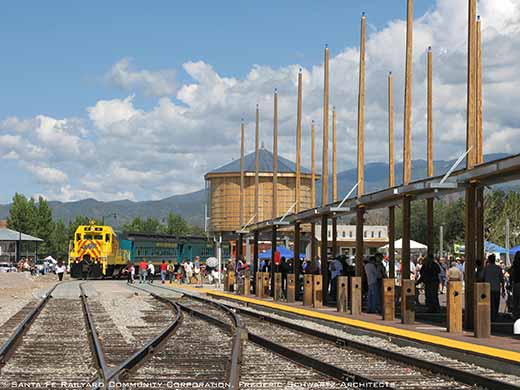
The Rail Thing, Is Metro Detroit On Track?

If you've never heard of transit-oriented development, it really needs a spot on your hot list. With a transit center planned for Birmingham and Troy, Metro Detroit is back to workin' on the railroad. But maybe the new D Train could take a lesson from the Santa Fe Express.

Is the renaissance of train travel upon us?

There's a lot of talk these days about high-speed rail throughout the United States. Unfortunately it'll take more than talk -- like a lot of money and a lot of time -- to realize such a network. But with the support of the Obama administration, the U.S. just might be on course to a train travel renaissance. Excerpt: Despite the controversy, the president is on board (no pun intended). During a speech back in April, Obama praised high speed rail by saying, "Imagine whisking through towns at speeds over 100 miles an hour, walking only a few steps to public transportation and ending up only blocks from your destination." That does sound idyllic, though in small cities, it might not be that easy. Thanks to suburban sprawl, many downtowns, especially in upstate NY, don't offer much in the way of public transportation. If the lines do get built, this would be an easy problem to overcome; zipcars or bike rentals are one option. There's also the possibility that the trains would create a resurgence in downtowns, bringing small business, shops, even upscale housing back to smaller cities. Assuming some of the states who have applied for stimulus money actually receive it and are able to build the high speed lines, it will still be years before they are ready to roll. Guess only time will tell if it will be worth the investment and if we'll, once again, be a country of train-travelers. Read the entire article here.


Our Partners

City of Oak Park

Don't miss out!

Everything Detroit, in your inbox every week.

Close the CTA

Already a subscriber? Enter your email to hide this popup in the future.