
Partner Partner Content Seeking mental health services can be overwhelming. Here’s where to begin
For people experiencing a mental health or substance use crisis, deciding where to turn for help can be overwhelming. Macomb County Community Mental Health offers a range of services designed to help residents navigate those decisions.

Sponsored content written by Macomb County Community Mental Health.
When you’re struggling with your mental health or substance use disorder, you may already feel overwhelmed. In those moments, figuring out where to turn for help can seem especially difficult.
Should you make an appointment with a therapist or counselor? Go to the emergency room? Visit an Urgent Care? How do you know what to do?
Fortunately, you don’t have to figure it out alone. At Macomb County Community Mental Health (MCCMH), we’re here to help you understand your options and find the right place to start.
We offer a range of mental health and substance use services designed to meet you where you are and connect them with the right level of care. Depending on the circumstances, the right starting point might be a phone call, a walk-in visit to Behavioral Health Urgent Care, or an in-person Mobile Crisis response.
You don’t have to know which service is right for your needs before you reach out.
Help Starts with a Call or Walk In
We’re here to listen, help you understand your options, and take the next step with you.
With just a phone call or going to our urgent care locations, our staff can listen to what’s happening, assess the situation, and help determine what type of support might be needed. That might mean talking through what’s happening and figuring out a next step, or it could mean connecting someone with a more immediate response.
If you are experiencing a mental health crisis, having thoughts of suicide, engaging in self-harm or are at risk of physically hurting yourself or someone else, our 24-hour Crisis Line is available at 586-307-9100 or 988 If you’re a family member, friend, or caregiver concerned about someone you care about, you can reach out to us, too.
Behavioral Health Urgent Care: A Place to Start

Sometimes someone needs help right away, but the situation isn’t necessarily a life-threatening emergency. Behavioral Health Urgent Care can provide another place to turn.
Like a medical urgent care center, our Behavioral Health Urgent Care clinics provide prompt assessment and help determine the appropriate level of care. The services are available to anyone, regardless of income or insurance.
After an assessment, you may be connected with a therapist, case manager, medication support or another outpatient service. If the situation requires a higher level of care, we can coordinate a hospital transfer and work with emergency medical services to help ensure the person receives the care they need.
The important thing is that you do not have to determine the right level of care on your own. We can help you understand what comes next.
We offer two Behavioral Health Urgent Care locations:
MCCMH North
43740 North Groesbeck Highway, Clinton Township
Hours of Operation: Monday, Tuesday, Thursday and Friday, 8:30 a.m.– 5 p.m.; Wednesday, 8:30 a.m.–7 p.m.
Walk-In Hours: Monday, Tuesday, Thursday and Friday, 8:30 a.m.– 3 p.m.; Wednesday, 8:30 a.m.–5 p.m.
MCCMH East
25401 Harper Avenue, St. Clair Shores
Hours of Operation: Monday–Friday, 8:30 a.m.– 5 p.m.
Walk-In Hours: Monday–Friday, 8:30 a.m.– 3 p.m.
Different Needs. Different Levels of Care.
Not every behavioral health or substance use concern looks the same. Sometimes you simply know that something isn’t right, but aren’t sure what to do next. That’s why we offer a continuum of care, with different services designed to meet your needs at different levels.
Our Mobile Crisis team provides in-person support throughout the Macomb County Community when help is needed. We are also working toward a partnership with the Macomb County Sheriff’s Office to develop co-responder teams that could bring behavioral health and law enforcement professionals together when appropriate.
If you’re experiencing a substance use crisis, the SUD Engagement Center provides a safe, supportive environment for up to 23 hours. Staff are available to solve basic needs and connect individuals with treatment options, whether they’re ready to begin treatment immediately or simply want information.
For more intensive support, our Crisis Stabilization Program provides adults and youth when hospitalization may not be necessary. You will receive regular psychiatric care and daily support from clinicians while working toward stabilization and ongoing care.
Each service serves a different purpose, but together they provide a coordinated continuum of care with one goal: helping you get the right support at the right time.
The First Step Doesn’t Have to Be Perfect

A behavioral health crisis can leave people feeling scared, overwhelmed and unsure of what to do. We want people in Macomb County to know that support is available, and that it is okay to ask for help.
Taking the first step means you’re taking care of yourself or someone you love.
You don’t have to know the right words. You don’t have to know which program to call. You just have to reach out, and we’ll be there to support you.
For information about MCCMH services, call 855-99-MCCMH (855-996-2264) from 8 a.m. to 8 p.m. Monday through Friday.
For help now, call the 24-hour MCCMH Crisis Line at 586-307-9100.
Related Articles

Partner Partner Content Suicide Prevention Month: Creating Connection Before a Crisis
Suicide prevention starts long before a crisis occurs. It begins by creating communities where people know they matter and know where they can turn when they need support.

They grew up breathing Detroit air. Generations of women are pushing for new approaches to pollution
Some are organizing and training to advocate for their neighbors; some are trying to change the laws to consider the cumulative burden of pollution.
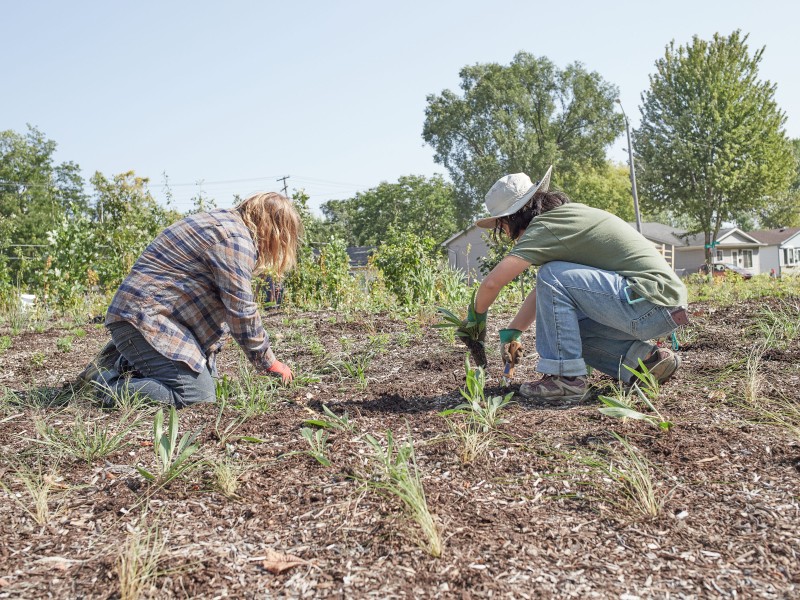
Micro forests attract not only birds and bees but Metro Detroiters, too
Whether you call them micro, mini, or pocket forests, they are taking root around the world — and in metro Detroit. They help the environment, provide refuge to native species, and respite to people seeking green spaces — especially in urban areas.


