
Michigan farmworkers hold onto hope amid increased immigration enforcement; nonprofits provide resources
Through Know Your Rights education, family preparedness and workplace advocacy, organizations help farmworkers navigate threats to their families and livelihoods.
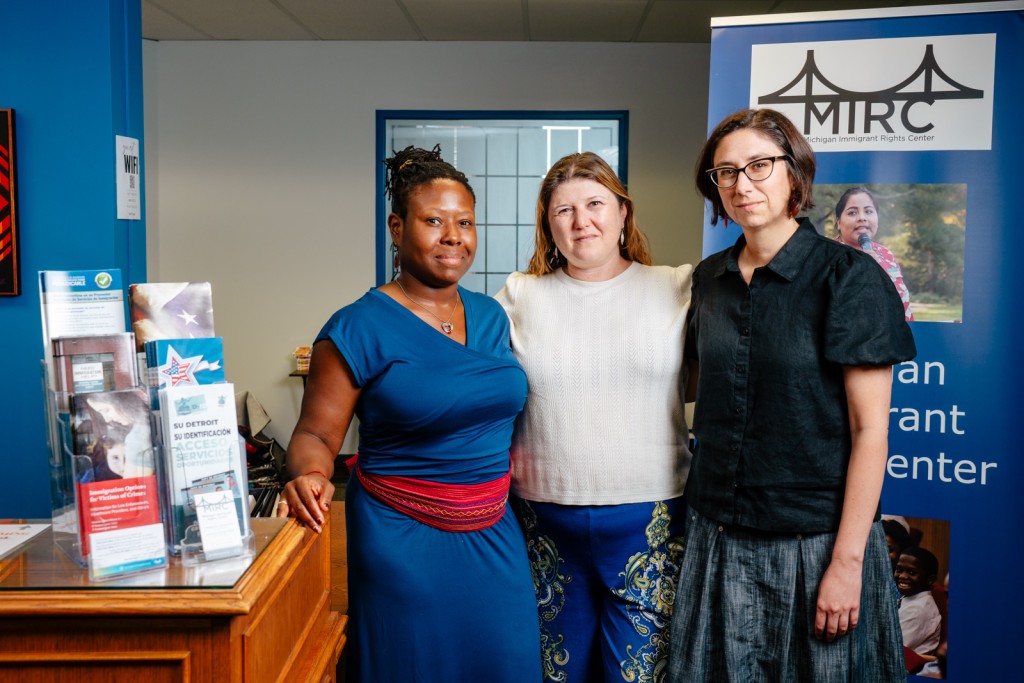
Undocumented farmworkers make up about half of the farm labor workforce in the U.S.
A new report by the United Farm Workers (UFW) Foundation, including 2,250 farmworkers from Michigan and 15 other states, indicates that 88% of farmworker respondents fear detention and deportation under the Trump administration’s immigration enforcement.
In Michigan, the fear is ever present, and advocacy groups are responding to that fear with outreach, legal aid and education to help farmworkers prepare for possible detention or deportation.
One 34-year-old farmworker in Michigan shared a statement, obtained through the Michigan Immigrant Rights Center (MIRC) in writing, about her working conditions. The information was translated from Spanish to English by MIRC representatives.
The Michigan farmworker, who chose to remain anonymous because of fear of retaliation, immigrated with her family to the U.S. to pursue a better quality of life. However, she says that in farm work, people are not treated with dignity.
“It is sad and regrettable to learn and know that in this line of work, the lives of animals are valued far above those of a person,” she explains. “At least that is how they make us feel and understand it.”
She adds, “They make us feel as if they are giving us our salary as a gift for working in their companies—and even though their production succeeds thanks to a mostly Mexican workforce, it is never recognized.”
She says workers have rights, and they should not be treated poorly, and people should speak up when they disagree.
“I recognize and appreciate the opportunity given to us to work here, but I also want to let it be known that nothing is given to us for free; at the very least, every worker deserves dignified and valued treatment,” she shares.
Preparing for the challenges
Anna Hill Galendez, managing attorney at MIRC, says Michigan depends heavily on farmworkers.
“Around 38% of Michigan’s agricultural crops are dependent on labor-intensive practices, meaning that they require farmworkers to get those crops harvested onto our tables,” she says.
MIRC provides direct legal services to farmworkers throughout Michigan, helping with things like labor trafficking, employment discrimination, sexual harassment, and wage theft.
The UFW Foundation provides similar resources including education and advocacy for farmworkers. Amanda Villa, UFW’s Michigan state director, echoes similar sentiments, saying farmworkers are feeling an increase in fear of detention and deportation.
“92% reported that immigration raids and deportations have affected their employment,” she explains, citing a UFW survey conducted last year.
Villa, whose parents were farmworkers, says many farmworkers migrated to Michigan to be among family or a welcoming community.
Her organization aims to keep people connected, informed, and prepared through Know Your Rights presentations when encountering U.S. Immigration and Customs Enforcement. The organization works with churches, community organizations, and schools to provide services including preparing families for the possibility of family separation.
“We always pray and wish for the best, but we know that the risk is real,” she shares.
While the UFW survey found 90% of farmworkers are fearful of family separation, half say they also have not lived in their countries of origin for several years.
Villa says the fear of family separation is magnified when the breadwinner in the family disappears or is not reunited with their family promptly.
Despite the fear, Villa says people go to work to pay their rent, insurance, and car payments.
“Having that need to go out there, put yourself at risk, because you have so many other things that are working against you… this [is an] overreaching feeling of fear that our farmworkers and immigrants face daily,” she explains.
Farmworkers in Michigan
In 2021, the U.S. Department of Labor estimated there are over 70,000 farmworkers in Michigan each year. Another report indicates there were more than 100,000 farmworkers and family members in the state in 2013.
UFW Foundation reports 80% of the farmworkers have lived in the U.S. for more than 10 years, with 41% living here for more than 20 years.
Galendez says last year Michigan certified almost 16,000 H-2A Temporary Agricultural Program positions, “which would roughly reflect the number of H-2A workers,” indicating it has grown “exponentially about 45 times larger than 2012.”
MIRC often meets people at housing and migrant camps. In 2024, MIRC provided community education to 1,400 farmworkers.
Galendez says people are afraid to report crimes. They are also skipping health care checkups and errands. She says the climate of fear is detrimental to the individual, but also to public safety. People do not feel safe coming forward to local law enforcement, as some are calling immigration officials on people during traffic stops.
Read Related Story: Islamic Center of Detroit’s MY Mental Wellness Clinic provides immigrants a safe space and mental health care
“It’s always been the case that it takes a lot of courage and knowledge for folks to reach out to our offices for services, and the huge increase in fear of retaliation related to immigration enforcement is just an enormous additional barrier,” Galendez explains.
Last year UFW filed a federal lawsuit on behalf of 18 plaintiffs to challenge the Trump administration for lowering wages for H-2A workers. A federal judge ruled in favor of the plaintiffs, but new wages have not been imposed, meaning farmworkers may still be getting paid $3 to $7 an hour less in wages.
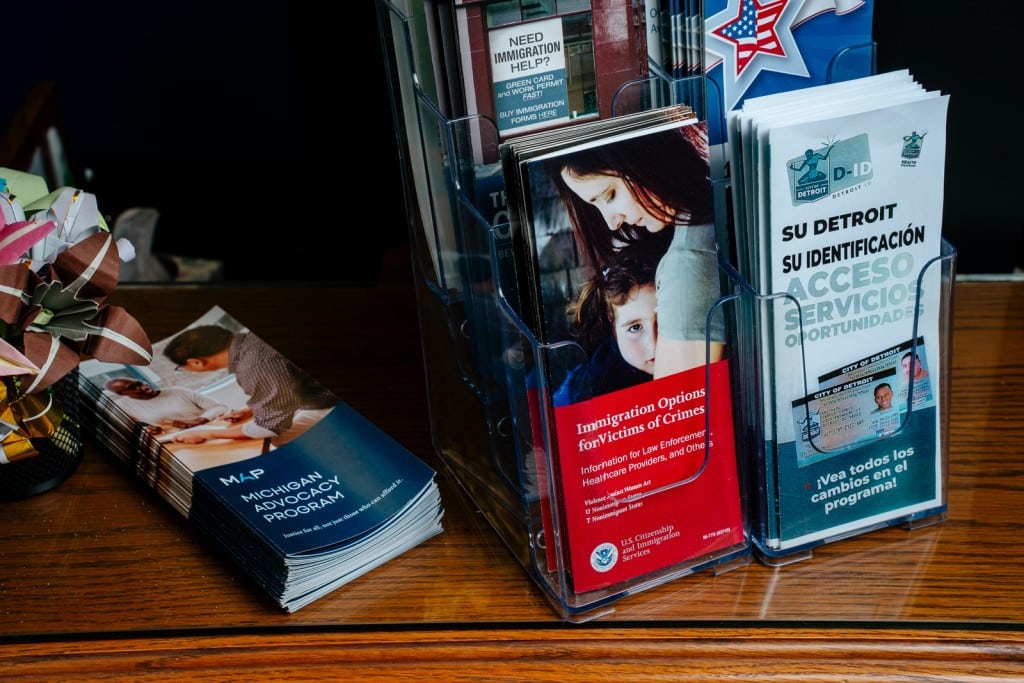
In Michigan, H-2A workers would be losing wages from $18.15 an hour to $13.73 an hour. In some states, that number could be as low as $7.25 an hour. Galendez says these workers usually don’t get paid sick leave or health insurance due to working temporary jobs. Nonetheless, farmworkers worked through the COVID-19 pandemic, and during other health emergencies like the recent heat waves and smoke pollution from Canada’s wildfires.
The Department of Labor estimates farmworkers lose $2.46 billion each year through the cuts nationwide.
Villa says historically farmworkers and immigrant populations have not been paid fairly.
“It’s hard work, it’s dignifying work, and we’re never compensated enough… because farm work has traditionally been like half the workforce is undocumented, and when there is no legal status or under documentation, there comes a lot of labor violations,” she explains.
Read related story: Attacks on immigrant families and what that means for early education
Advocating for farmworkers
Villa says while she’s unaware of mass immigration enforcement on the fields in Michigan, the fear of detention and deportation remains. When people are detained, agencies don’t always find out right away.
“Our farmworkers and immigrants are very isolated, and in rural communities, it’s kind of difficult to get that call or get that information ASAP because of the rural nature of the communities,” she explains.
Besides detention, Galendez says MIRC works to remedy workplace issues for individuals and groups.
“Oftentimes many of their coworkers are facing the same situation, but might be just afraid to come forward, so where there’s a means to seek an investigation of a whole workplace, or to consider a class action lawsuit, those are to try and remedy things across the board,” she explains.
Villa says the issues farmworkers face today are not new.
“It just feels a lot harder or bigger because of the current administration and because of the current tactics that are being used,” she says.
Losing federal funding impacts unaccompanied youth
In August, MIRC lost $12 million in federal funding for legal aid for unaccompanied youth, including some who are farmworkers. This year MIRC legally represented 1,000 unaccompanied minors, but now can only represent 400 unaccompanied children.
Ana Devereaux is the senior managing attorney with Michigan Migrant Rights under MIRC. She says the funding provided legal representation for unaccompanied minors under the Trafficking Victims Protection Reauthorization Act of 2008. The aid allows the minors to be notified of legal options like asylum or Special Immigration Juvenile (SIJ) status.“We would apply for protection on their behalf, and ideally see them through to the end where they have received those protections they’re eligible for,” she explains.
But Devereaux says without legal protections, many may return to situations of persecution or abuse, even in the U.S.
Last year, MIRC received 5,000 calls for assistance, including detention calls that tripled compared to 2024. MIRC has a free hotline at 734-794-9963 for detainees. Family members of detainees can call 734-239-6863 for assistance.
Carrying on with hope
Villa says most farmworkers and immigrants UFW serves are Latino or Hispanic, and despite their circumstances, they remain hopeful.
“I think we have a very good si se puede (yes we can) attitude,” she says. “I think our culture is very, ‘It’s gonna get better. We need to get over or continue working.’ It’s like that train. You gotta keep on pushing so that it’ll get better eventually.”
People in the community have stepped up too, she says, helping each other with things like getting groceries or gathering supplies if their community member is afraid to leave their home.
“There’s a lot of solidarity out in our community,” Villa adds. “I think this has exemplified how united we are.”
People can text “si se puede” to 877877 for UFW’s national general texting program to connect to resources.
Point of Entry is a series exploring the lived realities and vital contributions of immigrant communities across Southeast Michigan. This is a collaboration with New Michigan Media, supported by the Community Foundation for Southeast Michigan. See more stories from this series here.
Related Articles

Small Business Social Hours foster success through face-to-face connection
Why face-to-face networking opportunities are even more important for small businesses and entrepreneurs.

Hazel Park’s annual Art Fair is highlighting over 100 local artists this weekend
This year’s Hazel Park Art Fair, from August 22 to August 23, will feature over 100 local artists, food trucks, yard games, morning yoga, a charity beer tent, and much more.

Oak Park opens new event hub, celebrates years of community investment
Oak Park looks ahead after fulfilling promises to residents on the Elevate Oak Park initiative.


