
Transportation

Tax incentive package for Aerotropolis could create up to 50,000 jobs

The development of Metro Detroit's Aerotropolis concept took a big step forward last week when the state Senate passed a package of bills providing tax incentives that should help the development and business attraction around Metro Airport."This legislation will put Michigan ahead of every other state when it comes to attracting logistics and air travel-like businesses," says Michael McGee, principal at Miller Canfield. "Michigan will be able to compete for logistics businesses around the world."Miller Canfield, on behalf of Wayne County, helped craft the legislation called the Next Michigan Development initiative. The new laws allow for the creation of five Next Michigan corporations, which can utilize a variety of property and other tax abatements to attract businesses and tax increment financing to spur new development. The Aerotropolis Development Corp is the first of these five Next Michigan corps. The Aerotropolis initiative covers approximately 60,000 acres in Wayne and Washtenaw counties around Metro Airport. The plan is to create as many as 50,000 jobs over the next 15 years. Metro Airport is on of southeast Michigan's primary economic engines, providing a major hub for air travel and shipping around the world.Source: Michael McGee, principal at Miller CanfieldWriter: Jon ZemkeRead more about Metro Detroit's growing entrepreneurial ecosystem at SEMichiganStartup.com.

Latest in Transportation
Inkster streetscape project wraps up for the season

Save for some trees and landscaping, Inkster's streetscape improvement project for the area of Michigan Avenue and Inkster Road has been completed.The Michigan Department of Transportation announced in August federal Transportation Enhancement grants, through which Inkster received almost $600,000 in state and federal funding for decorative brick pillars, fencing, benches, decorative stamped concrete, and landscaping. "Everything turned out well," says Kimberly Faison, special projects manager for the city of Inkster.And although it's gray this time of year and the improvements don't stand out as much, she expects that come spring, when the landscaping starts to grow, it'll be very visible. What's most noticeable now is the stamped concrete along Michigan Avenue and Inkster Road, where there is decorative fencing and a brick pillar design. Two of the corners also have seating areas, and one has a gathering area with a circular walk and will have landscaping in the middle.Improvements done last year, including ramps and cross lights at pedestrian intersections, made the area more walkable, and the streetscape is also expected to calm traffic. Bus shelters are a part of the expanded project, and the city hopes to receive future funding for a greenway project down the line.Source: Kimberly Faison, special projects manager, city of InksterWriter: Kristin Lukowski

Woodward communities form task force to discuss transportation vision

When it comes to public transportation on Woodward north of Eight Mile, the communities are coming together to make sure everyone is on board.The Woodward Avenue Action Association has formed a task force of officials from Berkley, Birmingham, Ferndale, Huntington Woods, and Royal Oak, to work together on transit vision. At this point, their goal is to get the communities around the table to discuss what they and the others would like to see, says Heather Carmona, WA3's executive director.The task force, she explains, is the WA3's response to the community members who were concerned about the lack of consensus about what transit should be north of Eight Mile Road. With the latest news about the Woodward Light Rail receiving funding, there had never really been much discussion about what was needed or wanted north of Detroit, in Oakland County, specifically in the communities along Woodward. "Our goal was, how can we bring these elected officials to the table?" Carmona poses. "What shape should transit take on Woodward in south Oakland County?"Melanie Piana, a Ferndale city councilmember and the associate director of Michigan Suburbs Alliance, which is also represented on the task force, says that among her goals after she joined the council in January was building relationships with the other Woodward communities. "I think it's a good thing any time our cities can collaborate on achieving something together," she says. "Since we all share the same corridor, it makes sense for us to strengthen our relationships and share ideas for goals and visions, and how we would like to see our communities grow."The members are looking at what the communities share along Woodward, what the cities are planning, and how to better connect them. They're trying to stay away from discussing type of transportation and where the stops would be, taking more of a macro view.They do agree, though, that whatever transit option is put in place won't just end at Eight Mile. "I think it is a natural progression of the hard work our Detroit counterparts have been doing over the last couple of years, and now we can do our hard work to make sure we can connect together," Piana says.The task force hopes to have a resolution for all the communities to support before the holidays, and then work on a list of goals and objectives.Sources: Heather Carmona, executive director of the Woodward Avenue Action Association; Melanie Piana, Ferndale city council memberWriter: Kristin Lukowski

Lake St. Clair water trail gets grant funding

Paddlers and others who enjoy Lake St. Clair will benefit from a grant to develop a coastal water trail.The $10,000 grant will give a boost to the Lake St. Clair Tourism Development Program for a kind of "blueway," like a greenway but in the water, for paddlers. The funds are part of a Coastal Community Development grant from Michigan Sea Grant, and are part of a federal program to educate people on issues surrounding coastal areas, as well as the creation of a trail map.Kristen Grifka, Lake St. Clair tourism development specialist for Macomb County, explains that blueways typically run close to the shore, especially near a lake, and they can be marked. Maps show the blueway route so paddlers can figure out good places to launch, interesting things to see, and safe harbors.Grifka has found that as boating gets increasingly expensive, more people are turning to kayaks or canoes to get out on the water. "It's gaining in popularity, particularly in the state of Michigan," she says. In fact, the Tip of The Thumb Heritage Water Trail draws people from as far away as Europe, she says.She's expecting a reconnaissance-type trip next week to travel the shoreline to begin the mapping, and to continue lines of discussion with paddlers and other lake-minded people to be sure they're mapping out the area as well as they can."We're very excited," she says. "The thing that I think is very cool about the trail is there are a few people who have a vision for Michigan making a state-wide water trail. This would be a connector between a trail that is planned for the St. Clair river, and the trail already on the Detroit river. It's part of a bigger vision."The trail will run along the coast of Lake St. Clair, and will be suited for open water kayaking and other paddling sports, much like how the Detroit Heritage River Water Trail, Clinton River Water Trail, and Thumb Water Trail already are.Source: Kristen Grifka, Lake St. Clair tourism development specialistWriter: Kristin Lukowski

A Better Landing

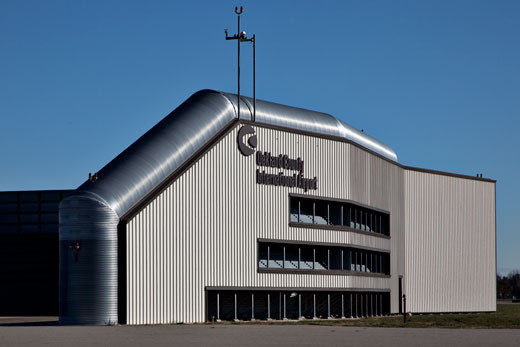
Overlooked for years, Oakland County Airport is getting a much-needed face-lift in order to live up to its title as Michigan's second busiest airport. The terminal's multi-million dollar upgrade will soon match the Fortune 500 execs, rock stars, trade missions, and elite clientele the airport caters to every day.

Northville trail will connect city to township

When walkers, runners, and bikers explore a new trail planned for the Northville area, they might just learn a thing or two at the same time.After two years of planning, Northville Township, the city of Northville, and Wayne County have a plan and funding for the Northville Bennett Arboretum Trailway, a non-motorized trail that will connect the city and township. The path will begin at Verona Lane and Sheldon Road, where the current Northville Township pathway system ends, continue along Sheldon through the Bennett Arboretum, cross into the city, and end near where Sheldon intersects with Seven Mile Road.Jill Rickard, Northville Township staff engineer and project point person, points out that not only will the trail connect the city to the township, it also provides access to the county and township park and bike system, including the Rouge River and Hines Drive, a popular cycling route. "It does provide some good interaction between the park systems," she says. "The township and city have been trying to connect for years."The project, funded partially by parks millage funds and a recently-awarded $450,000 Rouge Program Office Grant, will include an elevated boardwalk, block retaining walls with native plantings, and a bridge over Johnson Creek that will allow for accessing educational information about the creek. The boardwalk will provide a viewing platform for a wetland that straddles the city and township lines.Rickard says the path will also be a good way for visitors to learn about the surrounding areas, and about the green features planned, such as permeable pavement, the benefits of trees, and how native landscaping can prevent erosion. She expects that at least five informational kiosks will be displayed with such information.  "This provides an excellent opportunity for an educational, instructional way of doing that," she says.She hopes to put the project out to bid in February, begin construction in the spring, and finish by next fall.Source: Jill Rickard, Northville Township staff engineerWriter: Kristin Lukowski

Electric car charging stations coming to metro Detroit

Car fuel has come a long way - from steam to leaded gasoline - and now the metro area is preparing for the next technology, electric charging.Throughout the state, more than 5,300 home and workplace charging stations are expected to be installed through a collaboration between General Motors, DTE Energy, Consumers Energy, and others. The utilities will cover up to $2,500 of the cost of the charging station and installation.Novi and Northville are among cities in the area that will see electric car charging stations coming soon.GM's Chevy Volt is one of several electric cars soon to be hitting the public market. By the end of 2011, General Motors plans to have almost 350 charging stations in place for employees at its facilities in Michigan; more than 100 are already installed. That includes 18 planned stations in and around downtown Detroit's Renaissance Center.GM-installed charging stations for use by its employees in Michigan will include 34 at the Detroit-Hamtramck assembly center, where the Volt is built, and 140 in the homes of employees driving early-build models for quality evaluation. In addition, more than 1,500 Chevrolet dealers across the U.S. plan to install charging stations for use by customers, which includes nearly 650 dealers that will soon begin selling the Volt.And to further take advantage of clean energy, many of the charging stations at GM facilities will be powered by renewable solar energy; the Detroit-Hamtramck assembly center already has 10 stations in place powered by photovoltaic systems. A similar system will also be put in place at the Warren Technical Center and Milford Proving Ground.A grant program also exists for businesses and municipalities interested in installing charging stations. Business and municipalities in Michigan can apply online to own these free charging stations here.Coulomb Technologies' ChargePoint America program unveiled its first networked charging station in Michigan, at NextEnergy just outside of Detroit. It is the first of hundreds of public charging stations that will be installed throughout southern Michigan as a part of a $37 million grant from the U.S. Department of Energy.Source: General Motors; ChargePoint AmericaWriter: Kristin Lukowski

Chicago Sun-Times is on board with Michigan’s high-speed rail

Metro Detroit recently received $161 million in federal funds to improve high-speed rail service on Amtrak's Wolverine line between Pontiac and Kalamazoo. The Chicago Sun-Times takes a good look at the potential of this investment and how it breaks down.Excerpt:About $150 million of the money awarded to Michigan will be for the section of track between Kalamazoo and Detroit. This is owned by Norfolk Southern, which wants to sell it, Amtrak spokesman Marc Magliari said.Michigan may buy it with a portion of the high-speed rail money. Discussions are ongoing about how much of the funds would be for the track and how much for track improvement, Magliari said. Track improvements would increase speeds from 79 mph to 110 mph, which would bring it in line with the track Amtrak owns from Kalamazoo to the state line.At greater speeds, Amtrak could double the number of round trips from Chicago to Detroit from three to six, Magliari said. Ridership on this route already has increased 8 percent in the past year.The rest of the high-speed funding would be used to improve the connection from Pontiac to the state line.Read the rest of the story here.

Grant helps restore Fordson Island’s water, removes debris

The Detroit/Wayne County Port Authority will be getting some funding to help clean debris from the Fordson Island area.The National Oceanic and Atmospheric Administration and the Great Lakes Restoration Initiative has awarded a $150,000 grant to the Port Authority for the Dearborn-area Fordson Island Oxbow Restoration and Debris Removal Program. The project was one of eight selected nationwide out of 50 applicants, and was the only project selected in the Great Lakes.The focus of the program is to provide federal and technical assistance to community-based activities to remove debris from living, marine resource habitats. The program also promotes stewardship and a conservation ethic for marine species and habitats.Fordson Island was created in 1917 by the dredging and channeling of the Rouge River to the Ford Rouge Plant. The dredging provided a deeper channel, which allowed the Ford Motor Company to transport submarine chasers (Eagle Boats) from the Rouge River to the deeper water of the Detroit River during World War II. Over time, debris from commercial, industrial, and recreational use of the island and surrounding waterway accumulated in the shallow river west of the island.Through the project, the Port Authority hopes to remove boats and other debris by first conducting an ecological and habitat survey, shoreline cleanup, and monitoring the cleaned-up areas to see how quickly more debris accumulates.Source: Detroit/Wayne County Port AuthorityWriter: Kristin Lukowski

Chug no more: $150 million for regional high-speed rail

Michigan will be receiving $150 million to help develop a high-speed rail corridor between Kalamazoo and Dearborn.News came out Monday that the High-Speed Intercity Passenger Rail Grant Program will be awarding the money, along with a $3.2 million planning grant from the U.S. Department of Transportation. Michigan has the existing rail lines from Chicago to Detroit, but is lacking the upgrades to get the trains up to a higher speed.Although it won't be announced until today as to how the $150 million will be allocated, Carmine Palombo, transportation director for the Southeast Michigan Council of Governments, says the announcement was great news overall. "Being able to make that sort of investment in that high-speed rail corridor is great," he says.Among the beneficiaries will be Amtrak and freight rail, but also everyone trying to establish a commuter rail service between Detroit and Ann Arbor, too. One project that was identified as necessary was the connection west of Detroit, where there is consistently a bottleneck between usage of the track by freight and passenger services. Fixing that alone would take about 5-7 minutes off the time between Detroit and Ann Arbor, Palombo says."That's a pretty good chunk of time that would be saved as a result of this project," he says.It was also announced in January that Michigan will be receiving $40 million for train station development.Source: Carmine Palombo, transportation director for SEMCOGWriter: Kristin Lukowski

Our Partners

City of Oak Park

Don't miss out!

Everything Detroit, in your inbox every week.

Close the CTA

Already a subscriber? Enter your email to hide this popup in the future.