
Turning Brownfields Into Greenbacks
The old philosophy was knock it down and build anew. But what do you do with polluted or blighted land no one wants to take responsibility for? Creative economic incentives are transforming these unwanted brownfields into successful (and sometimes unexpected) properties.
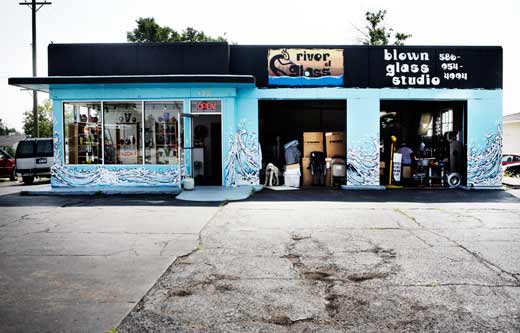
In a normal Michigan world the River of Glass wouldn’t be physically where it is today. The glass blowing shop took over an old gas station on the edge of downtown Mt. Clemens earlier this year and has turned it into an eclectic gem of a store that helps make the city unique.
For years it had been a 1950s-era gas station boarded up and abandoned. Features like name-your-favorite spilled automotive fluid and old rusting tanks filled with gas, oil and God knows what else made the place a practical undevelopable blight.
Conventional Metro Detroit wisdom said knock it down and leave it as a vacant parking lot for years so maybe someone can redevelop it one day. It’s the path of least resistance used time after time in recent decades by Michiganders that has left blocks of vacant dead space between downtowns and adjacent neighborhoods.
That didn’t happen in Mt. Clemens this time thanks in no small part to a piece of technocrat jargon – brownfield.
City officials used brownfield incentives to help keep River of Glass, which was looking for a new home to create their glass art, in the city. Brownfield funds (normally used to help spur development in contaminated or obsolete properties) helped determine the level of pollution on the site and clean it up.
“I knew going into it what was there,” says Chris Winn, co-owner of River of Glass. “I had been worried about what (pollution) was there and knowing I could end up being responsible for it. As silly as it is to say the brownfield made me feel safe.”
It turned out to be a perfect fit. The site is at the edge of downtown and brings in a lot more customer traffic. The large garage area provides plenty of industrial space for Winn to so his work (he is making a glass chandelier for Greektown Casino) while the big windows in the old office area provide some high-visibility storefront.
The building’s walls have been painted bright, lush colors by a Metro Detroit graffiti artist in a stunning piece of public art/store signage. And it also gives visitors one more reason to stick around downtown that doesn’t include eating, drinking or concert going.
“It’s a show-piece for the city now,” Winn says. “It worked out well for everybody.”
Brownfields = Green money
The definition of brownfield is a bit ambiguous. It can range from an old industrial site with pollution to an old building that has outlived its original purpose. The easiest way to think of brownfields is as a ugly piece of property that incentives help facilitate developers to turn into swans.
“It’s a very broad term that can include contamination, blight and functionally obsolete,” says Mike Kulka, president of Hazel Park-based PM Environmental. “You can even include sites that have buried foundations. … That’s a lot of money when you redevelop those properties because you have to take all of that out.”
One of Kulka’s company’s specializations includes redeveloping those types of challenging sites. They have ranged from old gas stations to the old Detroit Artillery & Armory site. The common thread is that there is something in these sites that makes them harder to utilize for development than say a cornfield.
Kulka points out that without brownfield incentives a lot of those projects wouldn’t become reality and the ones that would wouldn’t be as grand. Those projects basically include any major urban redevelopment project you have heard of in recent years, ranging from the XXX to Book Cadillac Hotel renovation. Brownfield incentives are a major component worth millions of dollars in the plans to save a portion of Tiger Stadium.
Brownfield incentives basically pay to remove the nasty, toxic things once considered safe like asbestos, lead paint and even the sludge pumped out of the ground where River of Glass now stands. The end game is it lets more developers bring more reinventment dollars into city centers where most of these sites are instead of sprawling further out into farmland.
“You need incentives to offset the additional costs,” Kulka says.
Expanding brownfields
Brownfield incentives are nothing new, but they have evolved over time. It used to be just for contaminated places in inner cities. Now the definition covers a wide range of things and continues to grow as officials and developers become more creative.
“On some projects it’s absolutely vital,” says Arthur Mullen.
State officials are looking to expand the reach. Even though there are a seemingly limitless supply of brownfields in the state’s inner cities, there are still a fair share in the rural portions of the state. Lawmakers want to make brownfield incentives an available tool for redeveloping these sites.
They are looking into…
I need one more expert voice to fill this part in and I haven’t heard back from him yet. Hopefully this will happen by Monday.
Related Articles
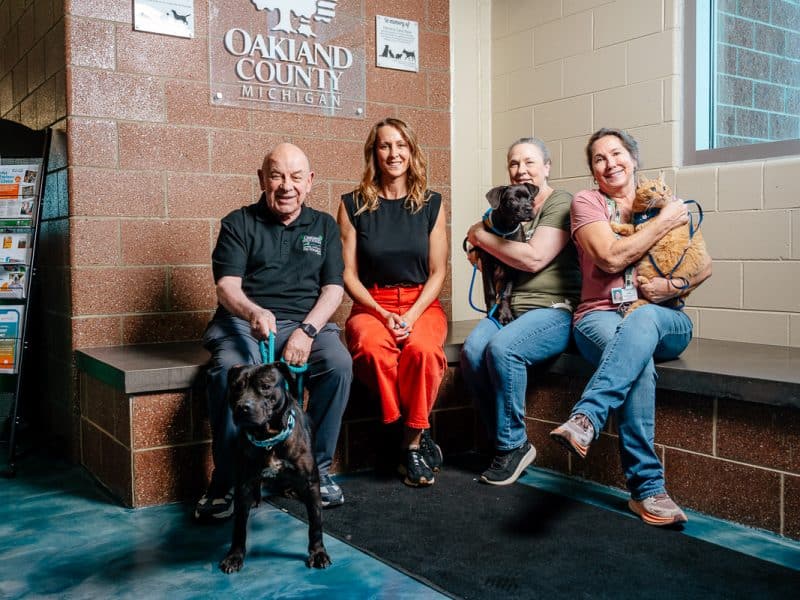
Oakland County Animal Shelter expands efforts to board pets for people experiencing homelessness
Pet owners who stay at an Oakland County homeless shelter this winter will be able to temporarily house their pets at the Oakland County Animal Shelter and Pet Adoption Center, thanks to a new partnership between the Pontiac-based Alliance for Housing and the animal shelter.

An Oakland County nonprofit is brewing success for immigrant entrepreneurs
Immigrant business owners and entrepreneurs can help revitalize and sustain Michigan’s economy.
Detroit’s water affordability crisis is tied to the uneven distribution of stormwater management costs – a fraught history explains why
Some Detroit residents spend as much as 25% of their disposable income on water bills. Many are struggling to keep up.


