
Partner Partner Content Creativity and community come together at Farmington’s new Art Park Promenade
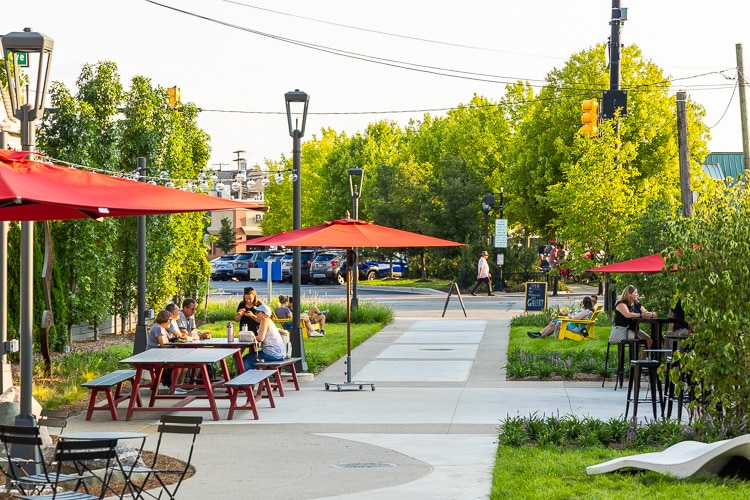
Farmington’s Art Park Promenade connects Riley Park with the Hillside Townes development through a pedestrian-friendly space filled with landscaping, seating, and public art.
This story is part of a series supported by the Farmington DDA, focused on stories shaping the future of downtown Farmington.
In downtown Farmington, public art is more than a display. In the case of the new Art Park Promenade, it’s a point of connection: a welcoming space to gather, a key pedestrian pathway, and a reflection of development that centers and engages the community. And for residents, it’s an opportunity to stop and look for a tiny piece of themselves.
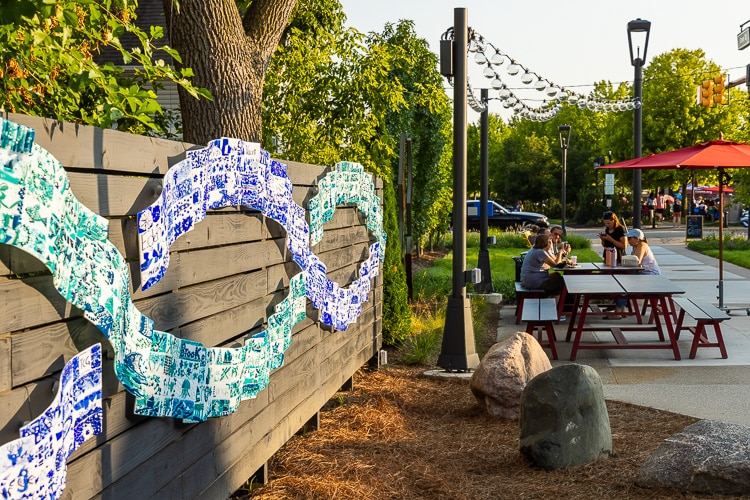
The Promenade, which officially opened July 17, connects Riley Park with the Hillside Townes development through a pedestrian-friendly space filled with landscaping, seating, and public art. At its center is the Make-a-Wave mural, a glass installation composed of 672 individual tiles created by community members.
For the people who made those tiles, the mural offers a reason to linger.
“They kept asking along the way, ‘When will it be ready? When will it be up?’ because everyone was just so invested and so excited about it,” says Helen Agius-Andreae, owner of Farmington-based Fired and Fused, which created the mural.
Now that the mural is installed, Agius-Andreae says she is excited to see people search for their individual pieces.
“I’m just looking forward to being there sometimes, and just watching,” she says. “Like I want to just hang back and watch people go and find their pieces, and I just want everyone to enjoy it and know that beautiful mural was made by the community.”
The mural is the centerpiece of a project intended to do more than add another public space to downtown Farmington. The Art Park Promenade is the first part of a larger pedestrian connection and a milestone in the Farmington DDA’s place-based economic development efforts.
Building a connection beyond Riley Park
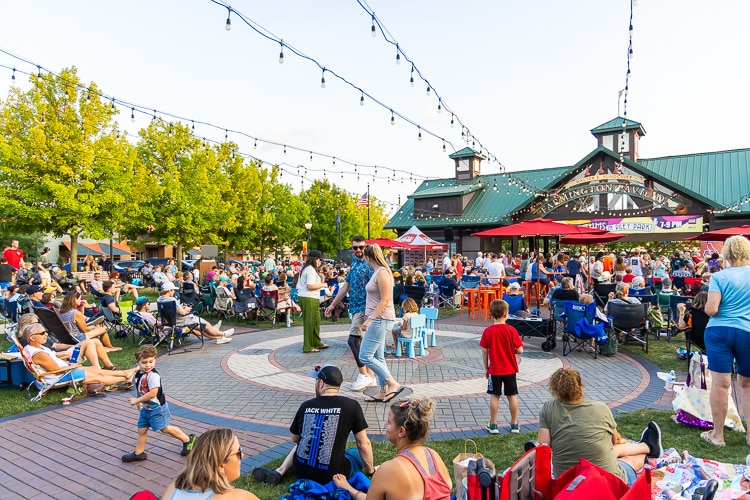
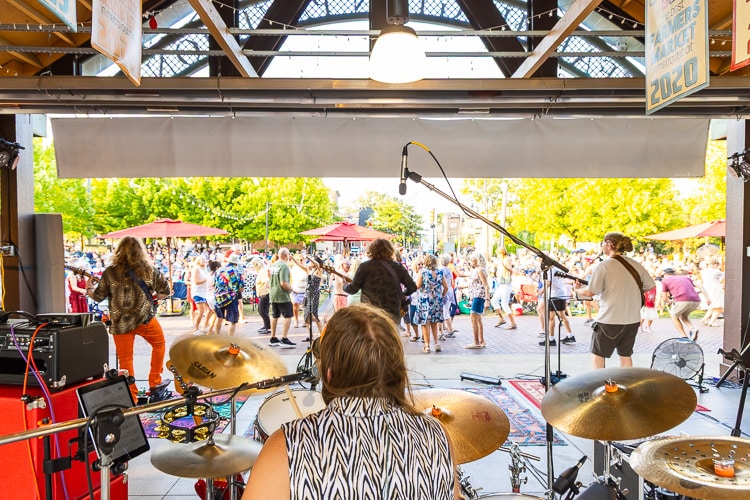
Riley Park serves as a cultural hub for downtown Farmington, hosting events including the weekly farmers market and Friday night concerts. The Promenade extends that activity beyond the park and creates another route through downtown.
“It’s really a way to extend that core energy of the downtown,” says Jess Westendorf, executive director of the Farmington Downtown Development Authority.
The DDA designed, funded, and managed The Promenade, making it the third consecutive public-space project the organization has completed in three years. Westendorf says The Promenade is the first “spoke” in a larger plan, connecting Riley Park to Hillside Townes as part of a route that will ultimately continue through the townhouse development toward Shiawassee Park.
That connection has been included in the city and downtown master plans as part of an effort to create an ADA-accessible route between the two parks.
The space is already seeing regular use.
“It is wonderful to see it activated,” Westendorf says. “It’s a great spot on the farmers market days every Saturday, 9 a.m. to 2 p.m… We see a lot of foot traffic. It’s also extremely busy during our Friday night concerts, just as anticipated.”
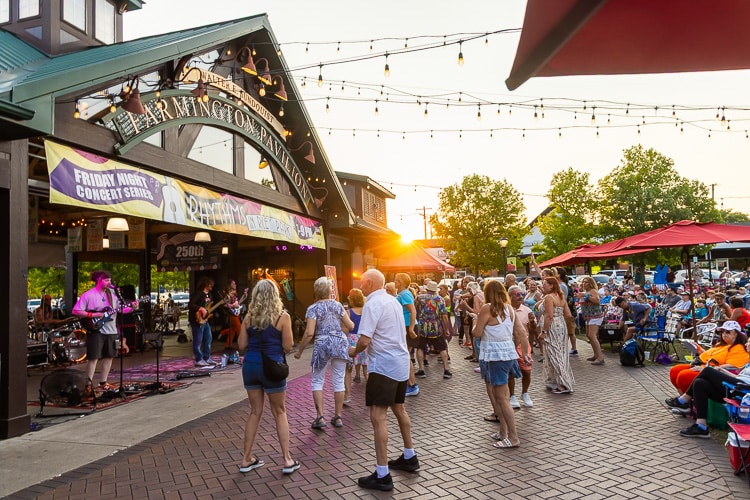
People are also using The Promenade outside of programmed events to relax, dine, grab coffee, meet friends, and walk between Riley Park and Hillside Townes.
“It’s a wonderful traffic driver for the downtown, and it creates a destination and a reason for someone to visit,” Westendorf says. “It increases the time that they spend here, and as a direct result, it’s an economic benefit to our downtown.”
The Promenade was supported by a Main Street Oakland County Placemaking Grant and features two installations from the Detroit Institute of Arts’ InsideOut program, which brings reproductions from the museum’s collection into communities throughout the region.
The public art component will continue to grow. This fall, Farmington expects to install six or seven additional sculptures through the Midwest Sculpture Initiative.
The DDA’s public art committee will review more than 100 submissions before selecting the pieces for the Promenade.
“We should have even more art installed this fall,” Westendorf says.
672 pieces, one community
The Make-a-Wave mural began with an idea from Westendorf: turn an architectural rendering of a wave into a glass installation and make it a community project.
Agius-Andreae and her husband helped residents create individual three-by-six-inch tiles through pop-up events and at the Fired and Fused studio. They then fused the individual tiles into larger panels before firing them again to create the mural’s wave shape.
The finished mural contains 42 larger sections, each made up of 16 individual tiles. Each section required multiple rounds in the kiln.
“It really, truly brought the community together because everyone worked on one project separately but together, and everyone has taken ownership in this project,” Agius-Andreae says.
For Agius-Andreae, who has worked with glass for 19 years, the project was particularly meaningful.
“In my 19 years of working with glass, this has been the most rewarding and special project I have ever worked on,” she says. “I have done other community-type pieces, but this one, everyone was so excited, and everyone was working toward the larger goal, not quite knowing how it was going to look or how it was going to turn out.”
The mural earned regional recognition in June when it received the Main Street Oakland County District Placemaking Award.
Placemaking as a downtown strategy
The Promenade is part of the Farmington DDA’s broader investment in placemaking. In 2026, Farmington received the Great American Main Street Award, the highest national recognition for downtown revitalization.
Westendorf says placemaking is a central part of the DDA’s strategy, which balances the community’s heritage with renewed investment in public spaces and fresh approaches to strengthening the downtown district.
Riley Park itself is an example of Farmington’s longstanding commitment to placemaking: the park was originally an underused municipal parking lot before being converted to a regional destination in 2005.
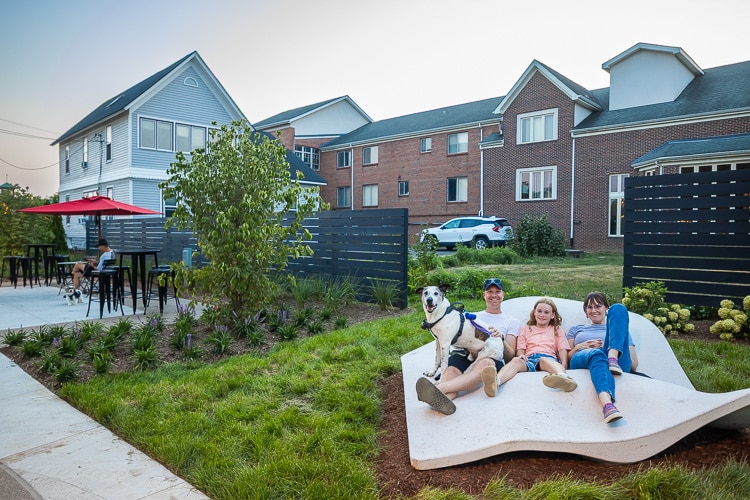
Placemaking can increase home values and attract investment, producing tangible economic benefits. But at its core, the strategy centers the human experience, responding to resident needs and fostering connection.
As Westendorf explains, placemaking “creates that sense of community and connection that is so important in a Main Street.”
Agius-Andreae says the finished mural demonstrates how Farmington’s placemaking efforts can foster that sense of connection. For her, the finished mural is a reminder of what can happen when individual contributions become part of something larger.
“It’s just so important because most Farmington residents seem to be very close, and everyone has a sense of belonging,” she says. “I think that with having these parks for people to gather and have something to look at and admire, it’s just more of a way to bring people together and give people something in common.”
Author

Related Articles
West End Commons brings community together in downtown Wixom
A years-in-the-making effort to develop a new gathering place in downtown Wixom is nearing completion with the creation of the ‘third space’ gathering center, The West End Commons.
Thumb Art Spark initiative connects artists, communities, and businesses ahead of 2027 public art celebration
Planned for September 2027, the Thumb Art Spark Celebration will bring communities across the region to highlight existing public art, showcase new projects, and give residents and visitors new ways to explore the places where they live.
Community Land Trusts help Portage residents become homeowners affordably
As the statewide housing crisis continues, communities of all sizes are looking at how to increase affordable housing options for current and future residents. In Kalamazoo County, the Portage Community Land Trust is helping residents become homeowners affordably with their new workforce housing development, Stanwood Crossings.


