
Metro Detroit schools see progress in reducing chronic absenteeism. Here’s how they’re doing it
Statewide chronic absenteeism rates remain above pre-COVID-19-pandemic levels, but Metro Detroit schools are tackling chronic absenteeism by removing barriers to attendance and creating enriching, fun school experiences for students.

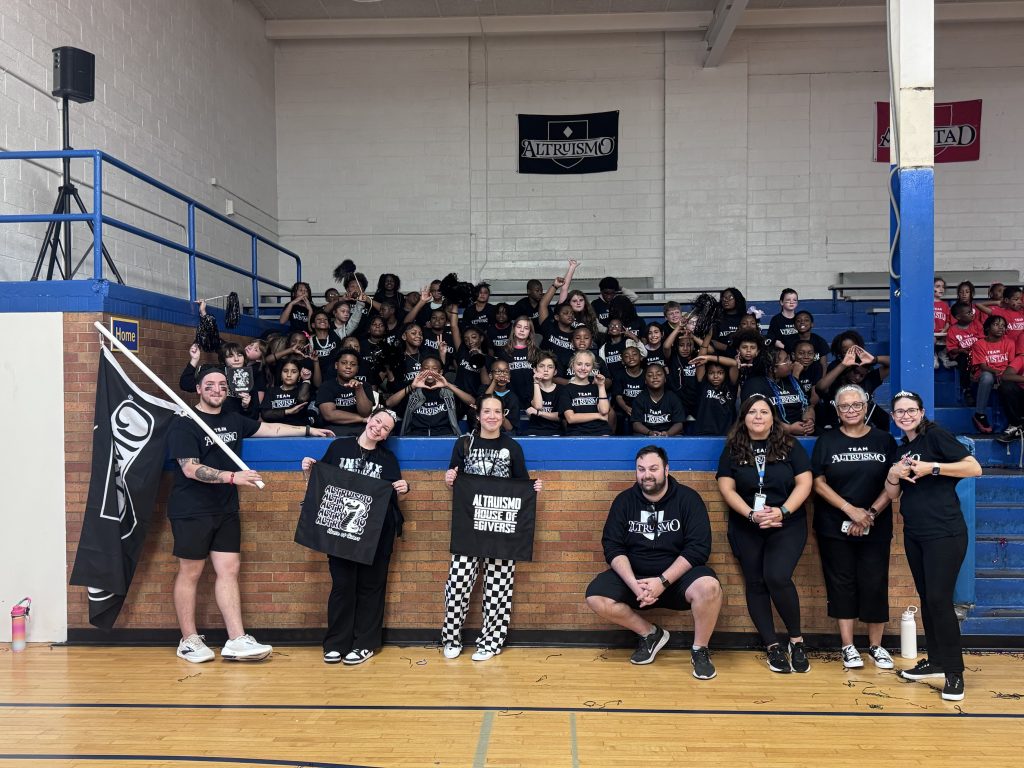
Earlier this year, students awaited their turn to be sorted into one of four “houses,” each with its own themes and colors. Each house completes attendance challenges and other activities to earn points and compete for an end-of-year prize.
No, this is not a scene from Harry Potter.
Launched at two elementary schools and one junior high in Redford Union Schools in the past two years, the “House System” is designed to develop a sense of fun and community that boosts attendance rates, says Redford Union Executive Director of Curriculum and Technology Kim Crenshaw.
This is just one of a multitude of approaches Metro Detroit school districts are using to reduce chronic absenteeism, defined as a student who is absent for 10% or more days in a given school year.
Guided by personal relationships between staff and students, schools are boosting attendance by eliminating barriers to attending school and creating fun and enriching experiences in school to incentivize students to attend.
Why are students chronically absent?
During and after the COVID-19 pandemic, chronic absenteeism surged statewide. In 2018-19, the last full school year before the pandemic, nearly 20% of Michigan students were chronically absent. In 2021-22, that number jumped to 38%, according to MI School Data.
While some school districts experienced a surge in chronic absenteeism for the first time, other districts have struggled with attendance for years prior to the pandemic. Chief among the former are districts with high rates of students living in poverty. Last school year, about 38% of economically disadvantaged students were chronically absent, compared to nearly 28% of the entire student population, according to the statewide data.
Chronic absenteeism has been an issue for high-poverty districts like Redford Union and Westwood Community School District for decades. Westwood Superintendent Stiles Simmons says in the past, Westwood dealt with it by referring chronically absent students and their families to the criminal justice system for truancy.
Then, the pandemic hit. The county justice system faced a backlog of cases. While attempting to address its financial and academic issues, the district could only accomplish so much without also improving attendance, he says.
“We really wanted to take a different approach, where we can actually try to work with our families to understand what they were dealing with, why they were not sending their children to school on a regular basis, and then see how we can work together to improve that situation,” Simmons says.
While the reasons for chronic absenteeism are varied and complex, poverty tends to exacerbate barriers to attendance. Homeless students often move from place to place, making access to school bus transportation challenging for both students and district administration, Simmons says.
“One month the family might be living with an aunt, and the next month they might be living with a grandmother, and the next month they might be in some sort of temporary housing or a shelter,” Simmons says. “It can be challenging to keep up with and manage.”
Some families struggle to afford warm winter clothing for school. When childcare is scarce or unaffordable, older siblings stay home to take care of younger siblings. Health issues on the part of the student or a family member cause some to stay home, Simmons says.
Sometimes, students or parents don’t realize how many days they’ve missed. A little education on the criteria for chronic absenteeism and its damaging effects on a student’s education can go a long way, he says.
Building relationships, removing barriers
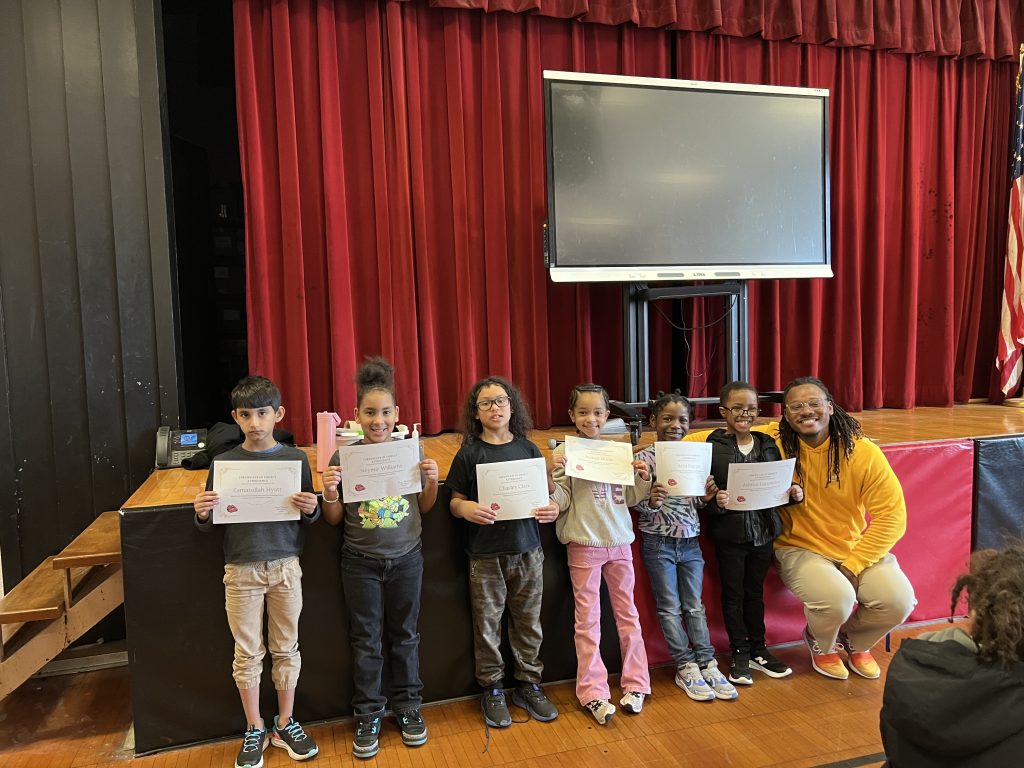
Personal relationships between staff and students are often the key to removing barriers to attendance. Westwood Attendance Liaison Kevyn Howard says he builds personal relationships with students to learn the challenges they face in getting to school and what might motivate them to attend.
Then, he creates a personalized plan to improve each student’s attendance. That might be helping students with their time management, connecting homeless students to community resources, working with a local nonprofit to provide students with winter clothing, or working with the district’s contracted specialty transportation service, HopSkipDrive, to get them to school.
“I meet them at their level, rather than being an adult telling them what to do,” Howard says.

Westwood has also contracted with Concentric Educational Solutions to conduct home visits to help school staff identify barriers to attendance and the resources to tackle those challenges, Simmons says. Coordinating resources is a team effort between Howard, district contractors, the McKinney-Vento Homeless Liaison, and the Multi-Tiered System of Supports (MTSS) coordinator.
Redford Union has taken similar approaches in recent years, including providing wraparound supports and an attendance liaison to meet with and help families overcome attendance barriers. Last school year, the district added a resource center stocked with laundry facilities, food, clothes, and toiletries, says Crenshaw.
Statewide, the Michigan Department of Education (MDE) has helped school districts address chronic absenteeism by implementing MTSS and an Early Warning Intervention and Monitoring System. These systems are designed to use data to systemically identify students who are off track for graduation, or who are or are at risk of becoming chronically absent, and provide wraparound interventions and supports to eliminate barriers to attendance and get students on track to graduate, says MDE spokesman Ken Coleman.
Making school fun again
Attendance incentives include things like Redford’s “The Best School Day Ever” – random, unannounced field trips and special events, such as a school trip to an educational Red Wings game, Crenshaw says.
“The idea behind it all is that they don’t want to miss school because they don’t want to miss if there’s something they might do that’s fun that day,” Crenshaw says. “It’s not necessarily always announced.”
Simmons says students who have perfect or improved attendance receive rewards such as awards, special recognition, special lunches, gift cards, parties, and more.
Some rewards are personalized to the student. For example, Howard says if a student meets their personal attendance goal – like attending school every day in a given week – he will buy them McDonald’s or other takeout and eat lunch with them.
Moving the needle
It seems these efforts are paying off: the statewide chronic absenteeism rate dropped by 10% from 2021-22 to 2024-25, according to MDE.
Redford’s chronic absenteeism rate for the start of the school year through the Friday before spring break fell from 49% in 2023-24 and held steady at 45% last school year and this year, according to data from the district.
School staff says they see improved attendance on an individual level, too. As students’ attendance improves, so do academics, students’ social-emotional health, and school climate and culture.
“When students come to school on a more consistent basis, they’re interacting with friends,” Howard says. “They’re smiling more, they’re laughing more. They have a little bit more pep in their step. They have a chance to do their work, so that’s helping them improve their grades.”
Why attendance matters
Studies have shown that students who were chronically absent in kindergarten were less likely to read at grade level by third grade than students who were not chronically absent. Chronic absenteeism in middle school can result in dropping out of high school, Coleman says.
Simply put, school attendance develops crucial academic and social skills needed to succeed in the world, several school administrators say.
“It’s important to come to school because it’s a safe place,” Simmons says. “It helps to prepare students for their future. It helps them to become productive citizens. It’s a place that can help them dream bigger and expand their horizons.”
Author

Related Articles

The Farm Bill, SNAP, and the childcare connection
SNAP helps families meet all basic needs, including childcare.

Navigating autism now more difficult for Michiganders
Autism Alliance of Michigan has laid off 75% of staff due to unexpected state funding cut.

Metro Detroit Death Doulas Want You to Talk about Death
Death Doulas in Metro Detroit are working to change how people approach the end of life — with less fear and more understanding. It can be a tough sell in a culture that largely avoids talking about death, but with the right support and guidance, these non-medical advocates promise life’s final chapter can be rich and rewarding.


