
The Davies Project expands care by connecting families to oral health
With Delta Dental Foundation’s support, The Davies Project, based in Lansing, removes transportation barriers, helping families access dental care as well as critical medical appointments for seriously and chronically ill children and expectant women.
This story is part of a series on the challenges and solutions related to oral health in Michigan, Indiana, and Ohio. It is made possible with funding support from the Delta Dental Foundation.
For families juggling serious medical needs, unreliable transportation can make routine health care an obstacle course.
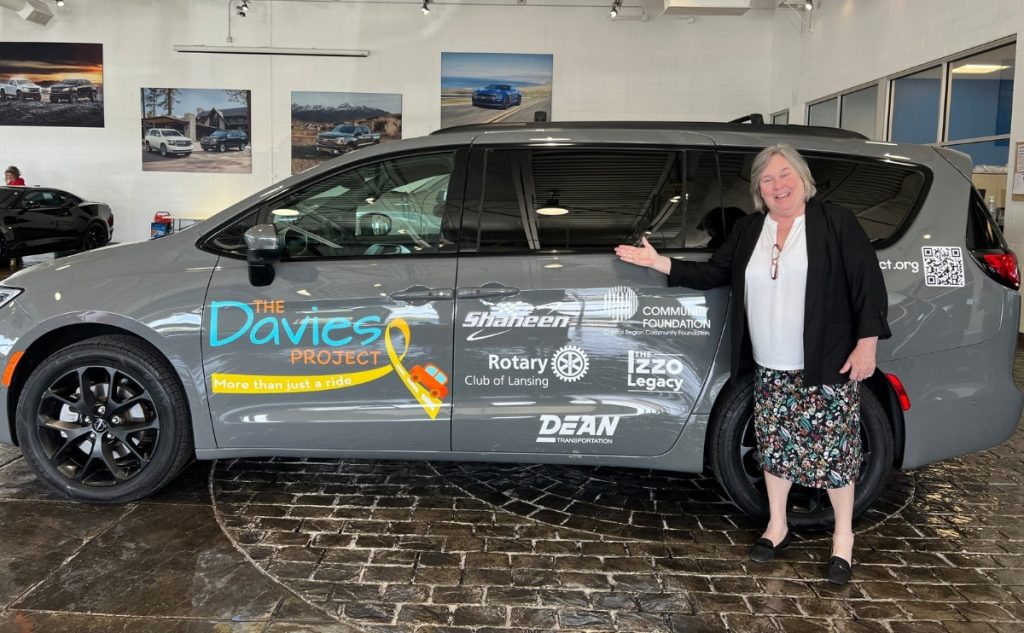
The Davies Project tackles that problem in the Greater Lansing area by providing free door-to-door rides to medical appointments.
Launched in 2014, The Davies Project brings together volunteer drivers with families who would otherwise struggle to get to appointments.
The organization provided nearly 4,500 rides in the past year alone, according to founder and Executive Director Pam Miklavcic. All rides are provided by volunteers, most of them recent retirees, who use their own vehicles and set their own schedules.
“We make it very flexible, which is why volunteers love coming to us,” Miklavcic says. “They often travel for pleasure in the winter and summer, and that’s fine. They can take rides when it works for them and come back when they’re ready.”
An overlooked barrier
The nonprofit is trying to address what is often an invisible barrier to health care.
An estimated seven out of 10 children who depend on specialty clinics in the region are covered by Medicaid, but they frequently miss more than half of their outpatient appointments because they lack a reliable way to get to them.
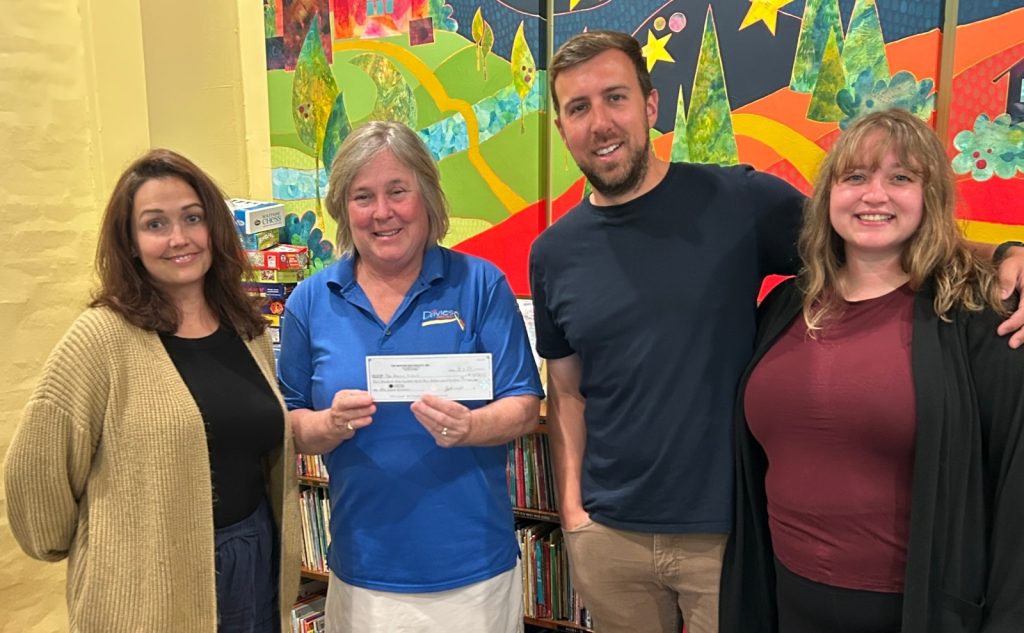
“Transportation is a huge barrier in this community,” she says. “If you can’t get to your care, what’s going to happen with your health?”
The Davies Project serves three main groups: children with serious medical conditions, expectant mothers, and parents of hospitalized infants who need a way to get back and forth to the hospital to spend critical bonding time with their infants.
For children, the service includes rides to specialists, physical therapy, occupational therapy, mental health care, and, increasingly, dental and vision appointments.
For expectant mothers, the organization provides transportation to prenatal visits and continues to offer rides for mother and baby for at least a year after delivery.
“We want to make sure moms and infants are as healthy as they can be,” Miklavcic says. “That gives everyone a better start.”
Recognizing importance of oral health
The organization’s expansion into oral health is driven by a growing recognition that dental care is closely tied to overall health. This is especially the case for children and pregnant women.
Support from the Delta Dental Foundation has helped The Davies Project to promote oral health among the families it serves. This means children can get to dental appointments and receive toothbrushes and educational materials to launch a lifetime of healthy habits.
“Their support allows us to focus on oral health in a way we couldn’t before,” Miklavcic says.
Accessing dental care can be particularly difficult for families facing financial strain. Miklavcic says some parents hesitate to seek dental services because of financial fears. This is an ongoing issue that the agency is working hard to address.
“Families are terrified it’s going to be more costly than what any insurance will cover, especially for parents,” she says.
The Davies Project is developing partnerships with local dental clinics to reduce barriers. That starts with reliable access.
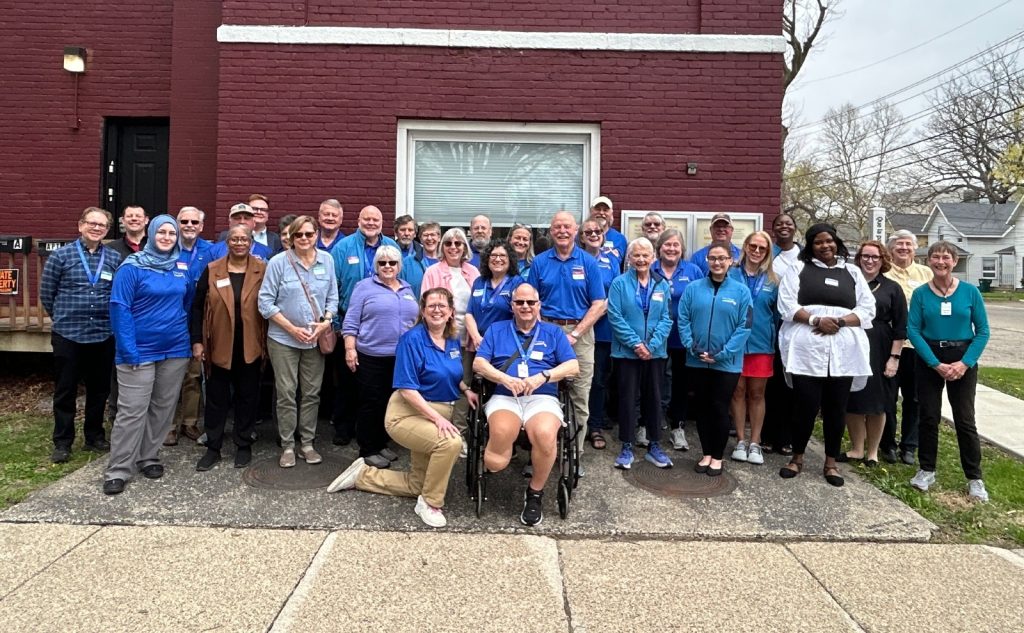
The nonprofit focuses on consistency and personal connection. Unlike ride-share or taxi services, drivers pick families up at their homes, take them to appointments, wait for them, and return them home.
“We’re not an Uber service,” Miklavcic says. “There’s no worry about how you’re getting home.”
Small touches are intended to reduce passengers’ stress. A partnership with the East Lansing Kiwanis Club provides children with a bag of healthy snacks. Drivers also give free books to children, who are encouraged to keep them.
“With recent food bank struggles, parents are so grateful for a little something extra,” Miklavcic says. “It takes some of the edge off.”
The nonprofit aims to build a sense of community among volunteers. For example, it hosts holiday gift drives, and Miklavcic hosts monthly coffee gatherings for drivers in their renovated firehouse headquarters.
Miklavcic believes the connections help retain drivers and strengthen the program.
“These recent retirees are looking for a way to stay involved,” she says. “They’re forming relationships with families they never would have met otherwise.”
Seeing families’ struggles
Miklavcic began The Davies Project after her oldest son was diagnosed with cancer at age 3, just weeks before she gave birth to her third child.
Her son, now 29, recovered after three years of treatment. But the experience exposed stark differences in how families navigate health care systems.
“We had a happy ending to our story,” she says. “But watching other families, it became clear how many were struggling just to manage the basics.”
The nonprofit is named after Dr. H. Dele Davies, a pediatrician and former chairman whom Miklavcic worked with through Michigan State University’s Children’s Health Initiative.
After the initiative ended, Miklavcic was determined to continue the work independently, but with a strong emphasis on providing transportation.
Last year, The Davies Project received about $400,000 from local foundations and individual donors. The organization is now focused on building partnerships with local Medicaid health providers.’
Expansion hopes
The Davies Project serves families across Greater Lansing, roughly from Mason to DeWitt and Grand Ledge to Williamston. Plans are underway to replicate the model in other Michigan communities, starting with Jackson.
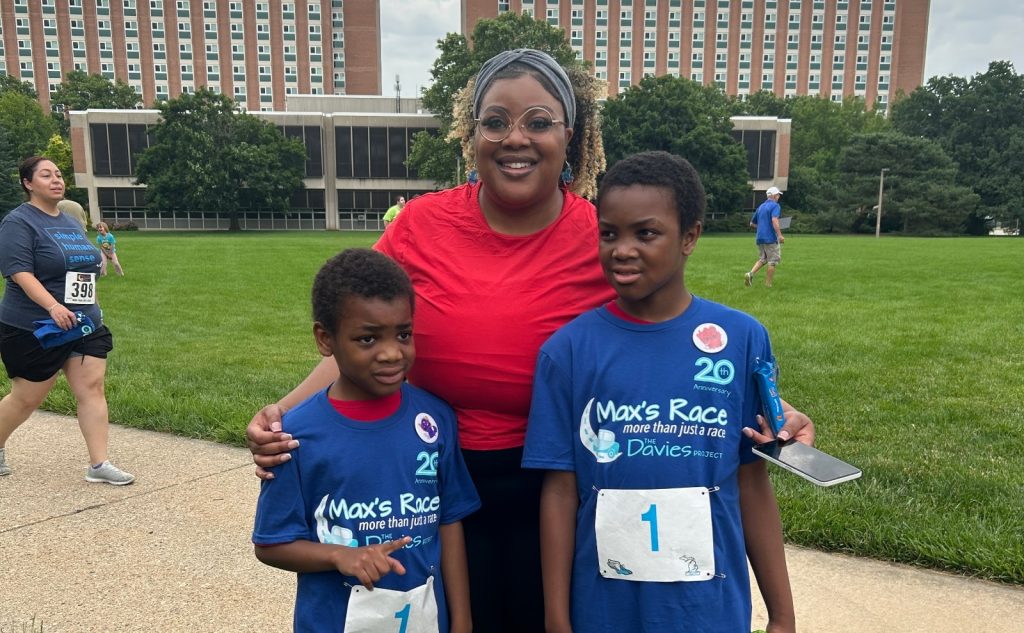
“It works incredibly well,” Miklavcic says. “But expansion takes time and local funding.”
For Miklavcic, the expansion into oral health is the next step in a broader effort to address gaps in care that transportation alone cannot solve.
“These issues are connected,” she says. “When you remove one barrier, you give families a better chance to deal with the others.”
The Davies Project is continuing to grow. Its leaders say its focus continues to be making sure no family misses care, medical or dental, because they cannot get there.
“Our tagline is ‘More than just a ride,’” Miklavcic says. “And that’s really what this is about.”
Photos courtesy of The Davies Project.
Related Articles
Indiana health center trains local residents as dental assistants to fill workforce gaps
HealthLinc, a federally qualified health center in Valparaiso, covers training costs while preparing local residents for dental assistant jobs, strengthening workforce pipelines and expanding access to care.

When everyone is welcome: How Michigan’s CCBHCs are changing care
CCBHCs have been improving access to quality mental health care for Michigan residents since 2021.
Partner Partner Content Day-long conference connects Michigan’s autism community with services, resources — and each other
Few spaces exist where autistic children and adults feel free to be themselves. The NAT Conference aims to be one of them.


