
Returning citizens face extra hurdles in Detroit’s already challenging housing market
Formerly incarcerated people face numerous challenges in finding housing, often leading them to become homeless or recidivate.
This story is part of a series that highlights the challenges and solutions around housing in Southeast Michigan and is made possible through underwriting support from the Oakland County (Region L) Regional Housing Partnership.
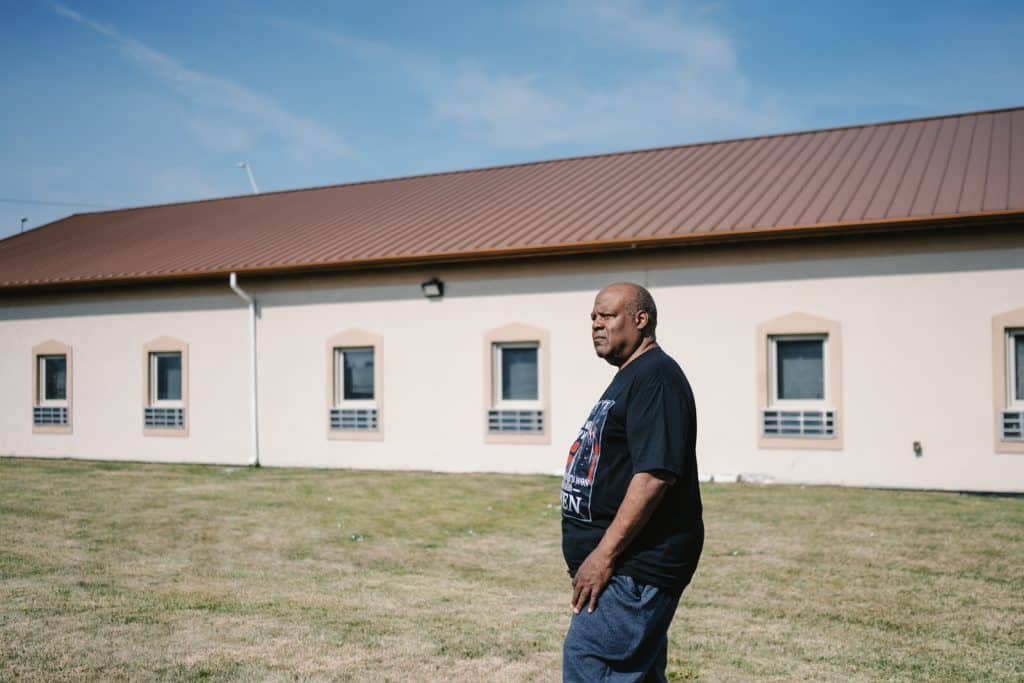
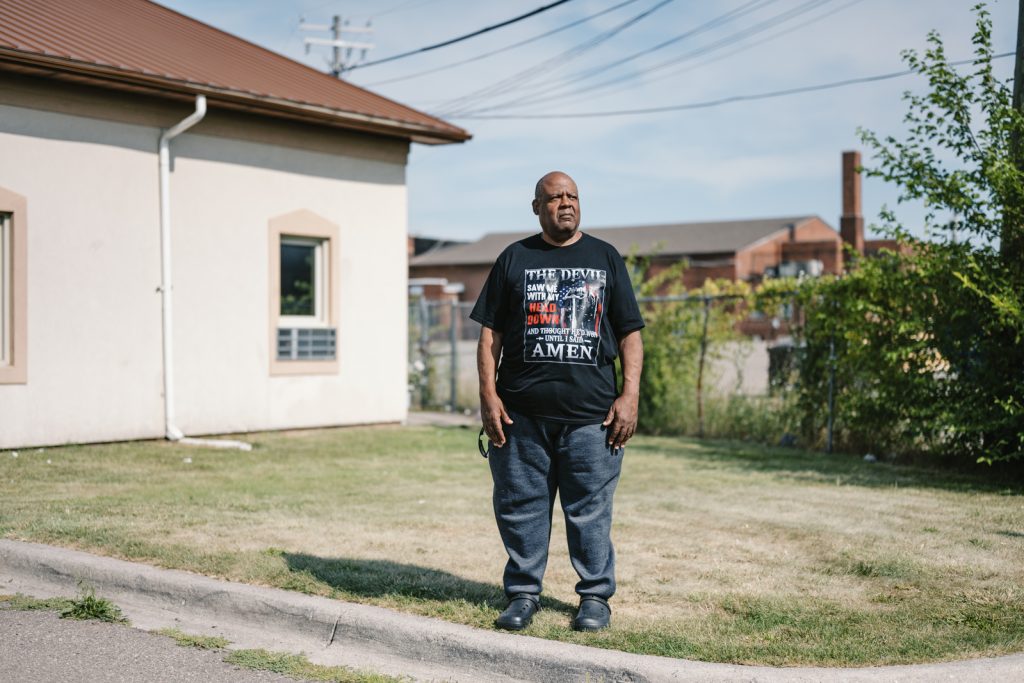
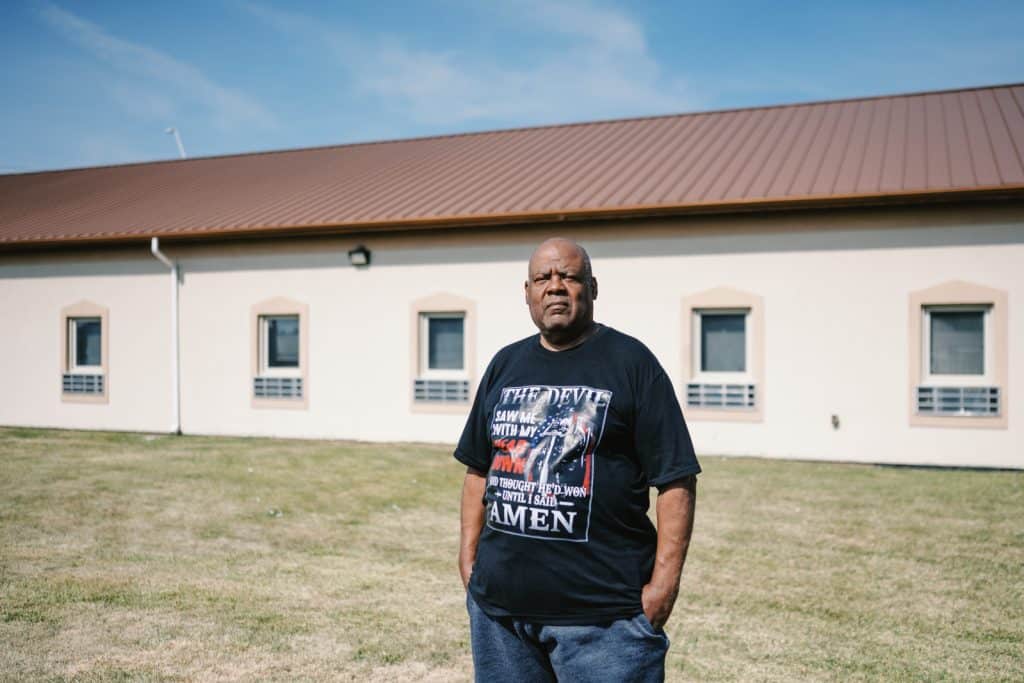
Jeffrey Carter says he expected life to be “a little bit better” when he was released on parole late last year after 39 and a half years in prison. But instead his challenges have only multiplied as he’s struggled to find his own housing, among other basic needs.
“You pay your debt to society and they finally let you walk out of the doors,” he says. “You’re still not free. You just have a bigger yard to walk around in.”
Carter is currently living in transitional housing in Detroit, where he has a room to himself but shares a bathroom with others. Knowing that his time there is limited, he’s been applying to find his own housing, but his applications have been rejected numerous times when criminal background checks reveal his felony record. He says it’s literally impossible to have hope for his future.
“I don’t allow myself to look that far ahead,” Carter says. “Right now, I’m living day to day. I try to get through today, and hopefully tomorrow will be better.”
The housing challenges Carter is experiencing are common among formerly incarcerated people, often known as returning citizens. Research has found that people who have been incarcerated once are nearly 10 times more likely to experience homelessness than the general public, and that likelihood skyrockets with additional periods of incarceration. In the midst of rising housing prices nationwide, struggles that affect every American right now are especially acute for returning citizens.
“It’s already a housing crisis for anybody,” says Tamir Bell, assistant director of Southeast Michigan for Nation Outside, a Detroit-based nonprofit serving and led by returning citizens. “For system-impacted people, it’s like that pressure or that scarcity times a hundred.”
Where to go after prison?
Resuming life beyond incarceration is an immensely chaotic process for returning citizens, with housing being one of the biggest and most immediate challenges. For those who have served their full sentences, Bell says, “they just put you out right on the streets.”
“They give you a bus ticket to a particular place,” he says. “They may give you a homeless shelter resource in that area, and they just ask you to figure it out from there.”
For those released on parole, like Carter, community placement in transitional housing provides an important lifeline. However, it’s an extremely temporary one. Parolees are usually placed in transitional housing for an initial period of 90 days. That time may be extended on what Bell describes as a “somewhat arbitrary” basis.
“It’s not enough time to secure housing, especially for individuals who are system-impacted because, of course, even if you had all the money in the world and a great credit score, the simple fact that you have a felony on your record creates multiple barriers when it comes to housing,” he says.
When Pontiac resident Randy Siebert was released into community placement in 2024, he was placed in a halfway house that he says “should be condemned.” When he raised a complaint about the building, he was moved to a second halfway house that he says was “not that bad.” However, he would have been unhoused after that if not for learning that he was old enough to be eligible for Supplemental Security Income (SSI).
“I aged out of homelessness,” Siebert says.
Siebert’s paychecks from his job at a car wash, combined with SSI, have allowed him to afford his own place. But he says he’d have been in big trouble without the “social safety net” of SSI.
“I’ve seen a number of people who don’t really have that,” Siebert says. “And they’re struggling mightily.”
Housing application challenges
Whether beginning a housing search immediately after release from incarceration or while in transitional housing, the housing market is particularly unkind to returning citizens. Siebert says finding work can be a major initial hurdle because “if you don’t have income, you don’t have housing.” He estimates that he applied unsuccessfully to 250 jobs before finding work.
“When you tell prospective employers that you’re on parole, they don’t want to listen,” he says. “Their ears close. Their face, you know, shuts right off. And it’s, ‘All right. We’ll get back with you.’ So if you don’t have housing already set by your parents, or if you don’t have employment already set, … you’re one step into a homeless shelter.”
Once a returning citizen has enough money to actually afford rent, they may find the basic process of seeking housing hard to navigate. Bell notes that many returning citizens have no experience using the internet, where most housing applications are completed. Carter echoes that sentiment, saying that “everything has changed” in the outside world since he went to prison.
In addition to those technological challenges, returning citizens may lack basic documentation needed to apply for housing. When Bell left prison, he says he felt fortunate because he was able to share a credit card with his sister, allowing him to build credit while he saved money. But when he began to apply for housing, many landlords requested his W-2s – which he didn’t have since he’d been in prison.
Another common challenge for returning citizens is the expense of paying numerous housing application fees only to be repeatedly turned down due to their criminal records. Carter describes it as “the biggest scam in the world.” Bell agrees.
“People know that they’re not going to allow you to live at their apartment or house because you have a felony conviction, but they will tell you, ‘Hey, we consider allowing these individuals to live at these residences,'” he says. “But what they really want is just you to pay that $50, $75, or $100 for that application, knowing well that they’re not going to let you stay there. So they’re just preying on you for that application money.”
When a returning citizen finally does find housing, Bell says it’s often in an area that poses additional challenges to their ability to rebuild their life.
“It might be a neighborhood full of drugs and poverty and all of those things, not access to proper food, healthy food, [or] public transportation,” he says. “So they’re usually stuck, especially in the rural areas, way off in the backdrop of that city or place.”
“The rarity instead of the norm”
Returning citizens say valuable resources are available to help them find housing, but more help is needed alongside some broader systemic changes. Bell says the Michigan Department of Corrections’ Offender Success program provides important support. Carter and Siebert say organizations like Nation Outside and Crossroads Detroit have been helpful to them in readjusting to life beyond incarceration.
But Bell says there’s not enough support, particularly not enough led by people like him who are returning citizens themselves. He says service providers who can’t directly relate to the experience of incarceration often treat returning citizens like “numbers, things they have to check off.”
“We know the barriers that people face,” he says. “We make sure we see these individuals as people because they are people and we treat them as such.”
Beyond a need for expanded assistance, Carter says he would like to see more landlords adopt an open-minded approach to housing returning citizens. He thinks they’d find that many returning citizens make for model tenants.
“If I had a chance to have my own place and a decent job, I would be at work every day,” he says. “I would keep my place clean and orderly because that’s the way we are trained to live in prison. … You’re trained to shower daily. You are trained to keep your clothes clean. So you carry the same mentality when you get out and you’re walking around.”
Bell agrees, noting that he’s talked to many landlords who avoid returning citizens simply because that’s how they’re used to operating. He also hopes to see legislative change on the issue, such as enactment of the Fair Chance Access to Housing Act, which was introduced in the Michigan Legislature late last year. The act would prohibit landlords from making applicants disclose criminal backgrounds during the initial screening process, instead requiring landlords to make a conditional housing offer before doing a conviction history screening.
Carter says he and most other returning citizens would “show so much appreciation” to have a place to call home.
“The only thing 80% of us is asking for is a chance,” he says. “Now, you do have some that are out there that are idiots. … There’s nothing you can change because an idiot is an idiot. He’s going to be an idiot. But that is the rarity instead of the norm.”
Related Articles
Community Land Trusts help Portage residents become homeowners affordably
As the statewide housing crisis continues, communities of all sizes are looking at how to increase affordable housing options for current and future residents. In Kalamazoo County, the Portage Community Land Trust is helping residents become homeowners affordably with their new workforce housing development, Stanwood Crossings.
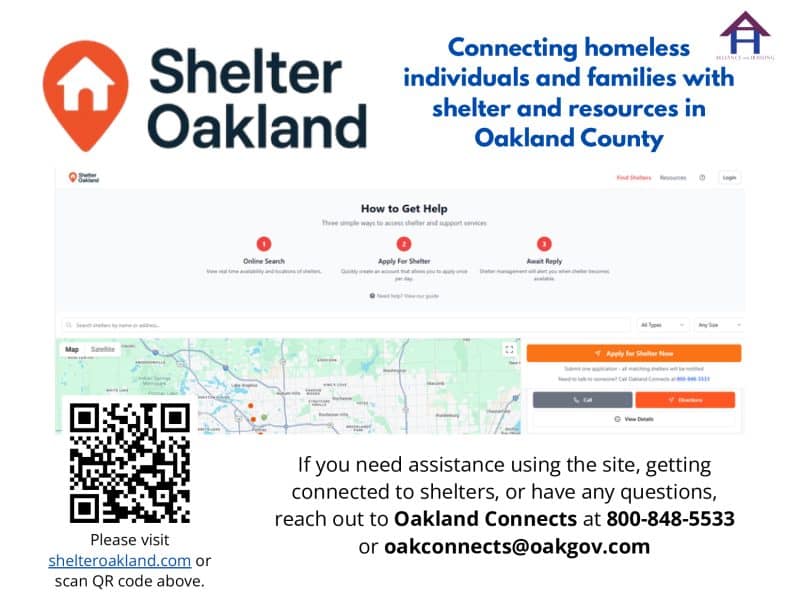
Partner Partner Content How to find a homeless shelter bed in Oakland County
Finding shelter can be frustrating if you’re experiencing homelessness, but a new website called Shelter Oakland makes that process easier in Oakland County.
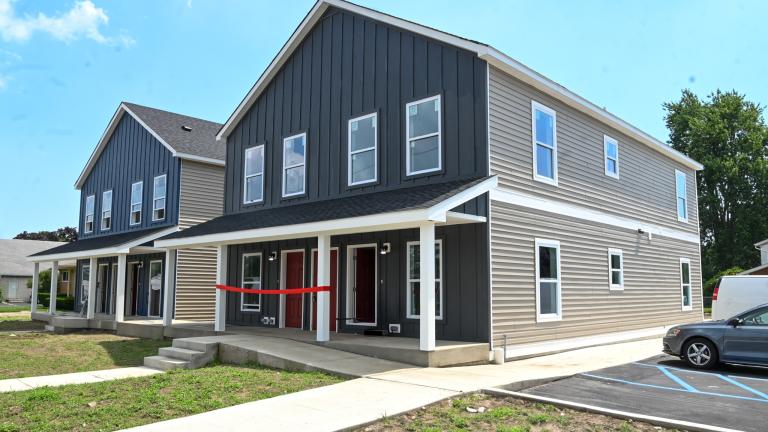
Modular building, 3D construction paves way for innovative solutions to the housing crisis
As Michigan’s affordable housing shortage continues, developers are exploring modular construction and 3D printing as innovative ways to reduce building time and address labor shortages.


