Westland

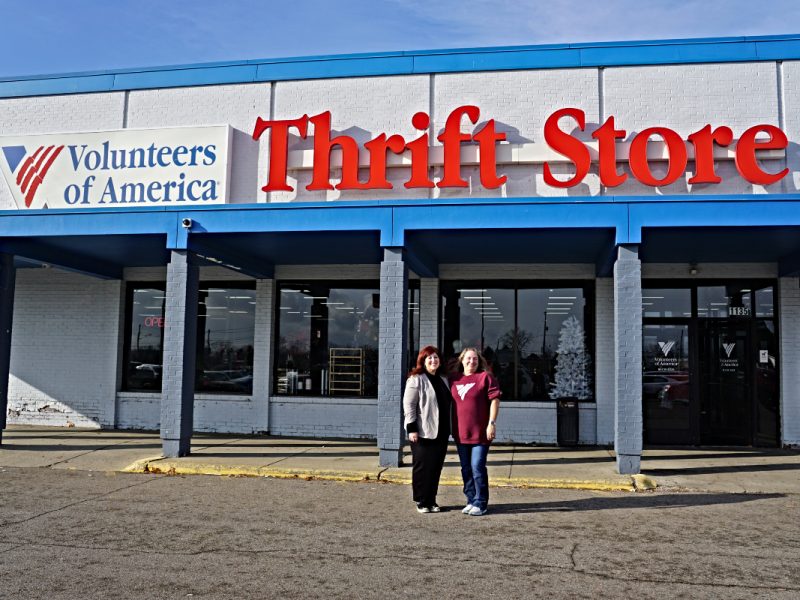
Volunteers of America Michigan’s mission made possible by social enterprise thrift stores; support from IFF

Sometimes nonprofits need help to fulfill their mission of helping others within their communities. For Volunteers of America Michigan, when costly necessary roof repairs and upgraded lighting arose, they found a supportive partner in IFF. The community development financial institution that has provided millions of dollars of loans to five of the VOA Michigan thrift stores.

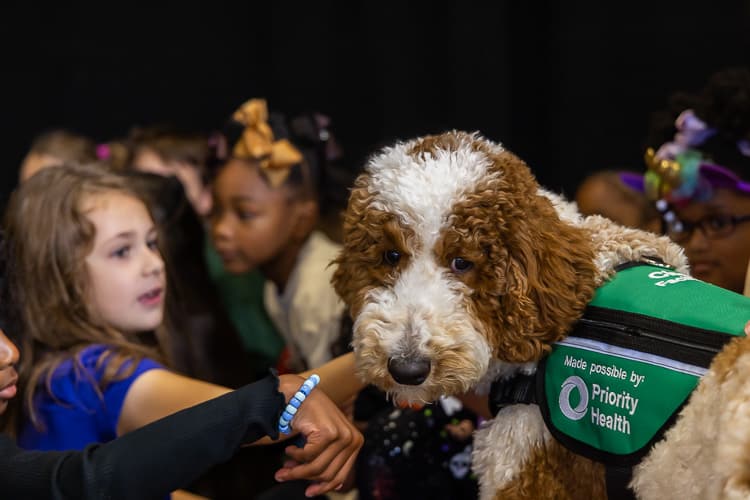
Facility dogs provide helping paws addressing mental health concerns among Metro Detroit schools

In partnership with Canines for Change and Priority Health, Priority Pups have been introduced in three Metro Detroit schools to help support mental health, teach responsibility and symbolize caring relationships.

DTE Energy’s community gardens expand

DTE Energy's community gardens are growing by four acres and possibly hundreds of new volunteers this year.Farming season for the 10 DTE Energy Gardens kicked off in Southfield earlier this week, starting a multi-faceted project that provides food to Gleaners Community Food Bank. The gardens also offer volunteers the opportunity to get involved in their communities, to get more exercise and to learn about gardening. The gardens also serve as aesthetic buffers around DTE facilities.Last year, the 10 gardens produced 44,000 pounds of food for Gleaners and its food banks. With extra land and more volunteers - as many as 1,000 total - the amount of food grown is expected to increase this year, DTE Spokesman Scott Simons says.DTE Energy and Gleaners started the program at two electric substations in 2008 and have since expanded to company properties in Allen Park, Birmingham, Farmington Hills, Frenchtown Township, Plymouth Township, Pontiac, Southfield, Lyon Township, Washington Township and Westland.Source: Scott Simons, spokesman, DTE EnergyWriter: Kim North Shine

New link added to 50-mile Downriver Greenway

$800,000 in grants will pay for the latest link in a trail, which when completed, will be the largest greenway connector of Metroparks in Southeast Michigan. How long? Fifty miles! The grants are earmarked for a 4-mile link to connect 24 miles of trails from Huron Park in Flat Rock to Oakwoods Metropark on the border of Belleville, making the entire Downriver Greenway a 50-mile path. The trail will take outdoor enthusiasts through trees, by waters, across open land, and more."It's huge. It traverses communities, historic areas, natural resources," Twardesky says. "People can use it to commute to work, schools, recreational facilities," says Anita Twardesky, co-chair of the Downriver Linked Greenways Initiative, a consortium of groups that have worked for at least a decade on projects from a vision to lay a continuous trail from the Detroit on the Detroit River DLGI.More than being a nature-rich spot for walking, running, kayaking, fishing and more, the trail could draw visitors from around and outside the state, Twardesky says."Through these greenways we are starting to reinvent our region and look at it as a tourist opportunity," Twardesky says. "Basically from the City of Detroit, down to Monroe over I-275 I consider a hidden jewel within the state. There are lotus beds, sturgeon spawning in the Detroit river. History, Henry Ford's village in Flat Rock, the building of the Edmund Fitzgerald."Making it possible are grants to the City of Flat Rock from the Michigan Department of Transportation and the Department of Natural Resources Trust Fund to the City of Flat Rock. The longer-term goal is to connect the Downriver system of trails to Monroe and, finally and eventually, Toledo. The newest link fulfills a dream of Metroparks planners going back to the 1940s for the park system to be linked. DLGI Co-Chair Mary Bohlng, a Michigan Sea Grant educator, and a number of nonprofits and governmental bodies have worked for at least a decade on creating the system."In just over 10 years, the Downriver community has come together to provide its residents with an impressive network of greenway trails," Congressman John D. Dingell says in a statement announcing the grants.  "These trails greatly improve the quality of life in the region by providing a means of transportation and an outdoor recreational activity."Source: Anita Twardesky, co-chair of the Downriver Linked Greenways Initiative and public relations and marketing manager for Riverside Kayak Writer: Kim North Shine

New cinema with 4D digital projection to rise in Westland

The former Showcase Cinema on Wayne Road in Westland will be demolished so that its nearly 50,000 obsolete square feet can be replaced with a modern 65,000-square-foot theater with 16 screens and room for 3,100 attendees.The new MJR Digital Cinemas theater will feature the latest in screen, sound and digital technology. Demolition, which includes the parking lot, starts next week. Construction starts in March and the theater is scheduled to open in November. It will be the only theater in Wayne County with 4-D digital projection (3D with motion seats)."It's huge for the city," says Lori Fodale, economic development director for the city of Westland. "It's right on the outskirts of our shopping and dining district."With an estimated 800,000 visitors to the theater each year, "it's a huge shot in the arm for the restaurants and retail shops," she says.About 10 permanent full-time jobs and 50 part-time jobs will be created by the project, a collaboration between the city of Westland, the Michigan Economic Development Corp. and the Michigan Economic Growth Authority, or MEGA and Wayne County T.U.R.B.O., a part of the Wayne County Land Bank.MEGA is providing nearly $188,000 to the theater developer to aid in demolition, environmental remediation, and other work. In addition, Wayne County TURBO offered tax incentives to bring the theater in, including 100 percent coverage of the first year of taxes and 50 percent off taxes for years two through five of the theater's operation, Fodale says.The project was deemed a brownfield redevelopment and is eligible for tax discounts. It can receive the MEGA payout and the tax discounts because of the jobs created and the stimulus it will provide to neighboring businesses as well as future positive impact on state, local and school taxes to be paid. It was also eligible because contamination on the property will be cleaned, in addition to other factors.Source: Lori Fodale, economic development director, city of WestlandWriter: Kim North Shine

Michigan Future secures $13M for Detroit schools

Michigan Future is bringing a 21st Century education to more high school students in Metro Detroit with its new Michigan Future Schools initiative.The Ann Arbor-based think tank has lined up $13 million in grants from four local foundations to get the initiative off the ground. The principal goal of the new initiative is to "figure out how to connect urban high school students to the economy of the future," according to a blog post written by Michigan Future's president and co-founder Lou Glazer.The effort will target creating new, small high schools in the city of Detroit and its surrounding suburbs. Previous local priorities of who runs the schools and where they're located will take a back seat to establishing schools that provide a high-quality education."It's al about the kids," Glazer says. "What matters to me, and I assume everybody else, is the quality of the school not the form of governance."Michigan Future Schools has made a commitment to its funders that revolves around the number 85. That means Michigan Future is aiming for at least an 85 percent high school graduation rate, with 85 percent of those graduates enrolling in college and 85 percent of those enrollees earning a college degree. The students targeted are both economically disadvantaged and minority students in the central city and its inner-ring suburbs. Each new school, which must take students from the city of Detroit, is expected to handle up to 500 students. So far seven new schools have been funded. The goal is to create 35 new high schools in eight years. That means the effort could reach 17,500 kids annually. "It's a big number," Glazer says. "The whole purpose is to do this on a big enough scale that it changes the system."Source: Lou Glazer, president and co-founder of Michigan FutureWriter: Jon Zemke

Wayne County children’s study means dozens of healthcare jobs

The Michigan Alliance for National Children's Study is about to start spending its research dollars in Wayne County.The ambitious study plans to enroll Wayne County families this fall, which will lead to dozens of new health care and administrative jobs within the next few years."There is a considerable employment potential," says Nigel Paneth, principal investigator for the Michigan Alliance for National Children's Study. "We're pretty much targeting the county we are focusing on for those new jobs."The study will focus on researching children's health in 100 counties across the U.S. over at least the next five years. Michigan has five counties in this pool, including Macomb and Wayne. Wayne State University and Henry Ford Hospital are partners in this study.Each county will enroll 1,000 families. That includes studying not only children, but mothers, both before and while they're pregnant. Researchers will thoroughly study the mothers' and children's health and the environment they live in, including water and air quality. The hope is to follow these people until the children are 21."They will be giving us quite a comprehensive picture of children's health in Wayne County," Paneth says.Source: Nigel Paneth, principal investigator for the Michigan Alliance for National Children's StudyWriter: Jon Zemke

State, foundation grants spread across Michigan

Grant money continues to pour into Metro Detroit from a number of different sources. The latest comes from the state of Michigan, the Community Foundation, and the McGregor Fund of Detroit.Making the biggest splash is the $716,000 recently awarded by the Community Foundation's New Economy Initiative. Among the recipients are Macomb Community College ($35,110 to help grow defense industry research), Oakland County-based Michigan Security Network ($300,000 to help grow the local defense and homeland security sectors), Michigan Opportunities and Resources for Entrepreneurs Program ($356,250 to help foster entrepreneurs) and Brookings Institution ($25,000 to help automotive communities). More grants are expected to come out within the next few months."They're constantly approving grants," says Theresa Fraley, communications director for the Community Foundation for Southeast Michigan. "They approve them as soon as they’re ready."The Michigan College Access Network also dished out $250,000 in grants. Among the local recipients are Career Transitions (Inkster and Wayne/Westland), Northwest Detroit Neighborhood Development (Brightmoor Neighborhood) and the POH Riley Foundation (Pontiac), which received $8,000 each. The Early College Alliance in Washtenaw County also received a slice of that pie.The $8,000 grants will allow local education and community leaders to determine what their areas can do to encourage more people to achieve a college education. This will serve as the basis for the creation of a broader plan that incorporates mentoring, career exploration, tutoring, college placement test preparation, and college admission advising.The McGregor Fund of Detroit also gave $250,000 over two years to Madonna University. This will help support development of new science courses and other enhancements in conjunction with opening a new science building.Source: Theresa Fraley, communications director for the Community Foundation for Southeast Michigan, the Michigan College Access Network and the McGregor Fund of DetroitWriter: Jon Zemke

Our Partners

Farmington DDA Logo
City of Oak Park

Solutions journalism takes time, trust, and your support.

Close
Psst. We could use your help today!

Don't miss out!

Everything Detroit, in your inbox every week.

Close the CTA

Already a subscriber? Enter your email to hide this popup in the future.