
How this Warren Thai market keeps Southeast Asian immigrants connected to home
At the Midwest Buddhist Meditation Center in Warren, a weekly Thai market helps Southeast Asian immigrants maintain cultural connections while introducing visitors to foods and traditions rarely found in local restaurants.
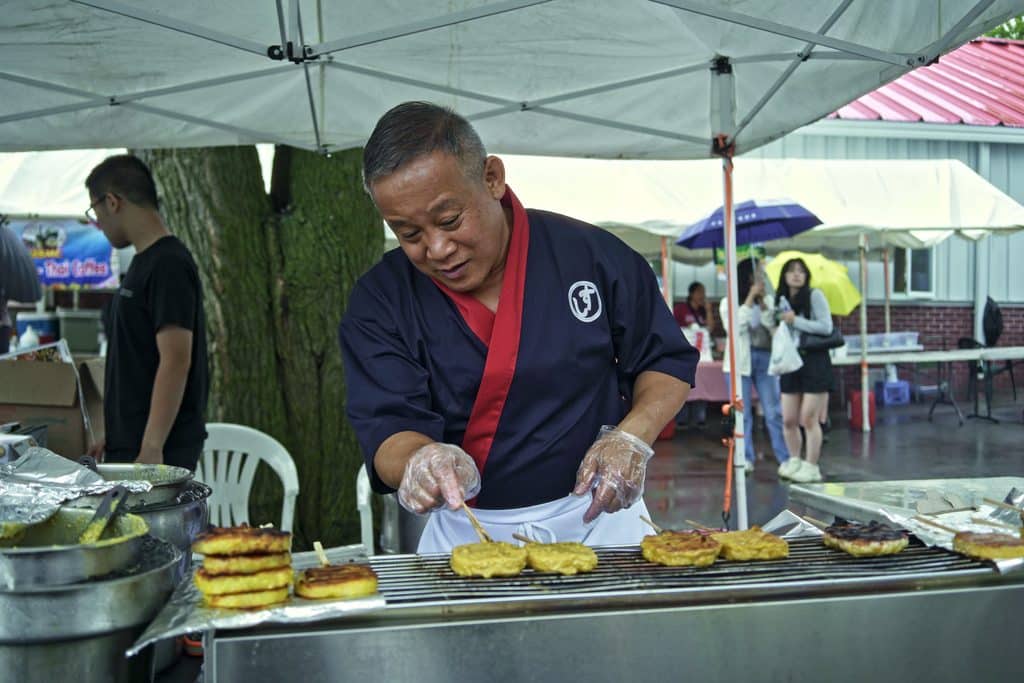
For Thai immigrants and other Southeast Asian communities, the Sunday market at Midwest Buddhist Meditation Center offers a taste of home in more ways than one.
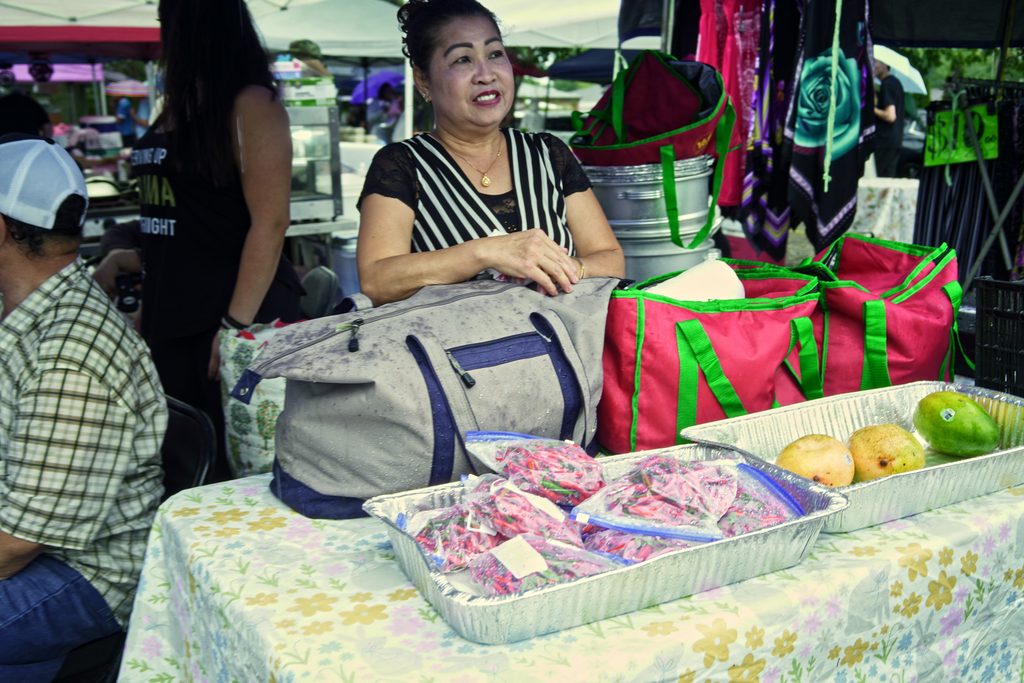
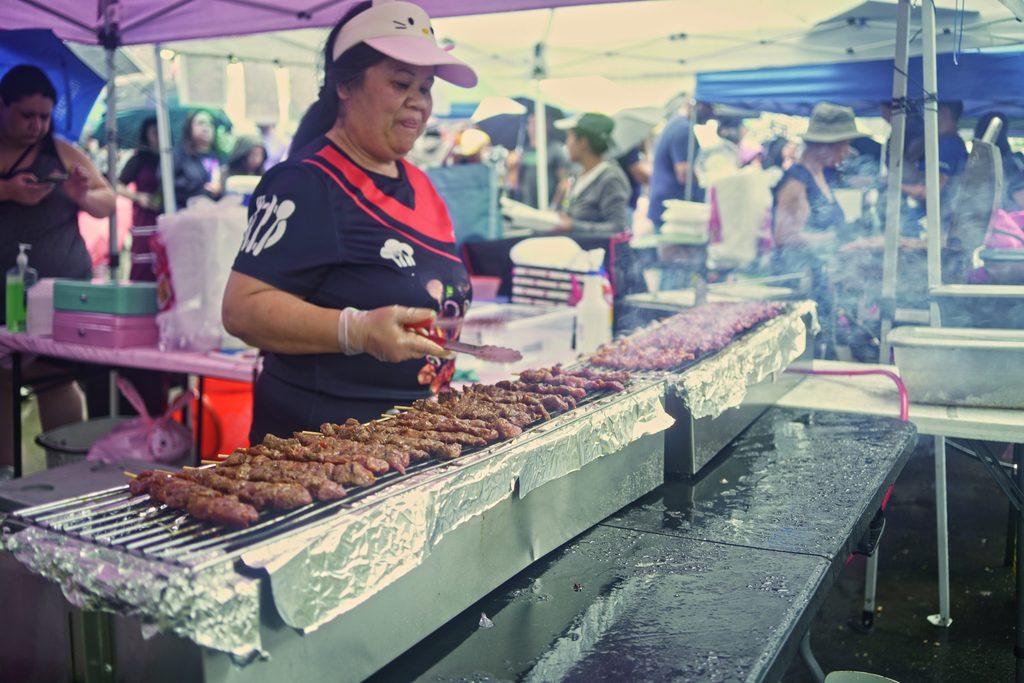
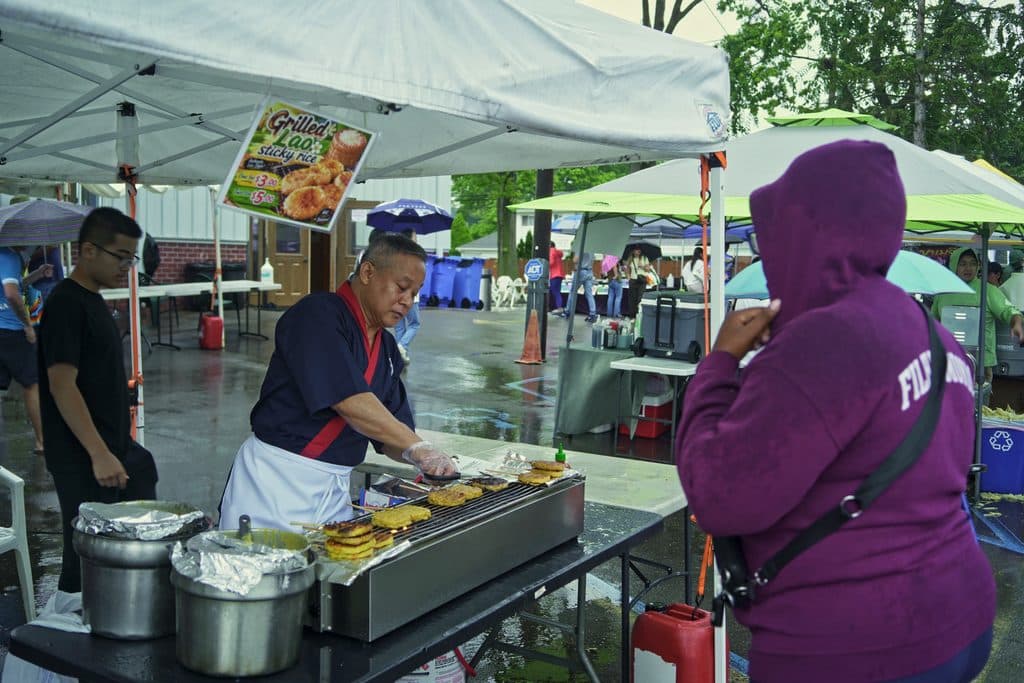
It was pouring rain on the morning of Sunday, August 30, but the weather didn’t keep people away from the seasonal Sunday Market at Midwest Buddhist Meditation Center in Warren.
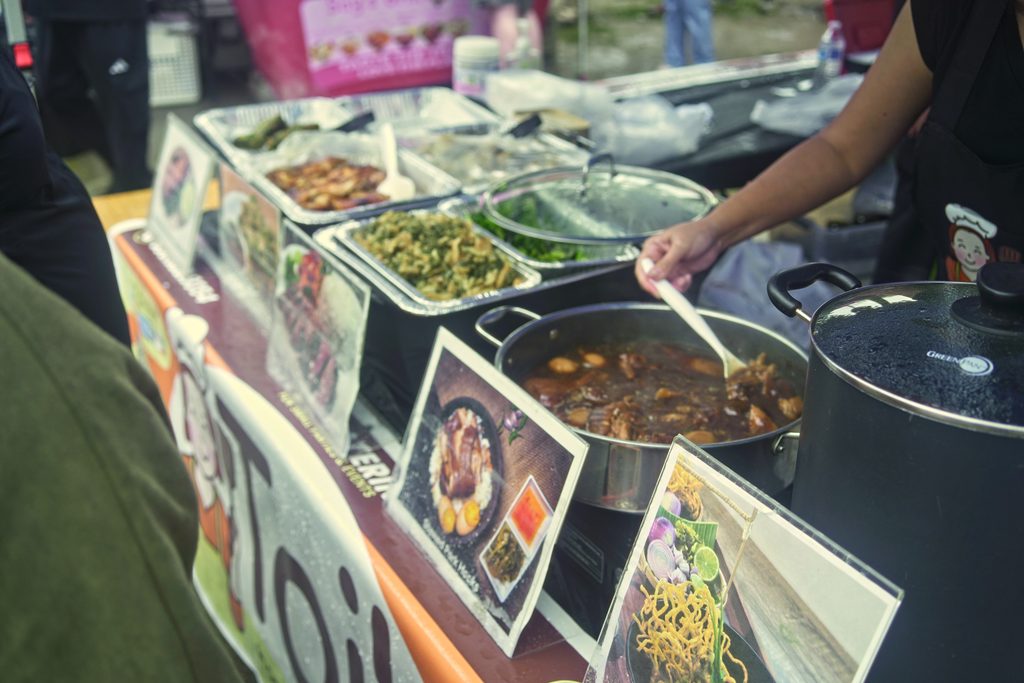
Under lines of tents in the temple’s parking lot, vendors served plates of food, poured drinks, and sold goods from their home countries. Thai, Lao, Vietnamese and other Southeast Asian immigrants came to eat food that brought them back home, while people from across Southeast Michigan came to try something new.
For Lawan Chandruang, vice president of the center, the market represents how much has changed since she arrived in Michigan in 1977. Back then, she couldn’t even find Thai chili peppers to cook with. Now, there are Asian markets throughout Southeast Michigan, making it much easier to find familiar ingredients.
But at the Midwest Buddhist Meditation Center, the Sunday Market offers something those stores and restaurants can’t always provide: a place to find the food, people, and cultural connections that make home feel a little closer.
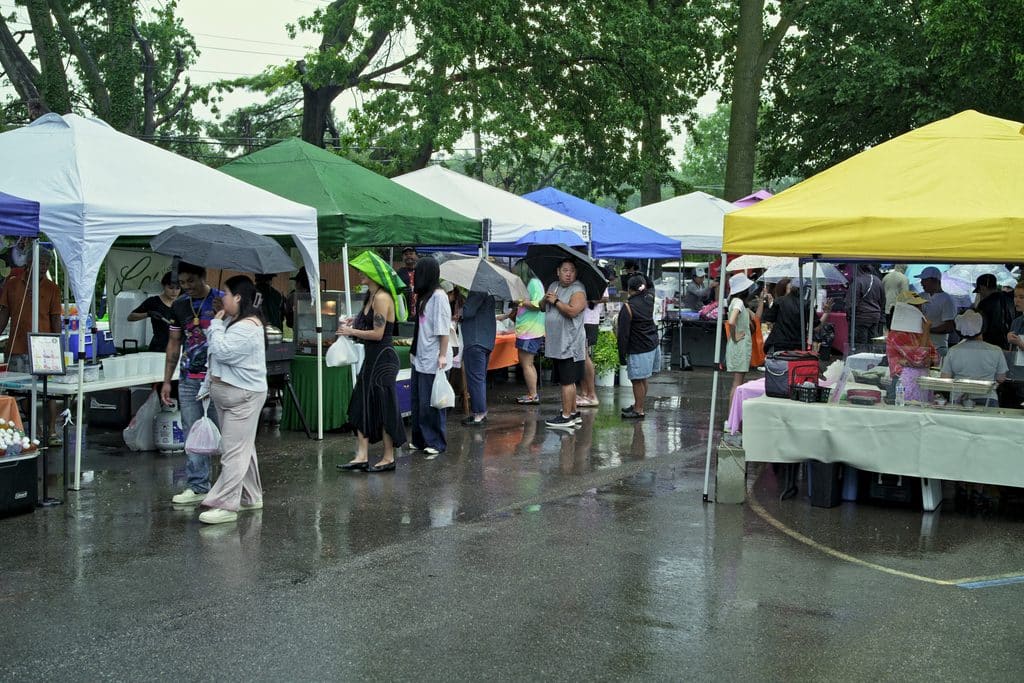
For Chandruang and other organizers, that is part of the point. The market gives local Thai immigrants a way to reconnect with something familiar while introducing the broader community to dishes and traditions they might not otherwise encounter.
That kind of community has become increasingly significant as Michigan’s Asian population has grown. Michigan’s Asian population grew by 40.3% between 2010 and 2020, when it reached more than 334,000 residents, according to the Michigan Department of Health and Human Services.
At the Warren temple, the market is one of the ways that growth has translated into a physical place where people can find each other — and find pieces of home.
A temple becomes a home away from home
Midwest Buddhist Meditation Center was founded in 1992 with the help of Dr. Chuen Phangcham, a Buddhist monk who moved from Chicago to Michigan and helped establish what became the first Buddhist temple in the area.
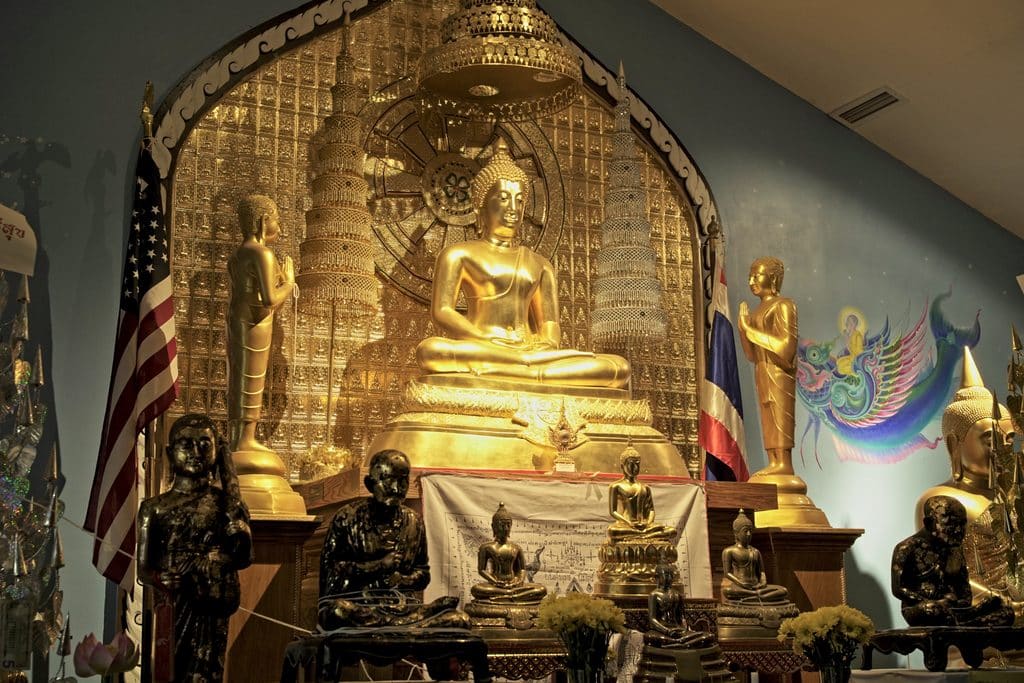
The center quickly grew beyond the Thai community. Lao, Vietnamese, and other Asian immigrants began using the space, alongside Americans interested in Buddhism and meditation. Today, the center hosts Buddhist ceremonies, meditation and Thai classes, and provides a place for people of all ages and backgrounds to come when they need community or support.
Chandruang, one of the temple’s founders, knows what it means to arrive in Michigan and have to build that community from scratch. She first came to the United States at 22 as a member of Thailand’s national table tennis team, later deciding to come back to the United States with her husband and build a life in Michigan.
That experience is part of what keeps her connected to the temple. As the center has grown, it has become a place where Thai immigrants like herself can maintain ties to their culture while building relationships with other communities.
For Chandruang, that means the temple is about more than preserving Thai traditions. It is also about creating a space where immigrant communities can support each other, whether through language, food, meditation or simply having people around who understand what it means to be far from home.
A market built around food from home
The Sunday market began about 25 years ago with only two or three vendors, most of them temple members who prepared food from their restaurants and brought it to sell or donate at the center.
Since then, it has grown drastically and is popular for people of all backgrounds in the area.
Nan Walters, another Thai immigrant who has lived in Michigan for 18 years and volunteered at the center for nearly a decade, remembers attending the market for the first time about 15 years ago. At the time, she says, there were only a handful of people involved and mostly Thai people.
Now, the market draws people from across Michigan and beyond.
For Chandruang, the growth is partly because the market offers a unique atmosphere, as well as meals that other spaces don’t. Some dishes—like khao soi, Lao sticky rice, and other dishes—can be difficult, if not impossible, to find at a restaurant.
“None of the restaurants would cook stuff like this,” Chandruang says. “They only know the simple [stuff] like pad Thai, fried rice, curry.”
Walters says she stopped going to Thai restaurants a long time ago because the food there doesn’t taste like what she remembers from Thailand. For her, that authenticity is a big part of why the market matters.
“I always feel good that someone said they love Thai food, and it’s very hard to find authentic Thai food,” she says. “[At] Thai market[s], you can buy authentic food … street food that you cannot find at Thai restaurants anywhere.”
She adds, “When you are far away from home, the temple is a place that you come see people that speak your language, and it comforts you, it helps you with the homesick.”
That feeling of home extends beyond Thailand.
Chris Sayanthone, a Lao immigrant and market vendor, sells Lao sticky rice at the Sunday market. The dish takes hours to prepare, he says, and the process connects him to his childhood.
“I love it. It reminds me of when I was a boy,” he says.
Sayanthone has lived in the United States since 1991. He left Laos after the communist takeover in 1975. “We have to escape,” he says. “If you don’t escape, they kill you. They capture you in the training camp, brainwash, training you to ‘Hate America’ or something like that, so we have to escape.”
His story is part of a larger history shared by many Southeast Asian immigrants who came to the United States after war, political upheaval, and displacement reshaped their home countries.
But at the market, Sayanthone’s connection to Laos is expressed through something much more simple yet heavily important: food.
He travels to Thailand and Laos every year just to visit and get the ingredients he uses at the market.
The recipe he uses for his Lao sticky rice took persistence to get. A family initially refused to share it with him because they were worried he would become competition, he says, but when he told them he would be making it in the U.S., they invited him into their home and showed him how to make it step by step.
Now, he brings that food to the Warren market. And he says he can see the desire for connection in the people who attend
“It’s communities — not just Laos, Thai, Cambodia, Vietnamese, Sri Lanka — it’s all communities here. That’s important,” Sayanthone says. “People come from all over — Ohio, Canada, all over. I love talking to them.”
More than a meal
The market has also become a way for people without a direct connection to Southeast Asia to learn about it.
Walters says she has met people who have Thailand on their travel bucket lists, as well as people who previously lived or worked there. Some come to the market specifically looking for food that reminds them of their own time in Thailand.
“It always warms my heart when someone say they like Thailand and love Thai food,” she says.
For Chandruang, that kind of cultural exchange is part of why she is grateful that the market is connected to the temple. Food may be what brings people through the doors, but once they are there, they can also encounter Buddhist traditions, different languages, and other parts of the community’s culture.
“We just want to give them some opportunity for meditation and to learn about Thai culture,” Chandruang says.
The market doesn’t require people to share a religion or a nationality. It simply gives them a reason to gather, try new foods, and learn about different cultures.
For immigrants who have left home behind, simply a familiar dish can mean a lot.
Point of Entry is a series exploring the lived realities and vital contributions of immigrant communities across Southeast Michigan. This is a collaboration with New Michigan Media, supported by the Community Foundation for Southeast Michigan. See more stories from this series here.
All photos by Jupiter Star.
Author

Related Articles
Thumb Art Spark initiative connects artists, communities, and businesses ahead of 2027 public art celebration
Planned for September 2027, the Thumb Art Spark Celebration will bring communities across the region to highlight existing public art, showcase new projects, and give residents and visitors new ways to explore the places where they live.
Partner Partner Content Creativity and community come together at Farmington’s new Art Park Promenade
Farmington’s Art Park Promenade connects Riley Park with the Hillside Townes development through a pedestrian-friendly space filled with landscaping, seating, and public art.
Small Business Social Hours foster success through face-to-face connection
Why face-to-face networking opportunities are even more important for small businesses and entrepreneurs.


