
From 3D-printed homes to “pocket neighborhood”: New approaches to affordable housing in Metro Detroit
Across the Metro Detroit area, innovators are finding new ways to develop the affordable housing that the community desperately needs.
This story is part of a series that highlights the challenges and solutions around housing in Southeast Michigan and is made possible through underwriting support from the Oakland County (Region L) Regional Housing Partnership.
Oakland County is in the midst of a housing crisis, as rents soar and supply dwindles. But across the Metro Detroit area, innovators are finding new ways to develop the affordable housing that the community desperately needs.
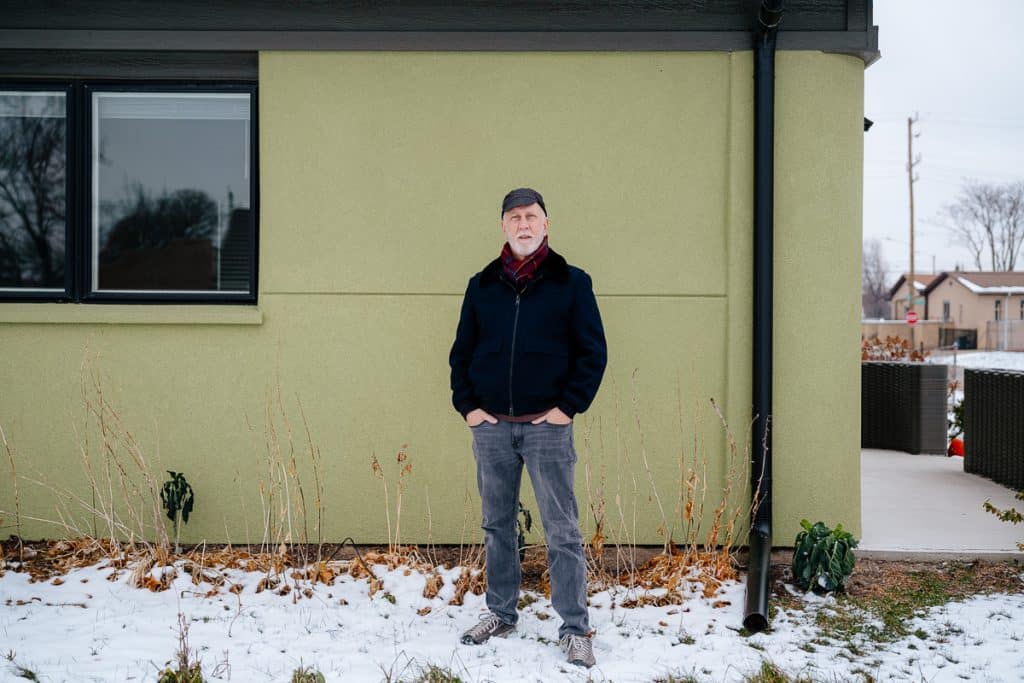
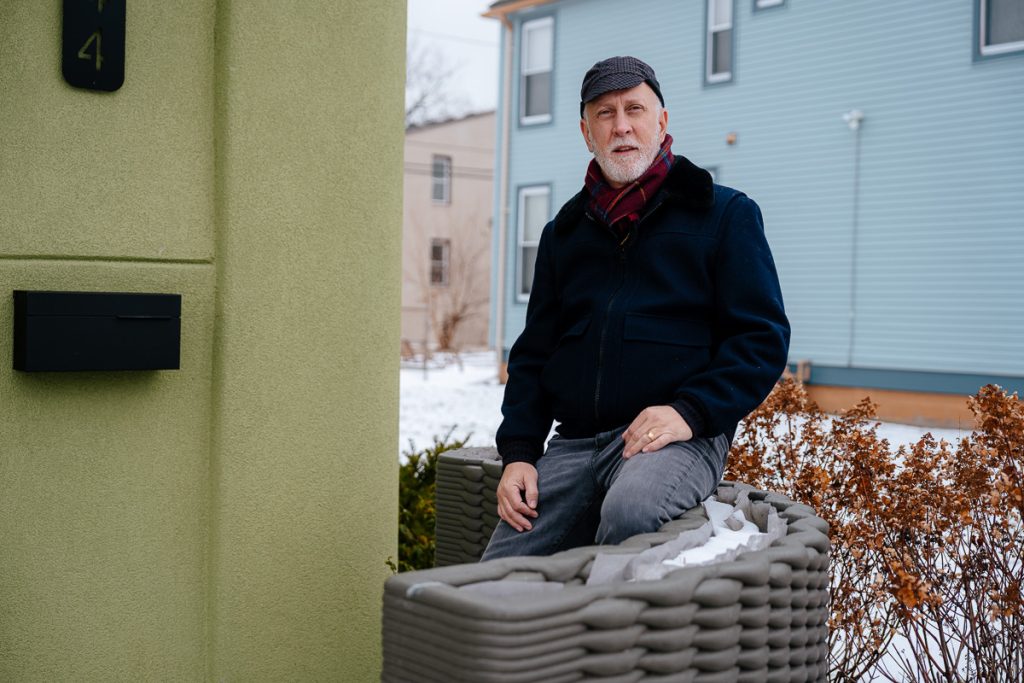
For instance, in 2023 Detroit-based Citizen Robotics introduced its unconventional solution: a Detroit home built with 3D-printed walls, allowing for quicker and more cost-effective construction. The company has currently procured a site in Pontiac for its second project, a 3D-printed duplex, and identified another Pontiac site for a planned 30- to 50-home development. Tom Woodman, Citizen Robotics’ founder and president, says non-traditional thinking is needed because there’s currently only one dominant paradigm for getting affordable housing built: using government subsidies like the Low-Income Housing Tax Credit (LIHTC).
“We’re not seeing anybody with the capability to make affordable housing for real,” he says, adding that the subsidy model “doesn’t leave any room for innovation.”
Kyle Hines, Oakland County’s housing trust fund manager, says unconventional approaches to affordable housing development are welcome at the county. For example, he says, he’d love to see proposals for converting vacant office space into affordable housing.
“When you find yourself in an affordable housing crisis, you want to really use all tools available to you,” he says. “… At the county, we’re very supportive of all different types of housing and whatever works. You’ve got to have a lot of tools in the toolbox, and we’ll support anything that makes sense to provide safe, decent, and affordable housing for Oakland County.”
From 3D-printed homes to a “pocket neighborhood” for older adults to homes built on a school campus, we took a look at three non-traditional affordable housing projects underway in Oakland County.
Disrupting construction and renting models
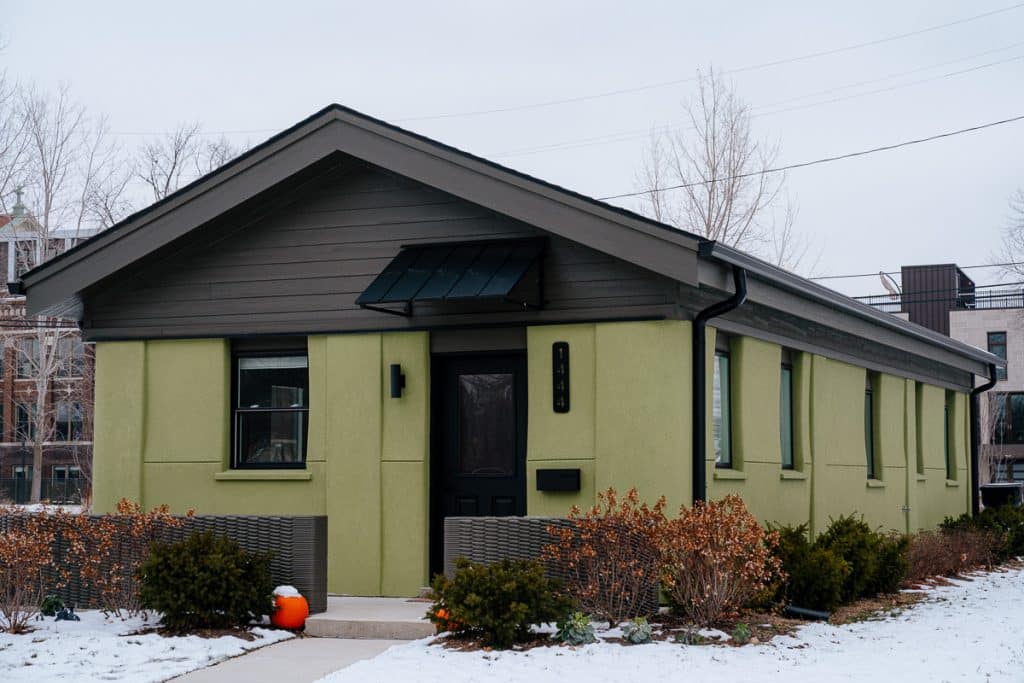
Citizen Robotics’ debut 3D-printed home in Detroit wasn’t necessarily a paragon of affordability, with a list price of $224,500 (nearly triple the average sale price in Detroit at the time). But Woodman notes that the home was a “pilot” built at a “cost premium,” demonstrating the feasibility of an approach that will reduce construction costs at scale.
Citizen Robotics 3D-prints structure walls using a cement-based mortar, a method that Woodman expects to save on time and labor costs when deployed for larger-scale development. The air-tight walls are filled with spray foam insulation, helping the home maintain temperature better and reducing inhabitants’ energy costs.
But Citizen Robotics is seeking to disrupt not just the way homes are built, but the way they’re rented. In the long run, Woodman intends to rent rather than sell homes because, he says, “if we hold the asset for its lifetime, then we as the developer care about total cost of ownership.”
Woodman is planning a model he calls “Build for Equity,” in which Citizen Robotics’ housing assets would be held in a fund, with a portion of tenants’ rents going toward equity in the fund alongside accredited investors’ contributions. Tenants’ equity would increase with property values and they could cash their shares out as they wished.
“Homeownership as the grand ideal is woefully flawed,” Woodman says. “… It worked fine for me because I bought low, right? But it’s not a panacea. Some young people have already realized that and they’re like, ‘Well, I don’t even want to be a homeowner. Let me just rent.’ But … if you’re going to spend 30% of your income [on rent], maybe get some upside the same way rich people do, with a diversified-risk real estate portfolio. And so that’s what we like to bring to the table.”
Woodman says he sees no other housing solution with the “disruptive potential” of 3D printing. He points to examples of 3D-printed structures around the world, from a neighborhood in Texas to a series of groundbreaking structures in Dubai.
“Kindergarteners today learn to 3D-print,” Woodman says. “And the process they learn to 3D-print something on a small printer is the same process [used to build a house]. And so the notion that those young kids are going to grow up and want to 3D-print an entire house for themselves seems like a sort of a foregone conclusion. The trick is, is it going to happen here or is it just going to happen elsewhere?”
Addressing Pontiac’s housing shortage and older adults’ needs
Also in Pontiac, the nonprofit Micah 6 Community is envisioning an affordable, close-knit community for older adults on the former site of Ralph Waldo Emerson School. The school closed in 2009, was badly damaged by a fire in 2014, and was acquired by Micah 6 in 2018. The nonprofit partnered with Oakland County last year to demolish what remained of the former school, making way for a housing development. Micah 6 Executive Director Coleman Yoakum says the need for affordable housing for older adults in particular was clear.
“Through listening to the community as the city was developing its Housing Master Plan we heard a common story: Seniors had been in their homes for decades, and were now finding that it was becoming too difficult to manage and move throughout those homes,” he says in an email.
Micah 6’s solution was to create the Emerson Housing Development, a “pocket neighborhood” of 50 homes reserved for sale to older adults making 80-120% of the area median income. Yoakum says Micah 6 is considering several methods to ensure that housing costs would represent no more than 30% of a resident’s income, a common benchmark for housing affordability. The homes would be small – 700 square feet or less – and the development would include communal spaces including community buildings, courtyards, and seating areas.
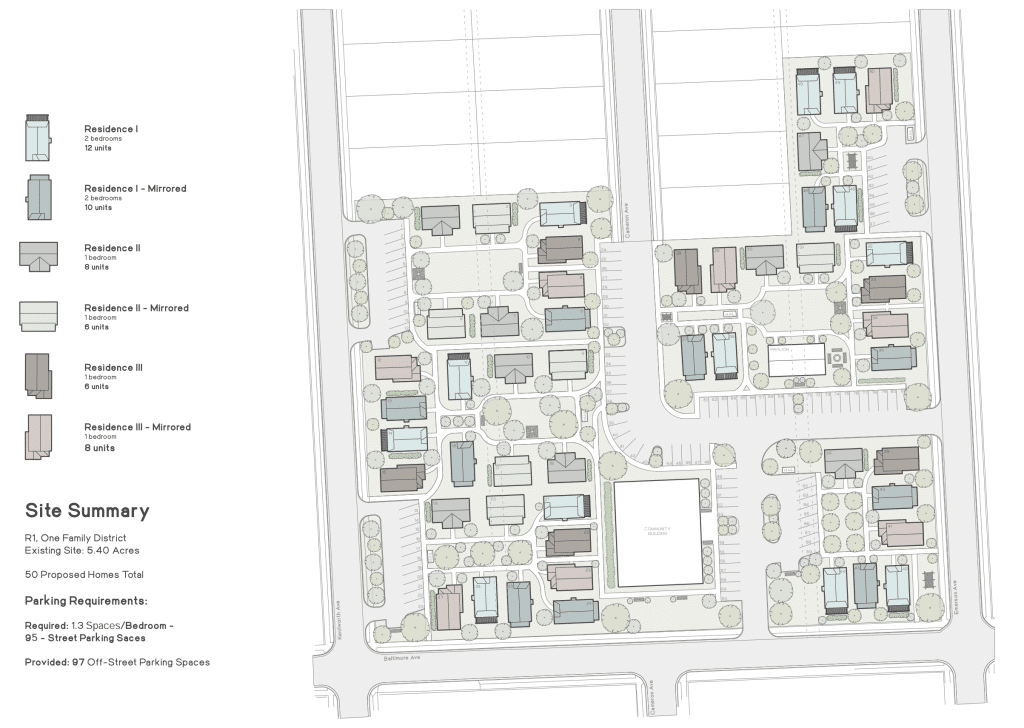
Informational materials for the Emerson Housing Development note that one-third of Pontiac’s population is over 50 years old. They also point out that the city is woefully short on housing, with over 50% of housing stock built before 1960 and only 21 single-family home building permits approved in 2023.
“In our mind this not only provides quality housing for [older] residents, but ideally frees up 50 homes in this city for families to move in,” Yoakum says.
The project is still in preliminary stages but moving forward. Yoakum says he hopes to have a site plan approved by the city of Pontiac in early 2026. He aims to find philanthropic support and other less conventional ways of bringing the project to fruition.
“If things like building affordable housing were easy and profitable, McDonald’s would do it,” Yoakum says. “It is clearly a need, but if money is your motive, affordability is less attractive. So many builders now come to communities, tell the neighborhood about an amazing project, then when one funding source falls through (usually LIHTC), they scrap the whole project. We need to find better solutions and different solutions to fix this problem because the need is bigger than the buckets of funding that exist for them.”
Big house on campus
Since 2019, students have been building affordable homes on the Oakland Schools Technical Campuses for transport and sale to Pontiac neighborhoods. That’s thanks to a partnership with Venture Inc., a housing subsidiary of the Pontiac- and Howell-based nonprofit Oakland Livingston Human Service Agency (OLHSA).
Venture Inc. President Brad Michaud says the idea arose from conversations between OLHSA and Venture Inc. staff, former Oakland County Treasurer Andy Meisner, and former Oakland Schools Superintendent Wanda Cook-Robinson. Michaud says the group “envisioned a partnership where high school students could build a home directly on school grounds, gaining real-world construction experience while helping address the region’s need for quality, affordable housing.”
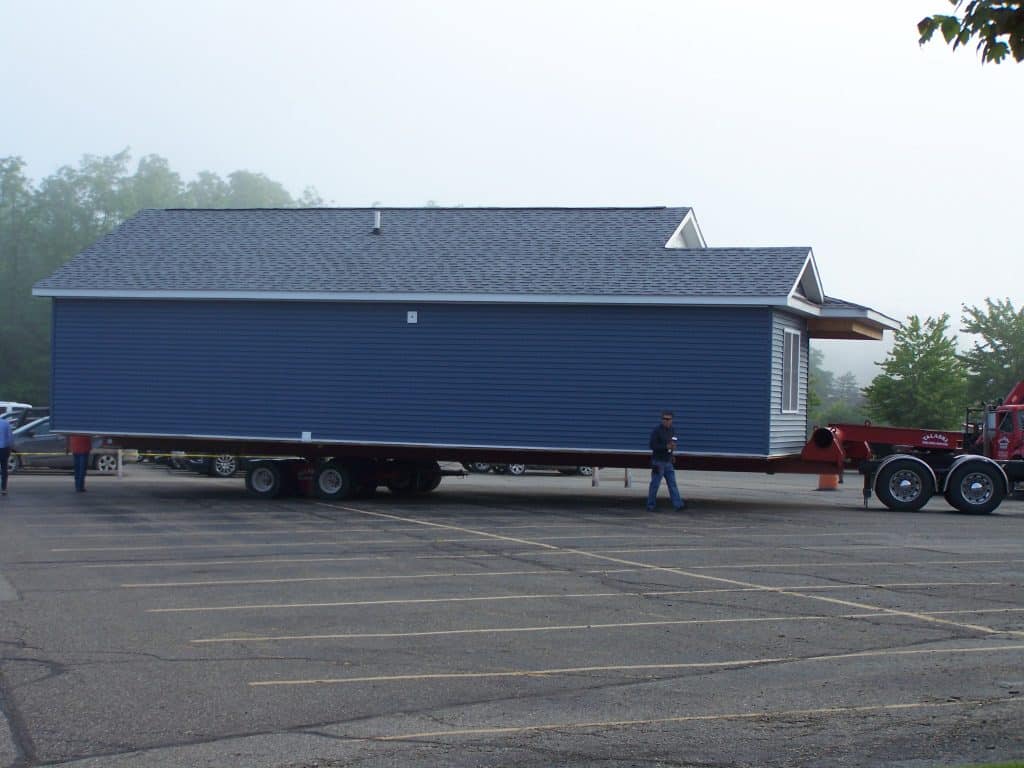
Oakland County allocated funds from the federal HOME Investment Partnerships Program toward the effort, allowing it to launch in 2018. The first student-built house was moved from Oakland Schools Technical Campus to a permanent lot in Pontiac in 2019, and five more houses have been built through the collaboration since then.
The homes are reserved for families making 50-80% of the area median income, and Venture Inc. furnishes them with appliances including washers, dryers, refrigerators, and stoves. Venture Inc. Assistant Director Veronica Echevarria notes that many people assume the model is cheaper because students do much of the construction work, but there are no actual savings because Venture Inc. still has to pay a contractor to oversee the students.
“It doesn’t help Venture in any way because it’s actually more work,” she says. “We don’t mind. The whole benefit and the whole reason why we do this is so the students can get the experience. … And it’s also for the homebuyer, because then the homebuyer knows, ‘Wow, I was a part of students getting experience and students built my house.'”
Related Articles

Farmington’s focus on public art fosters economic growth
The City of Farmington’s collaborations support its vision of leveraging public art as an economic driver.

Black Girls Do Science sparks a new generation of women in STEM
Bryne Berry, founder of Black Girls Do Science, created the nonprofit to expand access and representation, empowering and exposing girls of color to the STEM fields to reduce racial and gender gaps.

Collaboration Over Competition: How Downtown Farmington’s community spirit earned national acclaim
From sharing ingredients to using the Syndicate social district, local business owners are coming together as a community to continue driving economic success.


