
Federal housing funding rollercoaster leaves hundreds of Metro Detroit households in limbo
Housing service providers in Metro Detroit have been in turmoil over the past month as the federal government has threatened massive changes to funding of services for people experiencing homelessness.
This story is part of a series that highlights the challenges and solutions around housing in Southeast Michigan and is made possible through underwriting support from the Oakland County (Region L) Regional Housing Partnership.
Housing service providers in Metro Detroit have been in turmoil over the past month as the federal government has threatened massive changes to funding of services for people experiencing homelessness.
Last month the U.S. Department of Housing and Urban Development (HUD) issued a Notice of Funding Opportunity (NOFO) for its Continuum of Care (CoC) program, which funds homelessness prevention programs nationwide. Many CoC funding recipients (known as CoCs) were caught off guard by a major change to the program’s funding priorities. While over 80% of CoC funding in recent years has gone toward some form of permanent housing for people experiencing homelessness, the NOFO stipulated that only 30% of CoC funds be dedicated to that purpose. The remaining 70% would have been awarded through a competitive review process prioritizing transitional housing and street outreach services. Under that process, only permanent supportive housing projects serving older adults or people with disabilities would have been eligible for funding.
The previous NOFO had offered funding for two years’ worth of projects, in 2025 and 2026. CoCs had already applied for and received funding under that NOFO, and were anticipating continued funding of their projects through next year. But last month’s NOFO sent them scrambling to reapply for funding under radically revised guidelines and with little time to spare.
Michigan and 20 other states filed a lawsuit challenging the NOFO, as did a group of local governments and nonprofits. On Dec. 8, just before a court hearing on the lawsuits, HUD rescinded the NOFO. And on Dec. 19, a judge granted a preliminary injunction to the plaintiffs in the suits, ordering HUD to halt its planned changes. However, on Dec. 22, HUD released another new NOFO. Although HUD said the NOFO was for public review, and that it would not “implement or enforce [the] NOFO pending further court order,” the NOFO still stipulated that no more than 30% of a CoC’s funds be dedicated to renewing existing permanent housing projects. In a new addition, it set aside 30% of CoC funds for new permanent housing projects.
In Oakland County, CoC funding recipients had anticipated that the original NOFO changes would result in 700 people, 400 of them children, becoming homeless. While that specific threat has been lifted for the moment, local housing service providers are still confused about the state of their current grants, some of which are set to renew in just a few weeks, and concerned about longer-term seismic shifts in federal funding.
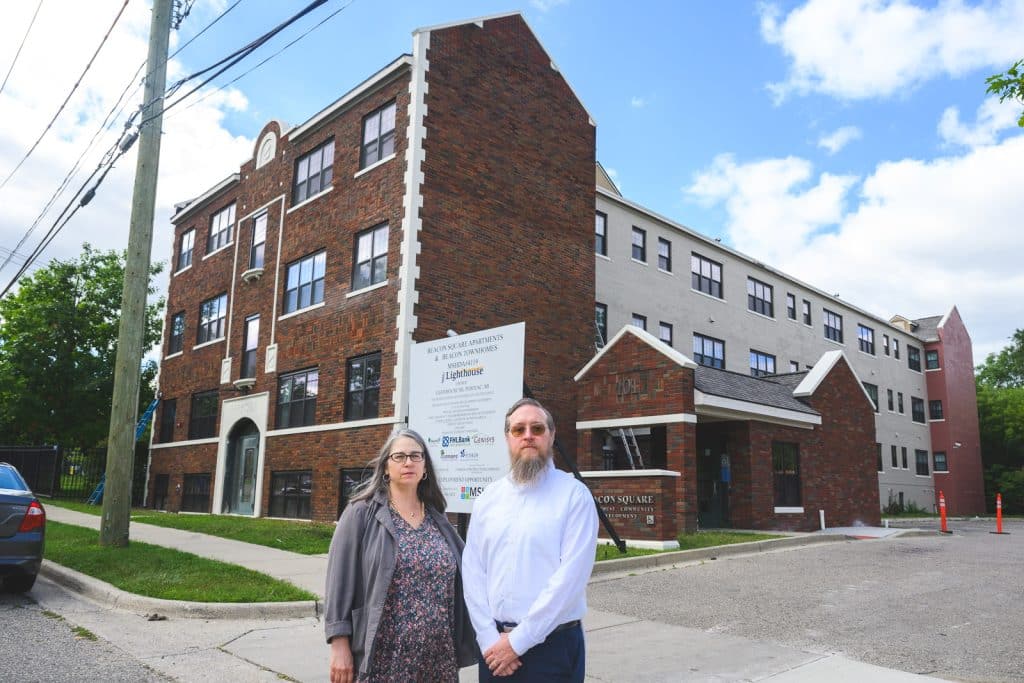
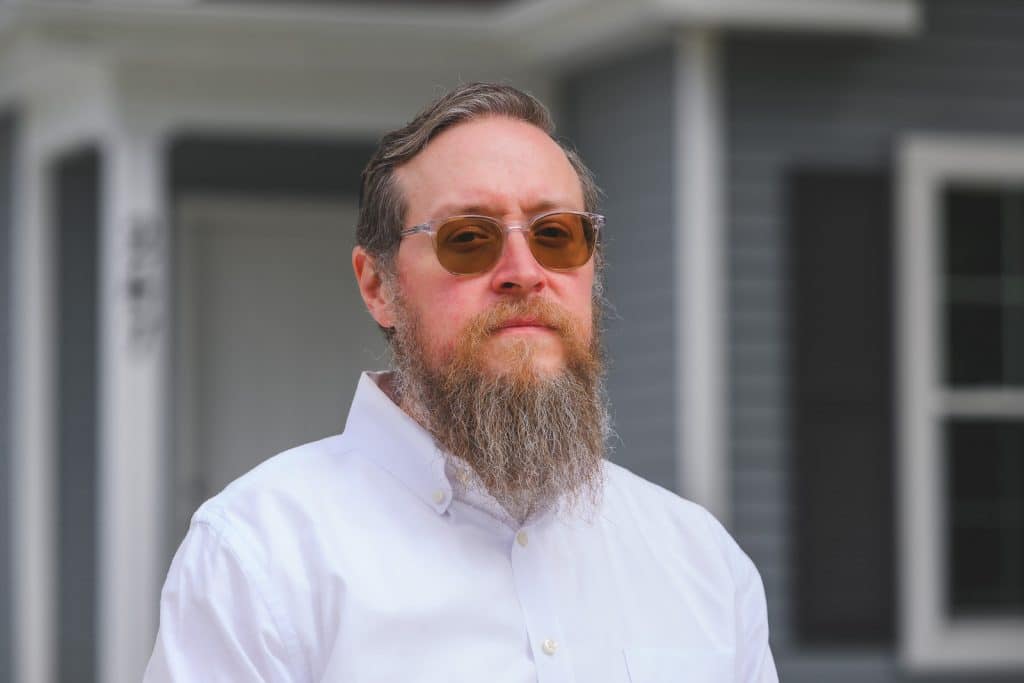
“While HUD’s issuance of a new NOFO last Friday for review has generated additional uncertainty, the absence of clear guidance and timing makes it challenging for local organizations like Lighthouse to plan,” says Ryan Hertz, president and CEO of Pontiac-based housing agency Lighthouse. “We still anticipate a period of lapsed contracts for some of our programs without clarity about whether they will renew. Barring intervention by Congress or the courts, we will need to make some difficult decisions during this undefined period of uncertainty.”
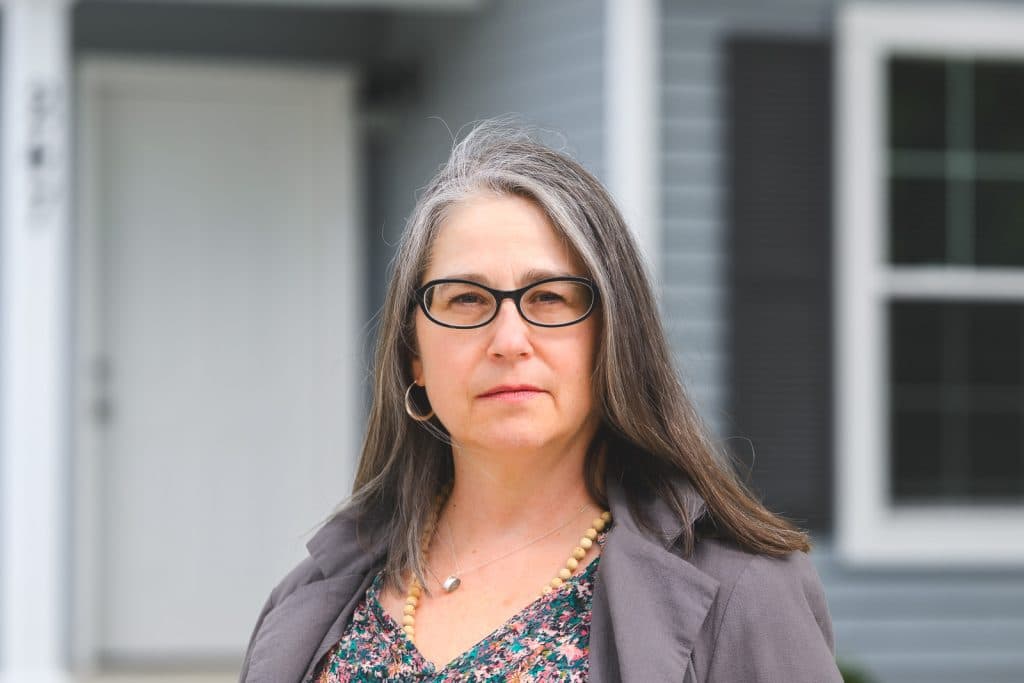
Kirsten Elliott, president and CEO of the Troy- and Eastpointe-based Community Housing Network, says some of her organization’s clients are “getting anxious.”
“We are doing our best to continue to say, ‘We don’t know. Things are very uncertain right now and we are working on it,'” she says. “That’s really all we can say.”
HUD changes
The two major programs that HUD appears to be deprioritizing, both in its two recent NOFOs and in the longer term beyond next year, are permanent supportive housing (PSH) and rapid rehousing (RRH). PSH combines housing cost subsidies and supportive services for chronically homeless people, defined as those who have experienced homelessness for at least 12 months straight or on at least four separate occasions in the last three years. RRH offers shorter-term housing cost subsidies for those with lower barriers to housing stability, helping them move from homelessness back to their own permanent housing.
Both programs are in keeping with an approach known as “housing first,” which prioritizes getting people experiencing homelessness into permanent housing. The “housing first” model was developed in the ’90s, implemented by President George W. Bush’s administration in 2004, and has received federal funding for over two decades.
Nicholas Cook, director of public policy at the Michigan Coalition Against Homelessness, says the original NOFO would have jeopardized 7,000 Michigan households that are currently served by PSH or RRH programs, including 2,163 households with children and 1,600 veteran households.
“A lot of our most vulnerable populations were going to be put in harm’s way,” he says. “And we saw that across the state. It was regardless of area. Obviously, the higher-population areas such as Oakland and Wayne County would have had a disproportionate impact than the rest of the state, and that would have been very problematic.”
HUD is seeking to redirect funding from PSH and RRH to transitional housing programs, which offer supportive services and limit participation to two years at most. While RRH units are designed as permanent housing, where residents will continue to live and pay their own rent in full once they stabilize, transitional housing is designed for residents to move elsewhere once they stabilize. In a July executive order titled “Ending Crime and Disorder on America’s Streets,” President Donald Trump said that “housing first” programs “deprioritize accountability and fail to promote treatment, recovery, and self-sufficiency.” Similarly, a HUD statement on last month’s NOFO said that the NOFO “restores accountability to homelessness programs and promotes self-sufficiency among vulnerable Americans.”
Local housing service providers argue that “housing first” is a successful tool and that its funding needs to be increased rather than slashed. Various analyses have found the approach highly effective; for example, in 2008, the Bush administration largely attributed a 30% decline in chronic homelessness over two years to “housing first” policy.
Hertz says transitional housing is a useful tool for many people experiencing homelessness, but it’s not right for everyone. An emphasis on transitional housing, he says, assumes that people in RRH programs need some kind of rehabilitative services. And it assumes that those in PSH programs can maintain housing independently for the long term.
“The way [the Trump administration communicates] is as if it’s ‘housing first’ that’s failing and that’s why we have so many people who are homeless, as opposed to we do not have enough resources in our communities to apply ‘housing first’ appropriately to the number of people who require it as a result of our general, broader economic challenges in this country,” Hertz says.
While housing service providers disagree with the Trump administration’s emphasis on transitional housing, they’re open to other anticipated changes in federal funding priorities. The now-rescinded NOFO allocated funds for street outreach programs, in which workers seek out people experiencing homelessness and help connect them to appropriate services. Elliott says the only street outreach funds currently allocated to Oakland County come from the federal Substance Abuse and Mental Health Services Administration, which limits their use to people who have serious mental illness. Elliott says CHN “absolutely would love to apply for” additional street outreach funds because the community “definitely” needs more. Cook agrees.
“We support [expanded street outreach],” he says. “Let’s get more people in the street. Let’s make contact and support those that are unhoused.”
What happens next?
Housing service providers are now anxiously awaiting HUD’s next steps as funding expiration dates loom. Leah McCall is the executive director of the Alliance for Housing, Oakland County’s local CoC. She says the work of reapplying for funding under the November NOFO was a “heavy, heartbreaking lift.” Having since suspended that work, she’s worried about what happens next to her organization’s CoC-funded projects. Their funding expiration dates differ, but the soonest is February 2026.
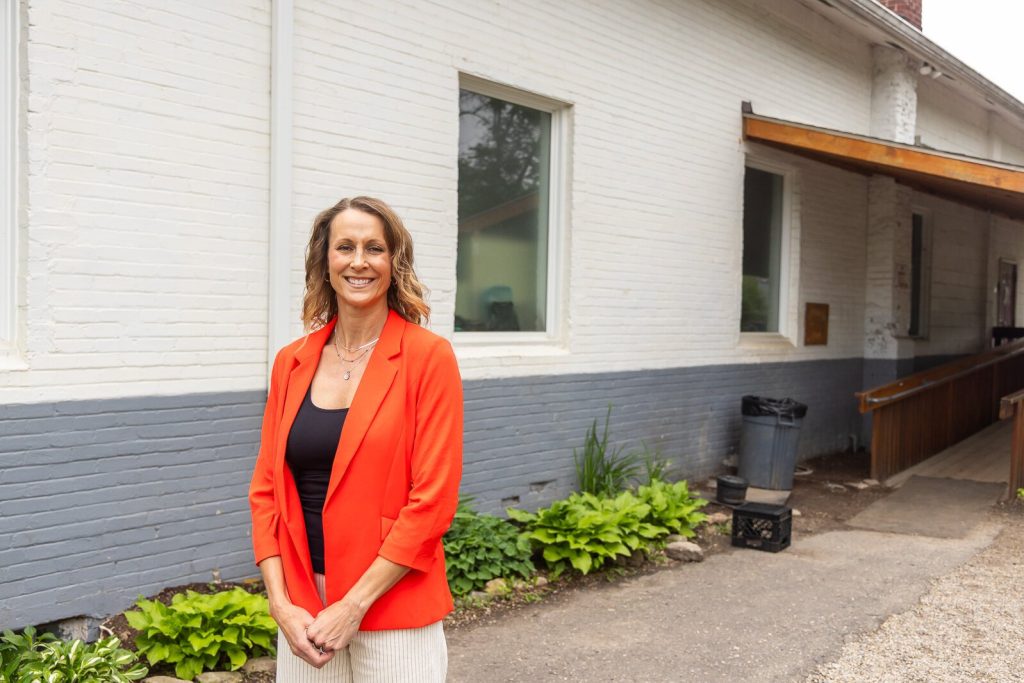
“We are hoping that they will decide to honor the two-year NOFO we were supposed to have for [fiscal year] ’24/’25 so we don’t have any lapse in funds,” she says. “If we do, we will be unable to continue to run our projects as is. As each expiration date comes up, … we could potentially be jeopardizing people’s housing.”
Cook says over $500,000 worth of CoC-funded projects will expire in the first six months of 2026 in Oakland County alone. $12.5 million will expire in Michigan overall. Those projects’ funding would have been renewed under the original NOFO for 2025 and 2026 funding, but are now in jeopardy.
“Unfortunately, we’ve hit a point where the longer we wait for the feds to act, the more people become vulnerable to losing their housing situation,” Cook says.
Funding could still be restored to “housing first” programs in Oakland County (and Michigan overall) by several mechanisms. Congress could pass a continuing resolution including a HUD appropriation that requires the department to adhere to the original two-year NOFO. However, that wouldn’t happen until January, when the current continuing resolution expires and when some CoC projects’ funding will already be expiring. Cook says there are also “extensive conversations ongoing” between housing advocates and state agencies about issuing a state contingency fund to cover CoC funding for the first six months of 2026.
Elliott says the philanthropic community could also help to temporarily fill funding gaps. However, she says, “everybody is very clear” that neither philanthropy, local governments, nor the Michigan State Housing Development Agency can provide the necessary funding for the long term.
“We’re triaging,” she says. “We’re like, what’s the most important thing in front of us right now? And right now it’s trying to preserve as much funding as we possibly can.”
Hertz says local, state, and federal governments were “already underinvested” in housing and homelessness even before the second Trump administration began, and the result is that America has “already been accepting a pretty high degree of failure” on those issues.
“We already have a pretty high level of tolerance for suffering amongst us,” he says. “So, you know, it’s entirely possible that [funding changes will] just simply set us back and that people will just be comfortable with a high level of chronic homelessness in their communities. And unfortunately, it doesn’t need to be that way. We know there’s a financial return from a broader economic perspective on investing in housing first. … We’ve been able to show over time what does work. And we’re just simply going in the wrong direction.”
Related Articles

Ferndale photographer gets international spotlight with nomination for People’s Choice Award
A Ferndale photographer is gaining international recognition for his macro photography. His photo, “Ready to Pounce,” showcasing the beautiful exotic ambush bug, is in the running for the global People’s Choice Award vote in the Wildlife Photographer of the Year competition.

Wixom’s West End Commons project, launching this Spring is empowering downtown and expanding the city’s social district
As West End Commons prepares to break ground, Wixom’s social district continues to serve as both an economic tool and a community bridge.

From past, present to future, Oak Park celebrates Black history year-round
Oak Park has a long history of celebrating diversity, from Black History Month to its pinnacle summer Juneteenth event.


