Economic Development

Mass transit scores more federal funds for rail, bikes

A pocketful of money is creating big changes to mass transit in Metro Detroit.First, SMART is installing $20,000 worth of bike racks away from its bus routes across the metro area. Of that, $16,000 is coming from federal Transportation Enhancement funds. The idea is to provide another amenity for bicyclists who ride its buses so they have a safe place to lock up their bike at their final destination."A place a rider might take their bike off the bus and ride it to a specific location," says Beth Dryden, director of external affairs marketing and communications for SMART. Some of those locations could vary between big-name destinations like Comerica Park in Detroit or smaller, every-day use places like the Wal-Mart/Meijer commercial center on Maple Road in Troy. SMART expects to spend about $500 per bike rack, which could mean about 40 new places for bicyclists to lock up their bikes across the metro area.That's on top of $25 million in federal stimulus funds the M-1 Rail project received from the U.S. Dept. of Transportation. That money is expected to go a long way towards bringing light rail to Woodward Avenue between the Detroit River and New Center. The funds will be primarily used for road improvements along the corridor.Transportation Riders United is also teaming up with the chambers of commerce from Troy, Birmingham, and Bloomfield to host a transit conference on Friday morning. The idea is to spread the gospel that improving mass transit will pay big dividends for economic development to the local business leaders, owners, and key stakeholders in the community. Friday's meeting will be held between 7:30 - 9:30 a.m. at the Troy Chamber Office, 4555 Investment Dr., in the Lower Level Meeting Room. For information, click here or contact TRU's Business Outreach Team leader Kevin Smith at business@DetroitTransit.org or 313 549 2299.Source: Transportation Riders United and Beth Dryden, director of external affairs marketing and communications for SMARTWriter: Jon Zemke

Latest in Economic Development
Green businesses spring up in Oakland County

Running a truly green business in Metro Detroit doesn't necessarily require big-ticket items like solar panels, wind turbines, and geothermal heating systems. Sometimes it just requires the right attitude and making a lot of the right little decisions to maximize sustainability.Here are a couple of firms that are doing the little things to make a big impact on the local environment:- Passage to Yoga built out its space in Southfield with features like low-VOC paints, bamboo flooring, energy-efficient lighting, recycled building and design materials, soy-based carpeting, low-flow water fixtures, an air filtration system, natural lighting via skylights, and recycling options. The firm also made a pledge not to use plastic products and sells yoga mats that aren't made of PVC.Matthew Darling, director and owner of Passage to Yoga, says it's about making a series of the right decisions to conform to a sustainability ethos, which he says complements the principals of yoga. To be "not fanatical but responsible.""As much as we could do, we have," Darling says. "It's not like we put these things in and said that's it."- Don Thomas Sporthaus in Birmingham was constructed largely with recycled or renewable materials, such as entryway tiles composed of 98 percent recycled glass and concrete and industrial-grade bamboo. It was painted with low-VOC paints and has carpets made of recycled yarn. Several of the store's product displays were constructed out of natural wood, and all-natural grass cloth wall covering was used throughout. LED signs were installed on the building's exterior. Inside, light sensors were installed to turn lights off when rooms are not in use.Source: Don Thomas Sporthaus and Matthew Darling, director and owner of Passage to YogaWriter: Jon Zemke

Belleville streetscape project gets green light

It's been a long journey, but the roads of downtown Belleville are about to be streetscaped this summer.The city received $458,314 in federal Transportation Enhancement funds for part of a $5.8 million streetscape plan. The project includes a complete revamping of the streets, including below the surface. It will be tackled in two phases this summer.All of the sewer and water lines and other underground infrastructure will be replaced in the downtown. Sidewalks will be enhanced with decorative brick pavers, benches, trash cans, bike racks, and new landscaping."It's definitely time to do an update," says Carol Thompson, administrator for the Belleville Downtown Development Authority.No improvements have been made to the downtown streetscape since the early 1990s. Many trees have also been lost to the emerald ash borer in recent years. The first phase of the project will include South Street from Huron River Drive to the railroad tracks and the Fourth Street Square. The second phase, set to begin after the Strawberry Festival in June, will replace Main Street from the Bridge to Huron River Drive.This is not the first time plans for the streetscape have been broached. An initiative to have the work done via a bond proposal was defeated last year. This new project is coming mainly from the city's coffers.Source: Carol Thompson, administrator for the Belleville Downtown Development AuthorityWriter: Jon Zemke

Video Welcome To Automation Alley

If building a knowledge-based economy is Michigan's only hope then, much like the force, Automation Alley is what binds the region's technological companies together, finding ways for them to succeed in the global marketplace.

Can Metro Parks save Detroit’s State Fair?

Metro Detroit is about to score the green space hat trick now that Huron-Clinton Metro Parks is making moves to take over the State Fairgrounds in Detroit.The scores would include Detroit receiving its first Metro Park, establishing the first inner-city Metro Park in the region, and saving the annual Michigan State Fair."The State Fair has been one of our regional jewels for more than 100 years," says Tim Greimel, an Oakland County Commissioner representing Pontiac, Auburn Hills, and Rochester Hills, who is helping push the deal forward. "It provides family friendly entertainment to hundreds of thousands of people. It would be a great shame if we lost the State Fair."Under the deal, the state would lease the State Fairgrounds at Woodward Avenue and 8 Mile Road to Metro Parks for $1 a year. Metro Parks would agree to run the State Fair and create a year-round park with the rest of the 135 acres. That park could include amenities such as a fishing area, cross country skiing, and athletic fields."One of the challenges southern Oakland County has is the lack of large-acreage parkland," Greimel says. "The alternative is our southeast Oakland County communities would have a vacant eyesore across the road."One of the major complaints Detroit and the inner-ring suburbs have had is that they pay taxes for Metro Parks, but most of that parkland is at the outer fringes of the region. Turning the State Fair into a Metro Park would go a long way toward remedying that complaint. The Metro Parks Board of Commissioners tabled the proposal yesterday afternoon and will revisit it after 60 days.Source: Tim Greimel, Oakland County CommissionerWriter: Jon Zemke

Sign up for Model D’s Speaker Series: This is Young Detroit

Are we making Detroit a place where young and talented people want to be? The Michigan Front Page, Model D and Fusion are joining forces to get some answers at our Speaker Series this month, Feb. 25

Astro Coffee shop headed to Corktown

Astro Coffee is gearing up to complement Detroit's famous Slow's Barbeque restaurant in Corktown, and yes, it has heard what happened to the Mercury Coffee Bar.Excerpt:Construction is underway on Astro Coffee, the shop Daisuke Hughes plans to open on Michigan Avenue in Corktown late this summer. Hughes left Michigan in 2002. He lived in various cities around the world but kept tabs on Detroit.  Working at highly-regarded Monmouth Coffee Co. in London, he got hooked on coffee culture. A Model D article about what was to be the Mercury Coffee Bar was the impetus he needed to make the move to Detroit in 2008. "The timing was perfect, coming back and walking into a job that I was qualified for," he says.While Mercury did not last, Hughes plans to take lessons learned and apply them to his own venture. "Now I have a fraction of the rent, which cuts overhead. And staffing at the Mercury was very high -- it will be a much smaller scale at Astro," he says, noting that coffee drinks will likely overlap with Mercury offerings, but food options will be scaled way back. "I've tried hard to keep what was good about it and retain that, and what was clearly not working, shave away and eliminate that."Read the rest of the story here and how This Old House picked Detroit's Villages community as one of the nation's best places to buy a historic home here.

Back For (and To Do) Good

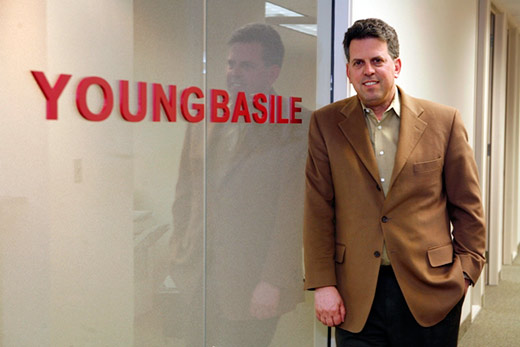
From Detroit to San Francisco and back again, Andrew Basile is rooting himself in Michigan in ways he never imaged. A successful lawyer, he's not only determined to bring Silicon Valley style-companies to the Motor City, he's established an incubator in Troy to make it happen. And as if that weren't enough, Basile has also become involved with evolving the Woodward Avenue corridor into a successful urban hub.

Clawson to begin streetscape project in spring

Clawson continues to steadily create a city center in the otherwise suburban suburb. Its latest step is a streetscape project that promises to recreate the sleepy little intersection at Main Street and 14 Mile Road.The project will revamp the two main streets of Clawson's downtown, including Main between Wolper and Phillips, and 14 Mile between Washington and Bellevue. That involves installing decorative lighting, replacing worn out sidewalks, and installing new landscaping, planters, trees, and bike racks. Brick pavers will also be installed along with the new sidewalks."It's a first step," says Joan Horton, director of the Clawson Downtown Development Authority. "This is one of our first brick-and-mortar projects that we have had in a long time."Previous projects including putting Main on a diet a few years ago. That consisted of shrinking the five-lane road to three lanes and creating two lanes of parallel parking. This resulted in more parking spaces for local businesses, slower traffic, protection for pedestrians, and making the downtown more walkable in general. Clawson plans to also put 14 Mile on a diet in the downtown section soon, too."That's very important for us as a downtown and a city," Horton says. "The road needs to be for all sorts of traffic."The $1.2 million project is being funded in part by $760,398 in recently awarded federal Transportation Enhancement funding. Work is expected to begin this spring and wrap up later in the summer.Source: Joan Horton, director of the Clawson Downtown Development AuthorityWriter: Jon Zemke

Metro Detroit’s Homeprenuers

As scary as the economy is, some smart and creative people are laughing in the face of fear and launching their own businesses from home. Meet three people who've created enormously cool jobs for themselves.

Our Partners

City of Oak Park

Common Ground Is Brewing

Support local stories and receive our signature roast straight to your door when you join at the Standard level (or above).

Drink Better, Read Local

Close the CTA

Don't miss out!

Everything Detroit, in your inbox every week.

Close the CTA

Already a subscriber? Enter your email to hide this popup in the future.