
Community Spotlight: Lincoln Park
Lincoln Park is 85 years old. Going back to the late 1700s, what is now Lincoln Park was then a series of ribbon farms, long narrow tracts of land that typically began at the banks of the Detroit and Rouge Rivers and ran inland for miles. The farms were primarily French-owned, which explains many of the French-named streets in modern Lincoln Park. Leaping forward a century and a half, Lincoln Park, like many of the cities in the area, experienced explosive growth in housing and retail and commercial because of the rise of the automobile and manufacturing.
 Lincoln Park is 85 years old. Going back to the late 1700s, what is now Lincoln Park was then a series of ribbon farms, long narrow tracts of land that typically began at the banks of the Detroit and Rouge Rivers and ran inland for miles. The farms were primarily French-owned, which explains many of the French-named streets in modern Lincoln Park. Leaping forward a century and a half, Lincoln Park, like many of the cities in the area, experienced explosive growth in housing and retail and commercial because of the rise of the automobile and manufacturing.
Today, the city is a stable bedroom community with one of the highest income densities in the region, $254,558 per acre. This has helped create stability. Like all older suburbs, with older infrastructure and near capacity of developed land, however, Lincoln Park is facing its share of challenges.
“When I drive down the street and see a dip in the road, most people see that as an annoyance,” said Mayor Frank Vaslo, over a hamburger at the Fort Street Brewery recently. “But I know that underneath there what it probably is, is a washed-out sewer line.”
Vaslo said the city uses the lion’s share of its annual Community Development Block Grant monies to repair its aging infrastructure. The City gets approximately $800,000. The rest of the monies go to support social service agencies in the area.
What the mayor and many of the Downtown Development Authority (DDA) businesses and other officials want you to know is Lincoln Park is open for business and that they are defining, in the Mayor’s words, “our own path, our own future.”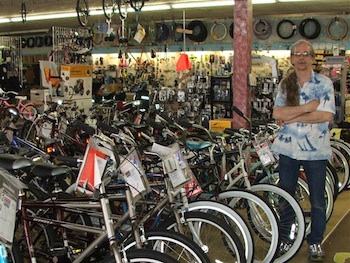 Redevelopment Ready
A few years ago city officials and administrators went through a labor-intensive process to overhaul and purge what Mayor Vaslo characterized as 85 years of antiquated rules and duplicated bureaucratic processing of permits which handicapped the city when developers knocked on its door looking to do business.
The Michigan Suburbs Alliance gave the city a redevelopment-ready designation for its efforts.
“What used to take four to six months for a developer working with the city, now is completed in 60 days,” Vaslo said. “That’s our goal with any developer that walks into the city. In 60 days you have all your approvals and permits.”
Valso points to the recent openings of a Walgreens and Starbucks near Southfield and Dix, where vacant and tired structures once stood, as proof that the redevelopment-ready model is working.
“It’s a very difficult environment though,” Vaslo said. “All I can tell you now is that when the banks start lending and developers start developing, Lincoln Park is ready to go.”
Lincoln Park also was recently awarded 43 liquor licenses from the Michigan State Liquor Control Commission (LCC). The commission raised the city’s liquor license quota based on an application prepared by the city’s planning and consulting firm, McKenna Associates. The LCC bases its decision to grant increases in liquor licenses on the amount of public and private investment in a downtown entertainment district. Typically a license is granted for every $200,000 in cash investment and Lincoln Park demonstrated in its application investments since 2005 of $8.6 million.
City officials and business owners see this as another tool to use for investment in the 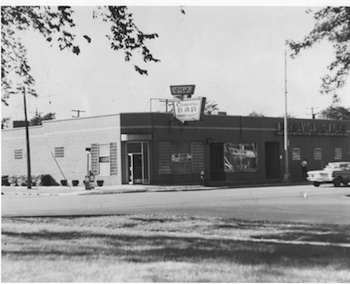 city’s core DDA and its newly defined entertainment district. Their vision is one similar to downtown Northville, Plymouth, Ferndale or Royal Oak, where a garden-variety of restaurants, pubs, and diners spring up to become a destination for metro Detroiters.
“This is excellent news for Lincoln Park and everyone who lives, works or visits our thriving city,” Vaslo said. “You want to open a restaurant and you would like to serve liquor, come to Lincoln Park, I’ll give you one for free. Make the investment in Lincoln Park and we will make an investment in you.”
Businesses seeking to serve liquor in Lincoln Park must still apply for licenses and be approved by the city council and the LCC.
Other improvements slated for the core DDA include: the redevelopment of the old Park Theater, once an adult bookstore, now shuttered, soon to be a mixed-use commercial and residential development; the demolition of the old Mellus newspaper building and its adjoining structures, clearing the lot for prospective developers; and a million dollar streetscape project, with the help of a state grant, which will include new sidewalks, benches, old style street lighting and more.
Customer-friendly business culture
The central business district and the core of the DDA is busy and bustling Fort Street, two to three blocks either side of Southfield Road, which carries thousands of cars daily.
One of the things that strike you as you walk the district is the number of stores that have been in business for decades. Nothing too fancy. Nothing too flashy. Just good old fashioned customer-friendly, established businesses that have managed to keep their doors opened. These businesses include Empire Furniture established in the 1940s, Painters Supply since the 1950s, and Busen Appliance since the 1930s.
“We’re a modern business in that we definitely have our computers and technology at the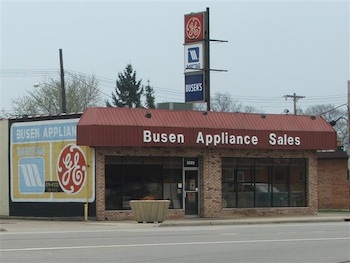 business,” said Mike Busen, owner of Busen Appliance on Fort Street. “But we still do business on a handshake, we still offer that personal touch.”
Busen, who sits on the DDA board, said the secret to the success of his store in the era of the big box, the “David and Goliath thing,” is customer service. “We are a small store but our customers can come in here and get the answers to their questions, they can find parts they need, the products they need, and our prices are competitive.”
There is also a palpable camaraderie among these long-time business-owner peers. “We get along very well,” said Don Van Cleave, DDA chairman and owner of Al Petri & Sons Bicycle & Fitness on Fort Street, voted Best Bike Shop in Detroit recently. “We share our customers. And help each other if there are sign ordinance issues or parking issues.”
Van Cleave said the key to his longevity and success has been the focus on families. “We cater to families. We are really in the business for the family bikes, not so much the cyclists. It’s parts, it’s accessories, it’s fixing the bikes, supplying the whole family with bicycles. It’s the whole family aspect, that’s really the key to our success.”
Awarding winning books and community organizations
Lincoln Park’s financial books are best sellers for auditors. In a time of dwindling general fund dollars and depleted rainy day funds, Lincoln Park is on solid ground.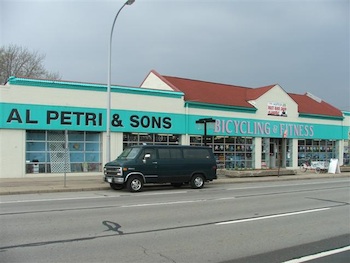 Vaslo attributes Lincoln Park’s 17-percent fund balance, or its rainy day fund, to tough cost-reducing measures and other proactive measures.
Its general fund is $24 million. “We reined-in things like healthcare costs and manpower issues to the point that last year we put $1 million dollars back into the bank,” Vaslo said. “Our auditors are thrilled.”
And the city’s efforts haven’t gone unnoticed. The Government Finance Officers Association of the United States and Canada, a non-profit professional association which services 17,600 government finance professionals around North America, awarded the city its Distinguished Budget Presentation Award for fiscal year 2008. The city was recognized for its “highest principles of governmental budgeting.”
“We have delivered to the citizens of Lincoln Park a community that is stable today,” Vaslo said. “We’ve been making the hard decisions.”
In making those hard decisions though, there has been some pain. The reality is that many of the programs and services or special events the city once provided with best-in-class delivery, have been targeted for cutbacks or elimination. But Vaslo said that’s when many of the city’s businesses, fraternal and social organizations stepped it up.
“Without them, Lincoln Park would be a bleaker place,” he said.
Vaslo said entities like the Fort Street Brewery, the Exchange Club, the Lincoln Park Chamber of Commerce, the Knights of Columbus and others have all filled in where the city’s general fund could no longer contribute. “Places like these are providing the services and activities that government used to do,” he said.
A good example is the local chamber of commerce taking over the responsibility for Lincoln Park FantasyLand, which is an annual, traditional Christmas holiday celebration that takes place in Memorial Park. “Kids from Downriver have been going to this for over 40 years,” Vaslo said. “The chamber stepped in, took it over, and have done simply a fabulous job.”
The Fort Street Brewery held a fundraiser by brewing and bottling beer and auctioning them off. The proceeds, $1,200, went to Home for Troops, an organization that builds new homes or retro-fits exiting homes for returning, disabled veterans.
And the city is reinvesting in Lions Park in partnership with Wayne County and the Lions Club. The park will become handicapped accessible using state-of-the art equipment and technology.
“Thanks to Commissioner Ilona Varga and Wayne County, they have secured $100,000 for the project,” Vaslo said. “It’s going to be pretty cool.”
Say Yes
So while other communities are struggling to get their arms around the effects caused by a collapsed manufacturing economy and falling government revenues, Lincoln Park has planned ahead and headed some of the problems off at the pass.
Such that, as Mayor Vaslo said: “One of the hardest things about being an elected official these days, I never get to say Yes. For seven years I’ve done nothing but say No. I get tired of that. Once in a while you want to say Yes.”
Pat Dostine is a Program Manager and writer in the Communications division for Wayne County.
Related Articles

Partner Partner Content How Downtown Farmington is Balancing 40 Years of Legacy with a New Era of Social Entrepreneurship
In downtown Farmington, the shift from late spring to summer heat brings more than just patio dining and farmers’ markets; it’s ushering in a change in how businesses and the community work hand in hand.

Metro Detroit Death Doulas Want You to Talk about Death
Death Doulas in Metro Detroit are working to change how people approach the end of life — with less fear and more understanding. It can be a tough sell in a culture that largely avoids talking about death, but with the right support and guidance, these non-medical advocates promise life’s final chapter can be rich and rewarding.

How Talent Together is helping solve the teacher shortage
In response to statewide teacher shortages, Michigan has invested in alternative routes to teacher certification. One program, Talent Together, helps Metro Detroiters realize their dreams of becoming teachers by providing a free education and a paid student-teaching experience.


